The Russian imperialists who twice banned the Ukrainian tongue in the 19th century were so dismissive of the language that they referred to it as “little Russian”. In the 1930s, Stalin wiped out the generation of Ukrainian artists and writers known as the Executed Renaissance.
Ukrainians have found that music, literature, theatre and dance can be potent instruments of “soft power,” the term coined by US political scientist Joseph Nye for the use of culture rather than force to wield influence.
In this fifth year of Russia’s full-scale invasion of Ukraine, the country’s vibrant cultural heritage and adventurous spirit are proving powerful instruments in winning support abroad. At home, they are a source of solace, unity and pride.
Volodymyr Sheiko is director general of the Ukrainian Institute (UI), Ukraine’s equivalent of the British Council, Alliance Française or Goethe Institute. Established in 2018, UI has offices in Berlin and Paris and a representative in Amsterdam. Three institutes were founded earlier in London, New York and Stockholm but cooperate with UI.
READ MORE


“Ukraine has recognised culture as an asset of national security since the full-scale invasion,” says Sheiko. “The narrative that positions culture as a pillar of Ukrainian resistance against aggression has been adopted by our leadership and cultural sector.”
Research showed that foreigners had simplistic, preconceived notions about Ukraine. “The clichés were: Chernobyl, war, beautiful women, vyshyvanka (embroidered clothing), the Klitschko brothers (former boxing champions, one of whom is mayor of Kyiv) and good food,” says Sheiko. “It wasn’t untrue, but it didn’t tell anything about the country. The creation of UI was part of the effort to fix that.”
More recent research shows people outside Ukraine now associate the country with resilience, democracy, resistance and courage. “It’s a complete narrative shift over such a short period of time,” says Sheiko, “Without being guided or told what to do, our artists and culture managers abroad have become a genuine, unscripted voice for the country.”
France is perhaps the best example of the rapid spread of Ukrainian culture. “France used to be one of the most difficult places for Ukraine to do cultural relations work,” says Sheiko. “The entry threshold was high. The Russian cultural presence in France had been strong and there’s an undercurrent of pro-Russian sentiment, which created an environment that was not hostile but detached.”
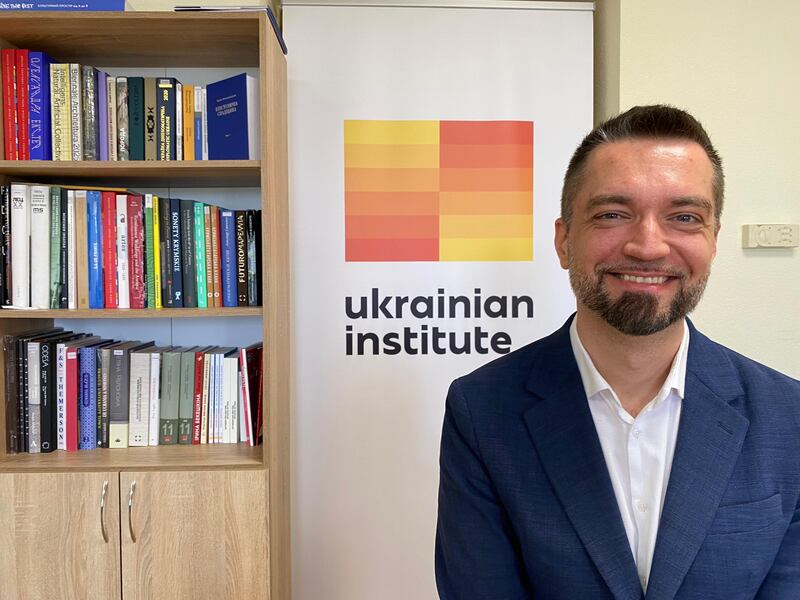
Sheiko proposed a Saison Ukrainienne to the French foreign ministry in 2024. The four-month season was organised in less than a year and just ended, after more than 70 events in 12 cities. Another 100 associated events were held under the season’s banner.
Two of Ukraine’s soldier-poets, Yaryna Chornohuz and Artem Chekh, presided over the season’s opening night at the Théâtre Sarah Bernhardt by remote video link from the front line. More than 1,000 people attended, including the first ladies and foreign ministers of both countries and the French culture minister.
With the help of the Irish Department of Foreign Affairs (DFA), the Centre Culturel Irlandais in Paris provided lodging for Ukrainian artists during the French season and hosted an event in late January. It ended with a rousing rendition of the national anthem, Ukraine’s Glory and Freedom Have Not Yet Perished, by Dublin-based musician and singer Olesya Zdorovetska in the chapel of the Irish College. The audience stood and sang. Some wept. It was an unforgettable moment of shared emotion.
So too was the performance of Brian Friel’s classic play Translations at the Abbey Theatre, in Ukrainian with English subtitles, by Ukraine’s National Theatre in 2023. In the Ukrainian version, the colonialist who changes place names to his own language is Russian, not British. Since 2023, DFA has funded Irish tours for two Ukrainian theatre troupes and two orchestras. Sheiko plans a Ukrainian Season in Ireland for 2028-29.
Ukraine does not limit its cultural outreach to Europe. On a shoestring budget of €4 million a year, UI has projects in 20 countries around the world. Russia claims to have the support of the “global south” in this war, but Sheiko says countries in Africa, Latin America and Asia find resonance in Ukraine’s experience of colonialism and cultural erasure.
Ukrainian writers and artists who were unfairly neglected by the outside world are finally becoming known. The Polish Institute in Berlin last year dedicated an exhibition to the Ukrainian dissident poet Vasyl Stus, who died in a Soviet labour camp in 1985. At the end of March, the books section of Le Monde devoted a cover story to the first translation in French of Stus’s oeuvre, asking how a dissident with the stature of a Solzhenitsyn, Havel or Kundera could have been so long ignored.
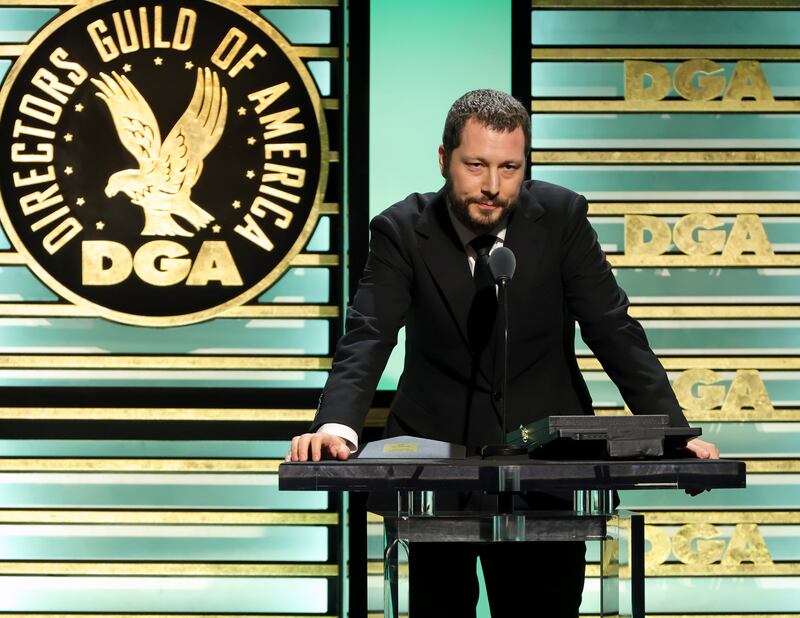
Journalist Mstyslav Chernov won an Academy Award for his searing documentary about the siege of Mariupol. Filming with Ukrainian soldiers on the front line, Chernov’s second film, 2000 Meters to Andriivka, gave viewers a shocking taste of war in the 21st century.
The writer, professor of literature and activist Tetyana Ogarkova says Ukraine has earned the attention. “The courage of Ukrainians has shown that everything is possible,” she says. “Everyone wants to know, ‘who are these Ukrainians?’. That is why Ukrainian artists, writers and performers are invited all over the world, why there are more translations of Ukrainian books than ever before. It’s because we held out that people want to know us.”
The cultural sector inside the country has suffered in the war, notes Sheiko. Many artists have joined the army or changed professions because there is no longer funding for their work. “A lot of institutions are in survival mode,” he says. “Yes, there is an increase in the number of people attending theatre, but sometimes the quality suffers.”
Sheiko alludes to a photograph from the 1990s Bosnian war, of a beautiful, dressed-up woman walking down a Sarajevo street with her hair done, indifferent to snipers. That sense of defiance and resilience is one reason why Ukrainians attend cultural events in such numbers. The need to be around other people is another.
With her husband Volodymyr Yermolenko, the philosopher and head of PEN Ukraine, Ogarkova and Sheiko make cultural missions to frontline communities such as Kherson, where Russians conduct “human safaris” that target civilians with drones. Despite mortal danger, the venues are always full.
“There’s a genocidal aspect to this war,” says Ogarkova, “because Russia is trying to destroy Ukraine’s identity. From 2022 until now, every poem or book that is written by a Ukrainian is an act of resistance”. Write to Survive is PEN Ukraine’s motto.
The poet Lyuba Yakimchuk, who is from occupied Luhansk, reminds me that culture can also be a tool for evil. In occupied parts of Ukraine, “after Russian tanks came Russian textbooks, Russian TV and Russian songs, to finish the job the tanks began”.
Since 2022, Russia’s cultural exports have often been contested because they are associated with disinformation and aggression. Russia still has money, legacy networks and enjoys a historical affinity in some countries. But, Sheiko adds, “Ukraine has legitimacy and movement. Ukraine aligns with lived reality. It’s not as rooted in the past as Russia’s cultural diplomacy. It’s rooted in democratic values and it is increasingly present at European cultural venues and platforms where Ukraine may have been excluded in the past.”