It is hard to be in Paris without reflecting on the life of Oscar Wilde, who lived in the city as a rising star: fluent in French, penning several plays, charming the literary salons.
Later on, disgraced and imprisoned for gross indecency, he dreamed of returning to the city to stage his “artistic reappearance” and “rehabilitation through art, in Paris”.
Tragically his health, state of mind and societal caché never recovered, and he died broke and in exile in a cheap hotel on the left bank aged 46.
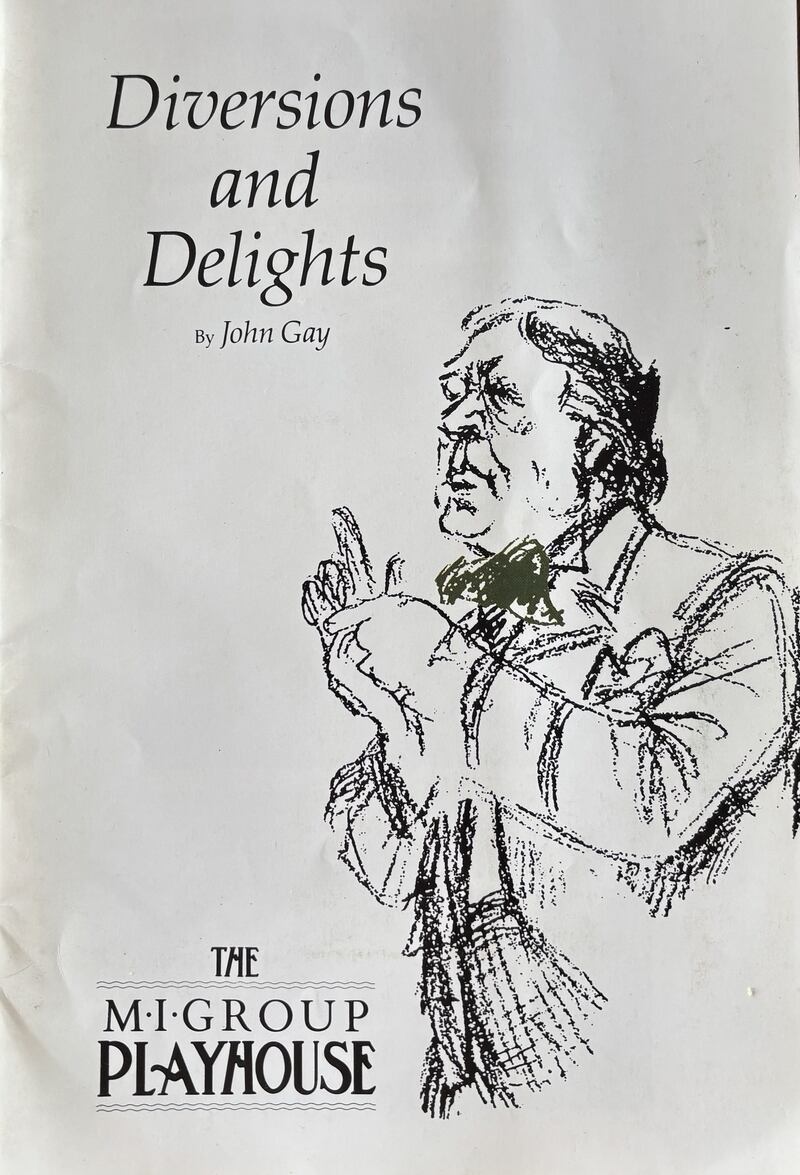
My father, an Oscar aficionado, has always remembered the magnificence of a production of the John Gay play Diversions and Delights, which he had seen in London in 1990, starring Donald Sinden as Wilde.
READ MORE


When an original programme appeared for sale on eBay, we bought it, and read it before a visit to Wilde’s grave at Père-Lachaise.
Running to 21 pages, it is more of a literary supplement than a typical theatre programme, featuring essays about the aesthetic movement and on Wilde.
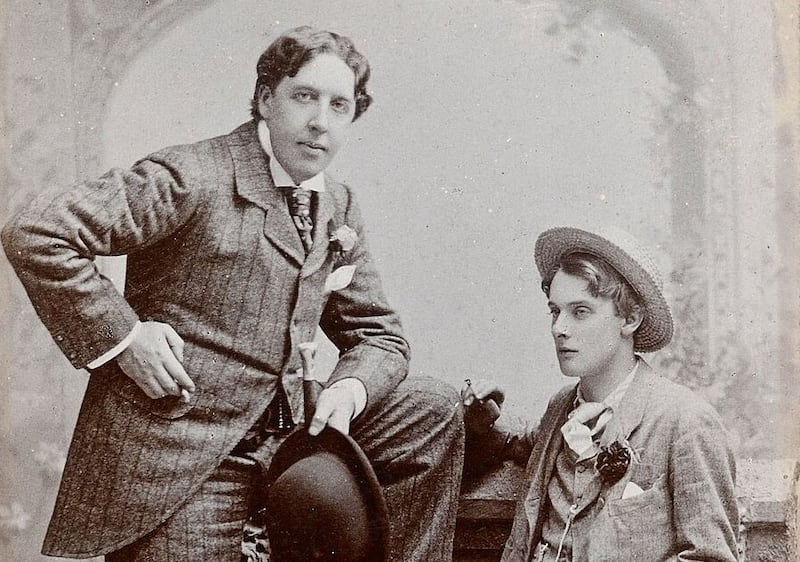
It also contains Sinden’s recollections of meeting the man who Wilde blamed for his downfall: Lord Alfred Douglas, known by the nickname Bosie.
Beautiful, dissolute, reckless and volatile, Bosie was an aristocratic Oxford undergraduate and a budding poet when he was introduced to Wilde in 1891. They began a toxic relationship bitterly detailed by the Irishman in his 50,000-word letter to Bosie from Reading Gaol, De Profundis.
“Your meanest motive, your lowest appetite, your most common passion, became to you laws by which the lives of others were to be guided always ... knowing that by making a scene you could always have your way,” Wilde wrote.
Wilde recalled how Bosie would run up bills on his account, send him poisonous letters, was cruel to him when he was ill and once accidentally let off a pistol in a restaurant. Nevertheless, he struggled to definitively break off the relationship.
Biographers blame Bosie for introducing Wilde to the world of Victorian rent boys – though both Bosie and Wilde would later write that Oscar’s vices were his own – and for encouraging Wilde to pursue a disastrous libel case against Bosie’s father, with whom Bosie was in a long-running feud.
The Marquess of Queensberry, remembered for giving his name to the rules of modern boxing, was outraged by his son’s relationship and was publicly harassing Wilde. When he left a calling card for Wilde addressing him as a “posing sodomite”, Wilde sued.
“The idea of your being the object of a terrible quarrel between your father and a man of my position seemed to delight you,” Wilde recalled in De Profundis. “It, I suppose very naturally, pleased your vanity, and flattered your self-importance.”
In defence of the Marquess, Edward Carson – the barrister, fellow Dubliner and later prominent unionist politician – was able to produce rent boys, love letters and suggestive poetry for his case. It led to Wilde’s criminal trial and conviction for gross indecency.
One carelessly-treated letter by Wilde to Bosie – either left in the pocket of a suit that was given away, or stolen, according to differing accounts – became part of the legal case against him.
“It is a marvel that those red rose-leaf lips of yours should have been made no less for the madness of music and song than for the madness of kisses. Your slim gilt soul walks between passion and poetry,” it read. “Always with undying love, Yours Oscar.”
In 1942, Donald Sinden learned that the slim gilt soul was alive and living, of all places, in Hove. He paid Bosie a visit.
“The door was opened by a little stooping man ... with grey hair, bleary eyes and pouches under them and a bulbous nose,” Sinden recalled. “The Lord Alfred Douglas living here?”
Sinden came to visit regularly, discussing Bosie’s life, work, and eventually Oscar Wilde. Bosie’s courtesy to the young actor faltered only once, when he flew into a rage on seeing that Sinden had a copy of his 1914 book, Oscar Wilde and Myself, in which he had trashed his former companion. With time, Bosie had come to remember Wilde “with great affection”.
Sinden asked Bosie how he had been so careless with the love letter that had ended up being part of Wilde’s conviction.

“You must realise that this letter was by comparison with others insignificant – I had received scores of letters from Oscar far more beautiful, far more personal than that one,” Bosie replied. He added that during a period of bitterness, he had burned them all.
Bosie died in 1945. “Only twelve of us were gathered at the graveside as we buried Oscar’s ‘Rose-lipped youth’,” Sinden recalled. “To me, a very kind old man.”