
Ukrainian and US officials met in Geneva on Thursday for talks on postwar reconstruction despite a deadlock in negotiations with Russia, and officials in Kyiv hoped to finalise key details of a settlement at a trilateral meeting early next month.
Top Ukrainian negotiator Rustem Umerov said the participants at the meeting, which followed a night of Russian attacks on infrastructure, spoke to Ukrainian president Volodymyr Zelenskiy after its conclusion.
Zelenskiy, who spoke to US president Donald Trump on Wednesday, said trilateral talks would likely take place in Abu Dhabi in early March and would aim to prepare the way for a meeting of Ukraine and Russia’s leaders.
Rebuilding Ukraine after the destruction wrought by Russian air strikes and frontline combat has become a major element in broader US-brokered talks on ending the war, which entered its fifth year this week and shows no signs of abating.
READ MORE


The US has been pressing Ukraine to secure peace in Europe’s biggest conflict since the second World War, but Moscow and Kyiv remain far apart in their positions as Russian troops grind forward on the battlefield and strike Ukrainian cities.
“Everything will have to be finalised. Everything that has been achieved for real security guarantees and preparing a meeting at the leaders’ level,” Zelenskiy said in his nightly video address, referring to the forthcoming trilateral meeting.
“That is the very format that can resolve a great deal. After all, leaders decide on key issues.”
Taking part in the Geneva talks were US special envoy Steve Witkoff and Trump’s son-in-law Jared Kushner.

Russian president Vladimir Putin’s special envoy, Kirill Dmitriev, also held talks with US officials in Geneva on Thursday, Russia’s state-run RIA news agency reported. Dmitriev declined to comment on the outcome of the meeting, RIA said.
Umerov said negotiators were working on economic and security issues to “make the next trilateral meeting involving the US and Russia as substantive as possible.”
Kyiv hopes to attract about $800 billion of public and private funds over the next 10 years to rebuild the country, where swathes of territory have been ravaged. The latest assessment from the World Bank, released on Monday, showed rebuilding Ukraine’s economy will cost an estimated $588 billion.
The assessment is based on data from February 24th, 2022, through December 31st, 2025.
Ukrainian and Russian negotiators met last week in Geneva for their third US-mediated meeting this year but failed to reach any breakthrough on key sticking points, including territory.
Hours before talks began, Russia launched 420 drones and 39 missiles in another night of attacks on energy and other critical infrastructure, Zelenskiy said. Dozens of people were injured and damage was reported across eight regions, he added.
In recent months, Russia has focused its missile and drone strikes on Ukraine’s energy sector, destroying power plants and substations and plunging entire cities and regions into prolonged blackouts.
[ European unity faces critical test as Ukraine war enters its fifth yearOpens in new window ]
In Kyiv, art teacher Larysa Fuzik (62) said more international pressure was needed on Russia as the aggressor.
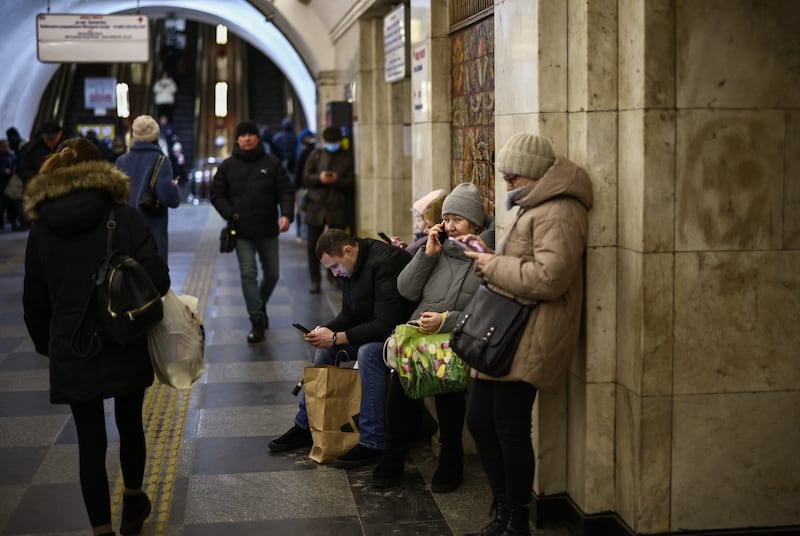
“Even though four years of war have passed, every time the alarm sounds, I feel such fear, such coldness in my soul, such anxiety,” Fuzik said. “I immediately get dressed and run to the metro.”
Moscow has denied targeting civilians, although its attacks have killed thousands since it invaded in February 2022. Ukraine has also targeted Russia’s energy system, particularly oil refineries, depots and transport terminals.
Foreign minister Andrii Sybiha said the strikes showed “Putin bets on more terror, attacks, and aggression.”
Russian forces are making incremental gains in parts of the 1,200km front line, threatening key “fortress cities” in the eastern Donetsk region and advancing within 20km of the southeastern regional capital of Zaporizhzhia.
Moscow has said Kyiv must cede the final 20 per cent of industrialised Donetsk that it controls. Ukraine says it will not give up territory that thousands have died to defend.
Land issues and control over the Zaporizhzhia nuclear power station, seized by Russian forces in the first weeks of the war, remain among the thorniest issues to resolve. Zelenskiy has urged Kyiv’s partners to increase pressure on Moscow.
The US has slowed the sale of Russian oil company Lukoil’s international assets to pressure Russia in the peace talks, sources familiar with the discussions told Reuters on Thursday. – Reuters


