

Leon Weintraub turned 100 on January 1st and survived the Holocaust, so he isn’t about to be defeated by Microsoft Teams.
After some fiddling with the sound he is finally audible from his home in Stockholm and, in a clear voice, delivers his urgent message on World Holocaust Day: remain watchful as Holocaust denial gains ground and begins to undermine European democracy itself.
“This thoughtlessness or malicious intent to trivialise or distort this horrific history makes me very sad,” he says.
As the world remembers the horrors of Auschwitz, and its liberation on January 27th, 1945, during the second World War, Weintraub belongs to a shrinking circle of survivors of the death camp in Nazi-occupied Poland.
READ MORE


For this year’s anniversary he and six other survivors have joined forces in a new book, Nach der Nacht, or After the Night, to discuss their fears for their future.
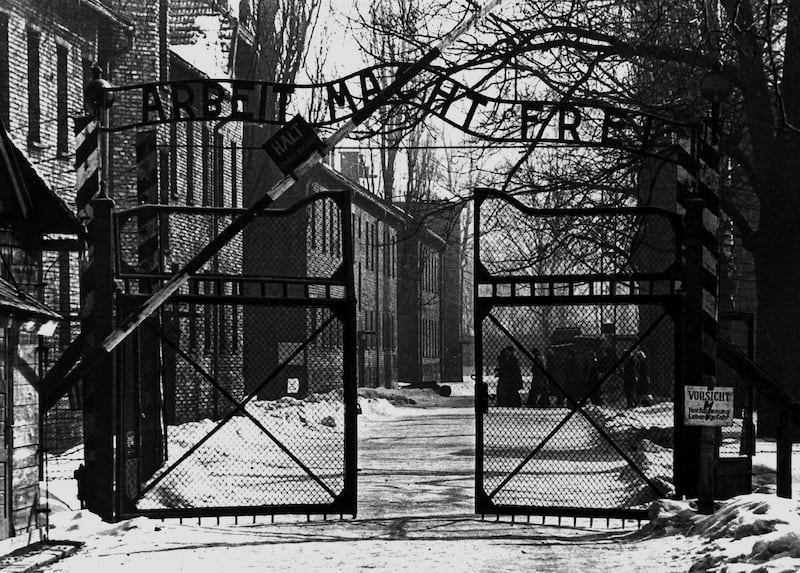
But first: Weintraub’s past. He was 18 months old when his father died and was 13, one of five children, when German troops marched into Poland and his native Lodz. They were transported to the Litzmannstadt ghetto, living in squalor and fear, until their deportation to Auschwitz in 1944 where he was separated from his sisters and mother, the latter sent directly to the gas chambers.
Weintraub survived by chance when, riskily, he joined a prisoner transfer leaving the camp. Later, his prisoner transport train was bombed and he escaped.
Weintraub had a remarkable postwar life, enrolling to study medicine in Germany in 1946, working in his native Poland to work as a gynaecologist but leaving again in 1969 after losing his clinic job during a countrywide anti-Jewish campaign.
He has lived in Sweden since and it is from here he has witnessed the rise of the far-right Sweden Democrats (SD) and the surge of the Alternative for Germany (AfD) in Germany. It is in second place in polls with 25 per cent support and hopes to secure at least 40 per cent – and possibly power – in an eastern state election next September.
The main reason for this rise, Weintraub thinks, is people’s short memories and fear of losing out.
“We all need to be a bit more modest,” he says. “Just the thought that our standard of living might drop two percentage points makes people panic, forgetting how things were 30 or 40 years ago.”
Instead of being satisfied with less, Weintraub fears greed is leading people to follow populist Pied Pipers with simplistic, ready-made scapegoat theories.
As someone who lived through all that with the rise of National Socialism – and only narrowly escaped its terrible consequences – Weintraub calls AfD’s rise in Germany “shameful”.
Last year he wrote a furious open letter to German chancellor Friedrich Merz after his party accepted AfD support in a parliamentary vote.
“It reminds me of 1933, these radical right-wingers must be stopped and their misanthropic ideology,” Weintraub says. “Pathological nationalism, which denigrates other people, is inhumane.”
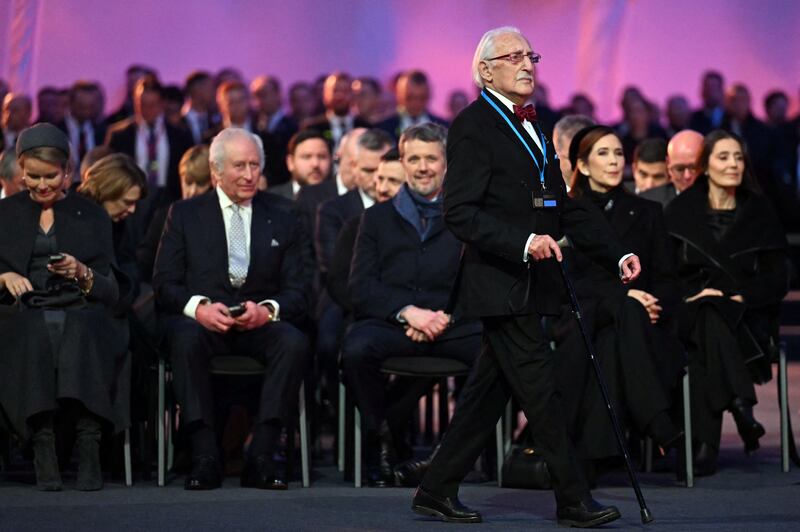
He was happy to participate in the book project by the film-maker and historian team Joachim A Lang and Thomas Weber, best known for the 2024 film Führer und Verführer, Goebbels and the Führer.
That film took apart the propaganda methods behind the Nazi takeover to show how similar methods were in use today.
They fear something has gone badly wrong in Germany’s approach to its Nazi past, given two-fifths of Germans aged 18-29 in a survey last year were not aware that six million people lost their lives in the Holocaust.
“At some point we began patting ourselves on the back and congratulating ourselves at how we we’d worked through the past,” says Weber, a history professor at the University of Aberdeen. “What is clear now is, however we did it in the past doesn’t work any more.”
[ Why do one in 10 Irish youths believe the Holocaust is a myth? ]
Film-maker Lang agrees. “We urgently need to keep what has proven its worth, but explore new paths,” he says. “Too much of it has become a box-ticking exercise.”
This box-ticking approach has created a crack that is being exploited by right-wing populists intent on undermining and sidelining democracy.
To halt this slide, in their book they present a list of requests – demands – from survivors. In particular they want to see more education efforts, with new ethical approaches and historical lessons for young people.
“The survivors don’t want applause when they speak to us,” Weber and Lang write. “They want us to leap to defend democracy.”
Listening in, Weintraub becomes emotional. It took him decades to set aside his postwar “blinkers” and talk in public about his ordeal. The idea that the postwar order is in peril – and the lessons we thought we had learned are being lost before our eyes – is overwhelming for him.
“Letting these people fall into oblivion,” he says, “would be like killing the innocents once more”.


