The likelihood of a negotiated, peaceful agreement between the United States and Cuba is not high, US secretary of state Marco Rubio said on Thursday as Washington continued its pressure campaign against the Caribbean island’s government.
Rubio, who was speaking after the United States formally announced murder charges against former Cuban president Raul Castro and deployed an aircraft carrier to the Southern Caribbean Sea, said the US always prefers a negotiated settlement.
“That remains our preference with Cuba,” he told reporters. “I’m just being honest with you, you know, the likelihood of that happening, given who we’re dealing with right now, is not high. But if they have a change of heart, you know, we’re here. And in the meantime, we’ll keep doing what we need to do.”
US president Donald Trump is pushing for “regime change” in Cuba, where communist government has been in charge in Cuba since the late Fidel Castro led a revolution in 1959.
READ MORE


The island is facing a rising crisis as oil supplies for domestic use and power plants have been exhausted after Trump effectively imposed a blockade on fuel shipments from any country.
Cuba has accepted a US offer of $100 million in humanitarian aid, Rubio said.
The United States announced the murder charges against Raul Castro on Wednesday, a major escalation that marked a new low in relations between the long-time Cold War rivals.
On Thursday, Rubio denied the US was nation-building.
“It’s not nation-building,” he told reporters before leaving for a Nato ministers meeting in Sweden. “We are addressing something that’s directly related to the national security of the United States.”

Earlier, the US military’s southern command and a US official said that a US aircraft carrier and its escort warships entered the southern Caribbean Sea on Wednesday and will remain in the region for at least a few days as part of the Trump administration’s campaign to pressure the Cuban government.
The administration intends to use the USS Nimitz, and its wing of fighter jets, as a show of force, not as a platform for major military operations, as the aircraft carrier USS Gerald R Ford did during the commando raid to seize president Nicolás Maduro of Venezuela in January, said the US official, who spoke on condition of anonymity to discuss operational matters.
The US justice department’s accusations of murder and a conspiracy to kill US citizens against Raul Castro, stem from the fatal downing 30 years ago of two planes over waters off the coast of his country.
The accusation against Raul Castro, issued in US district court in Miami, also accused five fighter pilots involved in the attack on the planes.
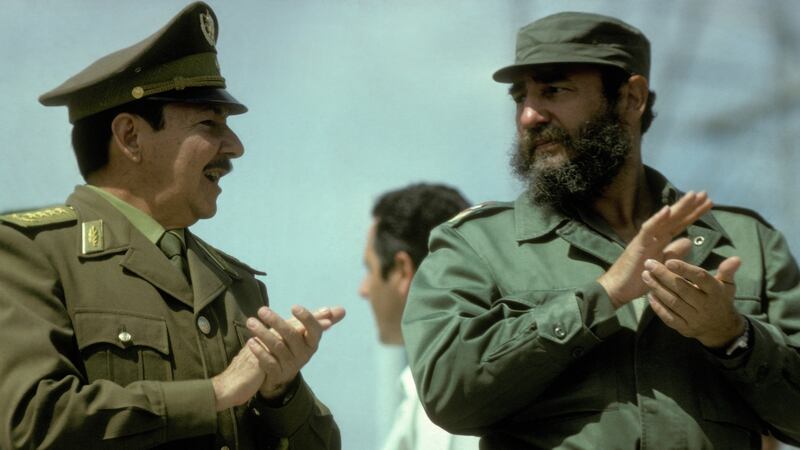
At a news conference in Miami, the acting attorney general, Todd Blanche, and Jason A Reding Quiñones, the US attorney for the Southern District of Florida, accused Raul Castro and the pilots of killing four people when the Cuban military shot down the planes on February 24th, 1996.
The planes were operated by Brothers to the Rescue, a Cuban exile group that often scoured the seas for Cubans fleeing the country.
Fidel Castro took responsibility for the shooting down of the planes shortly after they were brought from the sky, claiming that the organisation had been dropping anti-regime leaflets over Havana in earlier flights. The indictment said Raul Castro was also responsible because he and his brother were “the final decision-makers” in the Cuban military chain of command.
The Cuban government, in a statement, rebuked the United States.
“It is highly cynical for this accusation to be made by the very same government that has murdered nearly 200 people and destroyed 57 vessels in international waters of the Caribbean and the Pacific, far from United States territory, through the disproportionate use of military force,” it said. – This article originally appeared in The New York Times. Additional reporting: Reuters