
Jalil Muyeke could make out an outline of his surroundings when lightning lit the sky with flashes of blueish white. Through the dark sheets of rain, he saw rice paddies and swamps.
One thing was clear. He was in deep trouble.
Muyeke had left his native Uganda after a friend offered him a marketing job in Thailand. It offered more money than the 35-year-old made as a mattress salesman in Kampala, and with it the promise of a better life.
But when he arrived at the airport in Bangkok in August 2023, he noticed the visa stamped in his passport would allow him only three months in the country. The job he’d been promised was meant to last six.
READ MORE


A driver, with tattoos running over his arms and neck, picked up Muyeke and another Ugandan man, dumping their bags in the back of his car. Muyeke assumed it would be a would be a 30-minute ride from the airport to the city centre. Instead, they drove for eight hours. Panic bubbled in his stomach.
Finally, the men reached what Muyeke would later learn was the Thailand-Myanmar border. The driver abandoned them at a hotel in the pouring rain. Muyeke thought he’d been kidnapped; that his organs would be sold on the black market. He and the other man barricaded the door to their room by pushing a bed against the door. “We were up all night,” Muyeke said.
In reality, Muyeke had been trafficked to work in a cyber-scam centre. According to the United Nations, hundreds of victims from 66 countries have gone through the same since 2020. The industry is valued at about $64 billion annually and is still growing.
In Uganda, young people who have made it through secondary school face the highest unemployment rate in the country, with nearly 30 per cent out of work, according to a 2025 survey by the Uganda Bureau of Statistics. The desire for money and success also pushes many to seek work abroad, said Bright Bygengoma of Everfree Uganda, an organisation that supports survivors of human trafficking.
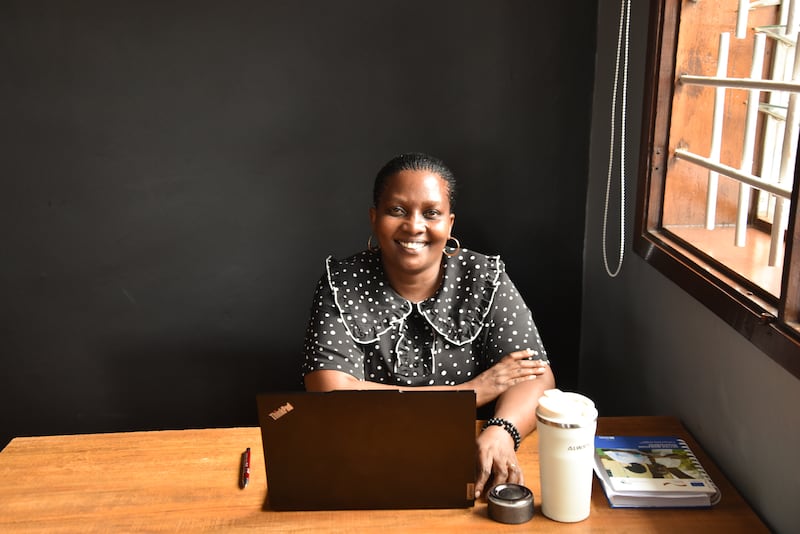
“There’s a mindset about being an expatriate,” she explained. “The cost of living is higher, so you get better pay and are able to look after your family.”
The next morning, another driver arrived to ferry Muyeke along the back roads into Myanmar. He only realised he’d crossed a border when the driver shifted from the left to the right side of the road. Eventually, they reached a tall wall in the middle of the jungle. Behind it was a network of concrete buildings. In the crowd of workers was the friend who had recruited Muyeke, now acting as a translator for the compound’s Chinese bosses.
Muyeke was handed a contract and signed it quickly, afraid of what would happen if he refused. Then, one of the bosses laid out the truth. “Here we do scamming. This is world war three.” Muyeke believes the man was referring to an economic battle with the western world.
He was given a phone and told to download dating apps such as Tinder and Christian Mingle. He was then forced to participate in “love scams”. Using a carefully constructed script, he would pose as a woman and target older men online, often widowers and divorcees. A woman who had been trafficked from Uzbekistan acted as the “model,” providing photos and videos. When they got a match, Muyeke and others like him would describe an opulent lifestyle of private yachts and luxury restaurants, paid for by cryptocurrency.
The goal was to get a WhatsApp number, which compound bosses would use to encourage the target to invest in crypto. The experience unsettled Muyeke. “You really feel for someone,” he said. “You’ve heard their story, you know how they’re struggling, and then you are here wanting to take everything they have.”
Whenever he could, Muyeke would pass the WhatsApp number to his bosses and then warn potential victims they were about to be scammed. This meant those people were not considered “productive”, which resulted in him being beaten, having electric Taser-type devices used on him and being forced to carry heavy water canisters between rows of desks. The goal, he told The Irish Times, “was to humiliate you; to abuse you”. If his bosses knew he was exposing their schemes, Muyeke claims, “they would have killed me”.
The friend who recruited him soon left, having drawn Muyeke in to serve as his replacement. This is one the few ways out of scam centres, experts have told The Irish Times. Trapped, Muyeke connected with other Ugandans in the compound and looked for a way out himself. When one of the Ugandan women grew ill, Muyeke took a chance and told his bosses that he could take her back home. To his shock, they agreed to drop him, along with the sick woman and another poor-performing scammer, on the Thai side of the border.
Stories like Muykeke’s are not uncommon. A report released in February 2026 by the office of the United Nations High Commissioner for Human Rights details torture, solitary confinement and sexual abuse in a network of compounds across Cambodia, Laos and Myanmar, as well as in the United Arab Emirates.
Victims are frequently lured into jobs with false promises, often through friends and family members. “Trust is a really central part of the recruitment pathway,” said Pia Oberoi, one of the reports’ authors. Those lucky enough to escape the compounds are often classed as irregular immigrants. Only a handful of African nations offer consular services in affected countries, Oberoi said, leaving escapees with few legal routes home. Muyeke said he spent weeks in a Thai jail for overstaying his visa before finally being allowed to board a flight back to Uganda.
Several months after Muyeke escaped Thailand, Waridi*, a 30-year-old Kenyan woman, heard about a job in a hotel there. It seemed like a good way to support her parents and younger siblings. But instead of the job she’d been promised, Waridi was taken to a complex deep in Myanmar’s jungle. She was forced to simulate fake relationships with older men online.
When Waridi didn’t make enough money scamming, she was locked alone in a dark room. Other women, she said, faced sexual abuse. “They have guns,” Waradi said of scam centre bosses. “They can choose to do anything to you.” Survivors from Myanmar told the United Nations they were raped, forcibly impregnated, and threatened with forced sex work if they did not meet scam targets.
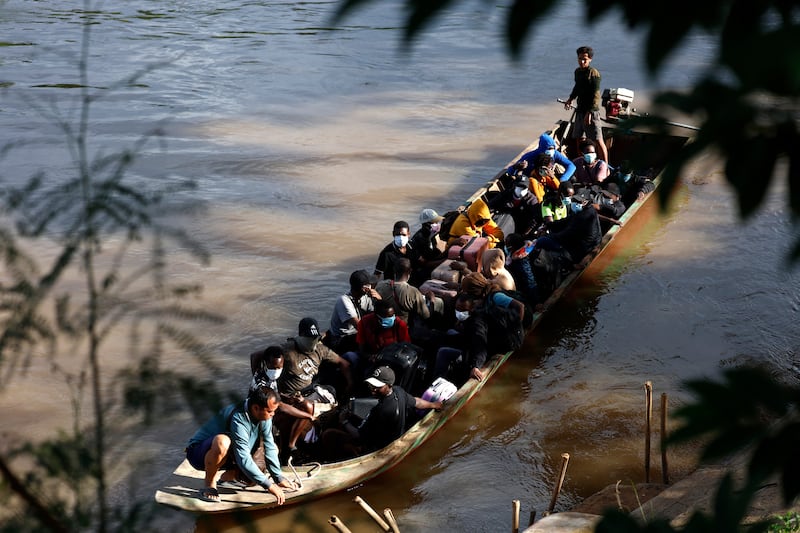
Phillip* also longed for money and opportunity. When a friend offered the 26-year-old Ugandan a data processing job in Vietnam he accepted it. He was instead taken to Cambodia by boat, forced to lie in the hull under a heavy tarp. “I thought I was going to die,” recalled Phillip, who does not know how to swim.
Finally, they reached an outpost of brothels and casinos that concealed the building where Phillip had been brought to work. He was given a computer and made to take part in a scam recruiting people to make false investments. His role was to assess how much money potential targets had and pass that information to his bosses. It also meant that victims came back to him to complain when they found out that they had been duped.
Phillip said victims sent him pictures as they prepared to take their own lives and blamed him for losing their homes and marriages. “You feel depressed. You feel stressed,” he said. But he was also afraid of what would happen to him if he stopped.
In August 2025, two of his friends were beaten to death on the suspicion of stealing money. The camp enforcers’ goal, Phillip thought, was to “show us what they were capable of. They told us they owned us; that they can do whatever they want to us, and no one can do anything.”
The Irish Times could not independently verify the specific deaths Phillip described, but his account is consistent with descriptions of abuse and murder in the United Nations report.
Early this year, the Cambodian government initiated a series of high-profile raids on scam compounds. When Phillip’s camp was attacked, he escaped in the chaos and found an apartment with other African men trafficked to Cambodia.

A June report by Amnesty International, however, argues that these actions rarely succeed in shutting down the lucrative centres. Montse Ferrer, Amnesty’s regional director, said the government in Cambodia often failed to actually shut down known scam centres, while criminalising survivors. “The industry being able to thrive in Cambodia is specifically because you have an elite that has allowed it to thrive,” she said.
Raids on scam compounds by the Myanmar military last October and November were chaotic, according to Jason Tower, a senior expert at the Geneva-based Global Initiative Against Transnational Organized Crime who focuses on illicit economies in southeast Asia. “You have a whole bunch of performative actions where a scam compound is raided and tens of thousands of people are on the street fleeing,” said Tower. “That makes no sense from a law-enforcement standpoint.”
[ Sighting of Aung San Suu Kyi comes amid diplomatic offensive by Myanmar regimeOpens in new window ]
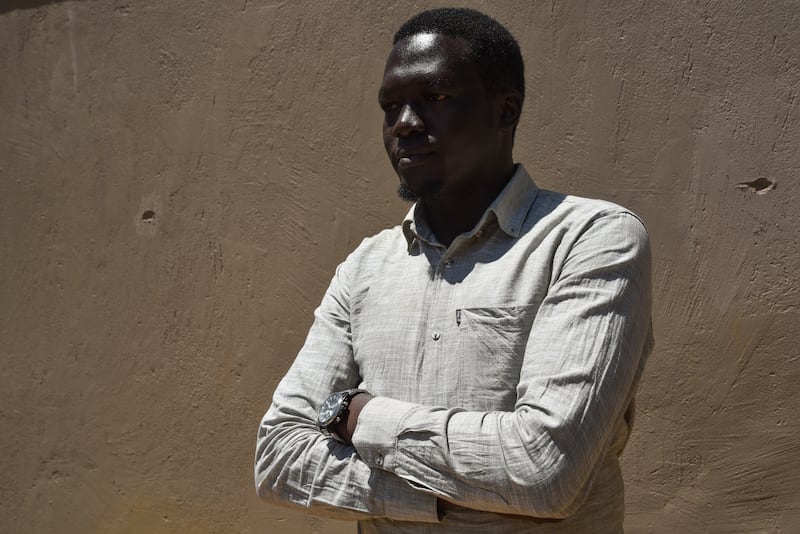
Mukeye now works with other survivors of trafficking as a programme officer at the anti-trafficking organisation Freedom Collaborative, Inc. He has shared his story with other outlets, including the New York Times and the BBC, and said it brought him comfort to help others facing the same challenges he did.
“If I can help just one person get back to their family, it would give me great satisfaction, as I know I would have eased the suffering of someone,” he said.
Waridi said she often thought about the time she lost in Myanmar. Phillip was looking for work when he spoke to The Irish Times. Still, he implored other young Ugandans not to fall for the same false promises that he did. “It’s life and death with this kind of job,” he said. “It’s life and death.”
*Name has been changed to protect identity


