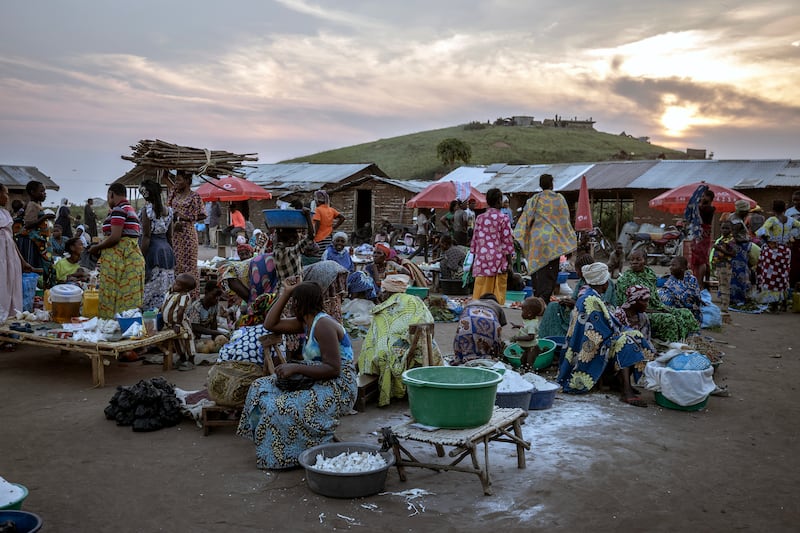
Four deaths happened in just 24 hours. The families were told they needed to bury the bodies themselves. Workers at the morgue were too busy to help. Nineteen people had already died in the camp that month, many more than usual.
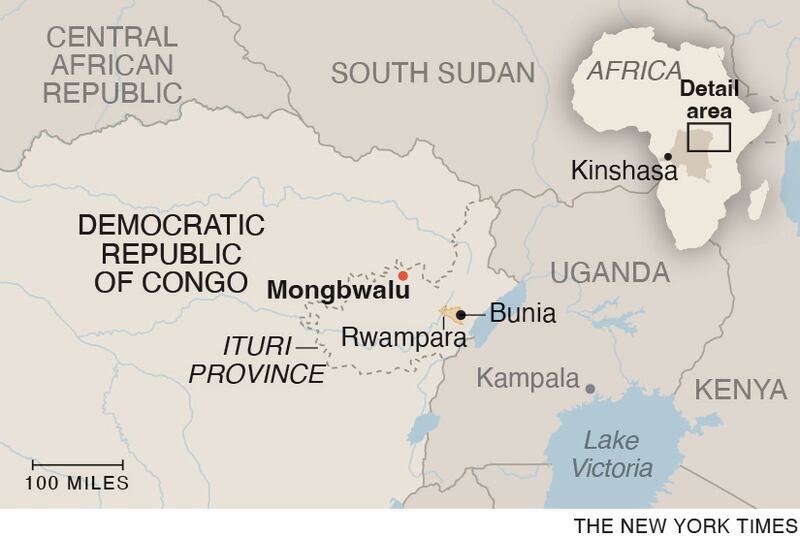
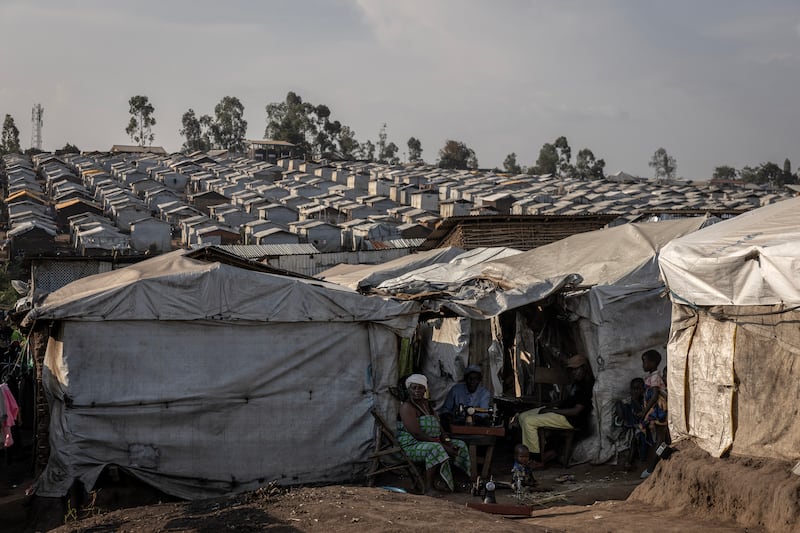
Here in the camps dotted around Ituri province, the epicentre of the Ebola outbreak in the Democratic Republic of the Congo (DRC), the virus appears to be spreading among the cramped tents that house more than one million displaced Congolese.
Despite an influx of aid and health workers since the outbreak was first officially declared in May, the battle against Ebola remains a staggering challenge – and the camps are a stark example. Sanitary conditions are dire. Access to basic nutrition is limited. Patients vanish down winding alleys. Tracing people who may be infected is a Sisyphean task.
With the death toll from Ebola skyrocketing in DRC, attention has turned to these camps, where some of the country’s most vulnerable people live after fleeing violence elsewhere in Ituri province. More than 80 per cent of new Ebola cases in eastern DRC are being detected outside known contact lists, World Health Organisation (WHO) chief Tedros Adhanom Ghebreyesus said this month.
READ MORE


Many of the new infections are happening in communities where people have little to no access to health facilities – communities like these camps.
Recent strikes by unpaid health workers, attacks on Ebola treatment centres and highly mobile populations have made matters worse. Congo’s health ministry has recorded 3,442 confirmed Ebola cases and 1,521 confirmed deaths as of last week. The WHO has said the real numbers may be two to four times higher.
The Ebola outbreak in Congo has become the second-worst on record, and it is spreading much faster than previous outbreaks, the nation’s health ministry reported last week.
Put another way, the species of Ebola behind the current outbreak, Bundibugyo, has killed more than five times as many people as previous outbreaks did in the same amount of time, officials from the Africa Centres for Disease Control and Prevention said at a press briefing on Thursday last.
By far the biggest problem in the camps is the severe lack of water, according to officials at two different camps in the province. It makes one of the central pillars of fighting Ebola – proper sanitation to halt the spread of the disease – next to impossible.
One camp, Kigonze, is home to 20,000 people and has only a handful of communal water stations. Residents stack yellow containers while waiting their turn at the spigot.
At the Tsere camp in Rwampara, just outside Bunia, the provincial capital, more than 6,400 people share a single water tank. Latrines overflowing with faeces have not been maintained since they were built in 2023, residents said.

“During Ebola, we need to wash our hands all the time to avoid contamination,” said camp president Esther Mave. “But how can we do that here when we don’t have taps and sinks and soap?”
The lack of sanitation in the camps is in part due to the recent foreign aid cuts under US president Donald Trump. Data compiled by the United Nations (UN) showed that funding for toilets and hand-washing stations in DRC was cut by more than half between 2024 and 2025.
At least 55 people had already died in Kigonze between early April and late June, according to Etienne Dz’Djo Ndrutsi, the site’s president, who added that the camp usually averaged just two deaths per month. At least four of those deaths were confirmed Ebola cases, he said. But many more families had declined testing for lack of trust in the authorities after years of neglect.
“We need more beds to put all the dead bodies,” Ndrutsi said. “I’m afraid we will all die from Ebola here in this camp.”
Dozens of women and children recently crowded together under a corrugated metal roof of a building made from sticks and mud as they pressed against the coffins of three people who had died in the past 24 hours at Kigonze.
The dead – two men and a woman – had all shown symptoms of Ebola, including fever, headaches and vomiting, but swabs taken from their corpses had yet to be tested for the virus, which is highly infectious in dead bodies.
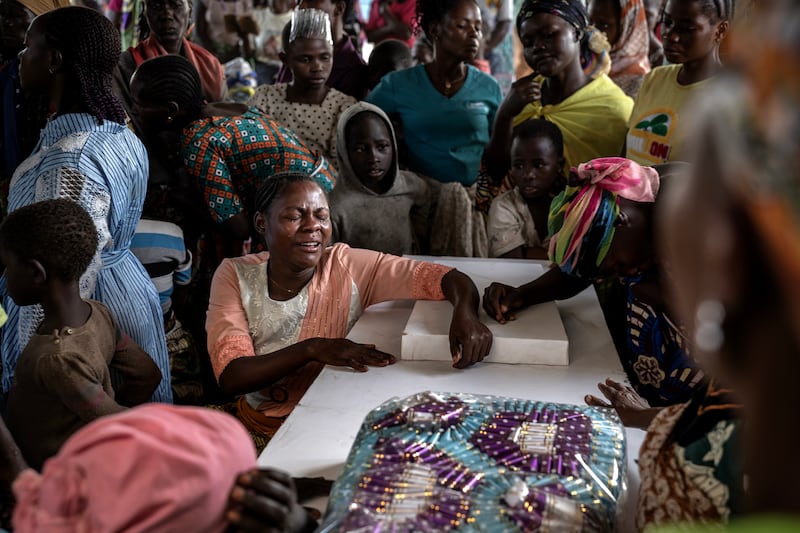
Women stroked the caskets as they sang and wept. Hundreds more swarmed the coffins as they were carried past makeshift shelters. Crowds then clambered on to a truck transporting the bodies for burial. Mourners sat atop the caskets while children ran behind the truck as it bounced along the road toward the cemetery.
Camp residents are displaced from their homes because of decades of violence between rival ethnic militias and armed groups vying for land, control of lucrative trade routes and access to gold and timber.
For residents, Ebola is just another threat.
Renewed fighting in Ituri has displaced 361,000 people since December, bringing the total number of displaced in the province to 1.3 million; according to the UN insecurity has also hampered humanitarian efforts in the region.
“When there are clashes, children have been shot and killed in the crossfire. Another picked up an explosive and was killed,” camp president Mave said.
Dr Jean Kaseya, the director-general of the Africa Centres for Disease Control and Prevention, said the response to the outbreak needed to address more than just the health crisis to effectively reach people in the camps.
[ France reports Ebola case in doctor returning from CongoOpens in new window ]
“The humanitarian response is critical today, as important as the health response,” he said. “Because we will not defeat this Ebola outbreak without dealing with the humanitarian issue.”
As international aid has arrived, camp residents who languished for years with little outside help have looked on sceptically. The contrast is stark at Tsere, located 200 yards from a new clinic run by medical charity Alima.
“We can see them building an Ebola treatment centre across the street, but they haven’t done anything here yet,” said Baudouin Unega, a 74-year-old camp resident. “They come, they do investigations, then they go away. They tell us there is no more funding, just to be patient.”
Camp residents work as labourers on local farms and sell firewood, but even that lifeline has frayed during the epidemic. Many local farmers have fled the virus, leaving the displaced with even fewer sources of income. “We want to leave the camp,” Unega said. “Nobody wants to live here, but there are no funds for us to leave.”
As he spoke, the Tsere camp recorded another death. Espérance Raciu Ucwimungu (40) died of Ebola-like symptoms on a recent afternoon. Her sister Chantal Imani (32) and daughter Wivine Biwiga (23) grieved outside the one-room hut they had shared with Ucwimungu.

Despite deplorable conditions and the fear of Ebola hanging over the camps, life goes on. Children chase each other through narrow alleyways. Markets do a brisk trade in basic goods. Women wash laundry and braid each other’s hair in the shade.
On the evening of the recent funerals in Kigonze, 18-year-old Isaak Dieume pressed a worn trumpet to his lips. Children gathered around, and women preparing a meal nearby looked on as he played a gentle tune.
Crisp notes hung in the air, their metallic sound offering a moment of joy on an afternoon of sorrow and loss.
– This article originally appeared in The New York Times.