

Mikel Arteta is the longest-serving manager at his current club in not just the Premier League but in England’s top four divisions.
Arteta is beginning his seventh full season at Arsenal, having been appointed midway through 2019-20. It is fairly remarkable that his comparative longevity means Arsenal have had only five managers since 1986 – George Graham, Bruce Rioch, Arsene Wenger, Unai Emery and Arteta.
Arsenal have won six league titles in that period, been runners-up nine times, won nine FA Cups, two League Cups and built a 60,000-capacity stadium. There are still Arsenal fans indifferent to the new home, and the leaving of Highbury coincided with a 22-year wait to be champions again, a wait ended in May; but, if not in Europe, Arsenal’s sustained domestic success would suggest continuity of personnel and club behaviour is a policy to appreciate.
Some of us, perhaps carried away by a desire to see serious competition back at the top of the Premier League following Manchester City’s Pep Guardiola-inspired dominance, saw possibilities in the fact Arsenal’s title last season meant a third different winner in three seasons. After City and Liverpool, did Arsenal’s victory signal a welcome new age of variety?
READ MORE


Given the skewed nature of modern football economics and the financial tilting of a once-level playing field – between 1959 and 1972 England had 11 different clubs as champions – this was longing rather than hard-headed analysis.
Sure enough, three months on, the flux at the clubs beneath Arsenal hints that we could be on the cusp of the Gunners replicating City’s tight grip.
While elsewhere football’s ongoing addiction to change is unceasing, Arsenal represent continuity. In Oliver Glasner, for example, Nottingham Forest are on to a fifth manager in less than a year. Forest started last season with Nuno Espirito Santo still in charge. He lasted three games before Ange Postecoglou, Sean Dyche and Vitor Pereira shuffled in and out of the City Ground’s revolving doorway.

Glasner left Crystal Palace, meaning they have a new coach. So do Liverpool, Bournemouth, Chelsea, Fulham, Ipswich and Newcastle United. Add Michael Carrick at Manchester United and Roberto de Zerbi at Tottenham, neither of whom were in charge of their clubs last Christmas, and change is relentless.
But much of it is simply not strategic. Man City have enough accusations to fend off without being included. Guardiola stayed a decade, after all, and they were readying Enzo Maresca as a replacement from early last season; hence his Chelsea rupture.
If City and Maresca can be excused the charge of making a change for the sake of it, Maresca is, nevertheless, a new club head coach. He has worked inside the club before, so there is an element of continuity but change at City is not confined to the dugout. Rodri, Bernardo Silva, John Stones, Manuel Akanji, Nathan Ake and Tijjani Reijnders have all departed. Five of them were either on the pitch or bench when City beat Arsenal 2-1 in April.
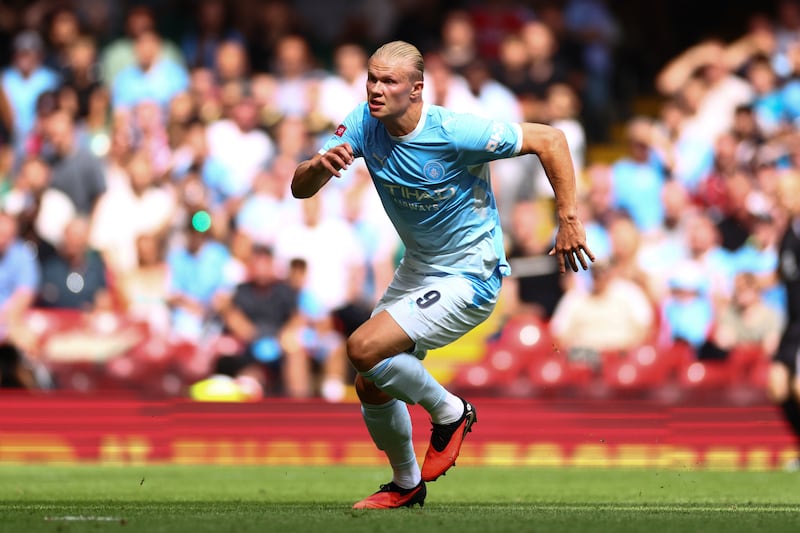
How the club copes with the switch to Maresca, and how he copes with a changing squad, will be informative. Anything is possible with Erling Haaland up front, but City may be looking at a two-three year evolution. Will the club view Maresca as the continuity candidate when, as it did with Arteta at Arsenal, things get tough?
It is reasonable to argue managerial continuity for the sake of it is not logical if a downturn is pronounced and stemming from the head coach, but persevering is not illogical either. We have seen many times the disruption caused by kneejerk managerial change and in Arsenal-Arteta we have evidence of the wisdom of sticking rather than twisting.
Of course there are many other factors in achieving success, and Arsenal have invested heavily in the past two seasons. We should probably not forget the questionable VAR intervention at West Ham in May when Callum Wilson had a late equaliser disallowed. A draw then would have cut Arsenal’s lead to three points and City had a game in hand.
But we can also say that had Arsenal cut Arteta adrift in the moment of greatest anxiety, continuity at the training ground would have been affected, so too recruitment, patterns of play and the overall approach, the club’s philosophy itself under Arteta.
Yet change could have worked. At Brentford last summer all the talk was about how Keith Andrews was unsuitable as Thomas Frank’s successor, how Andrews would be the first Premier League coach sacked. Andrews was new in the role. But he had already spent time inside Brentford and, besides, the club has a defined structure and smart people running it for a long time. The change they made in Andrews was in the context of club continuity.
It can be blurred. Ruben Amorim was United’s change in November 2024; by this January he was discontinued. Carrick was sought. First he was the change, then quickly, almost simultaneously, the continuity candidate.
Brentford finished ninth last season, one point off European football. Andrews has been given a contract extension to 2032 – Brentford showing faith in him and their processes.

Sunderland squeezed past Brentford on the final day and will play in Europe for the first time in more than half a century. They were also doubted this time last year, having brought in 13 players, including Granit Xhaka, and sold or moved on eight, at a net cost of £150 million. It was change verging on upheaval. Yet it worked.
Fast forward 12 months and Sunderland have signed one player on a free transfer, Thomas Meunier, and sold a couple. There is some fan angst at the lack of trading, but not from head coach Regis Le Bris. Crucially, the club has retained the likes of Xhaka. The belief is in their second season together, Le Bris’s team should know more, link better.
“It’s part of my methodology,” he said on Thursday, “I like continuity.”
Le Bris made the valid point that watching a club with lots of transfers can make us think “this club is working hard”.
But, as he then asked, “is it efficient? Sometimes it is better to keep the core, to strengthen with less movements. It doesn’t mean we are less efficient. It’s quality over quantity.”
In an industry Le Bris calls “really fragile”, he is now the fourth longest-serving Premier League manager. Emery at Aston Villa and Daniel Farke at Leeds are ahead of him, as is Arteta. There is much hype about what Xabi Alonso can bring to Chelsea or De Zerbi to Spurs in his first full season, but a prediction is that Arsenal, Villa, Leeds, Sunderland and Brentford will all outperform expectations due to a realisation that continuity can be as effective as change.