

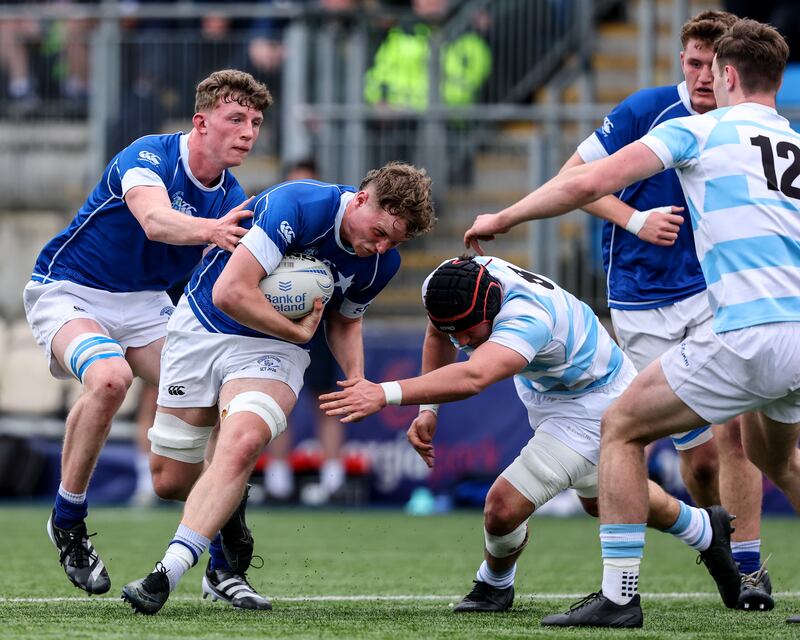
Jumping off the Luas, I bumped into the mother of an old team-mate, Stephen Grissing. She was still energised after watching St Mary’s College win the Leinster Schools Senior Cup for the first time in 24 years, having beaten Blackrock College after a replay.
It offered an instant reminder of the place that schools rugby holds in some hearts and minds across the four provinces.
It got me daydreaming on the walk home. Images, memories. Clongowes outhalf Richie Governey kicked a touchline conversion to beat St Mary’s and secure a place in the decider.
Leinster’s outhalf dilemma
Denis Hickie was unplayable at fullback leading the Rathmines school to silverware. Geordan Murphy, a standout for Newbridge College in reaching a final.
READ MORE


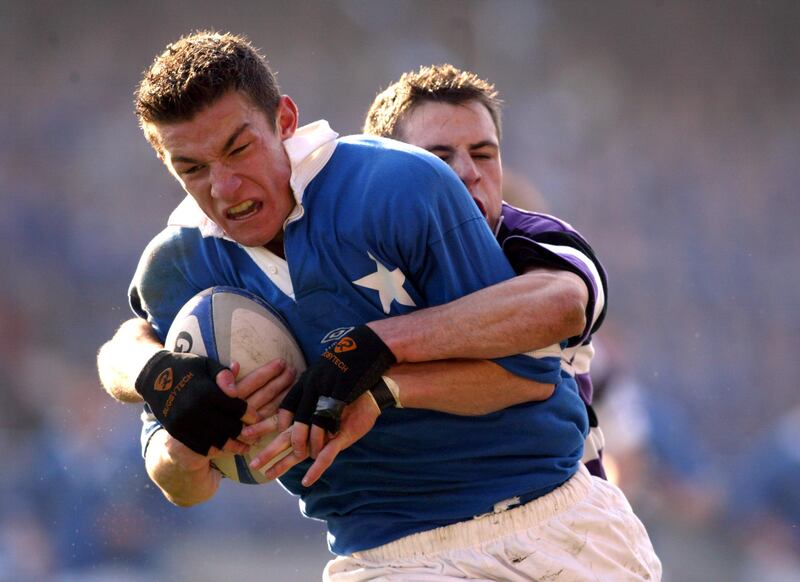
Blackrock’s self-proclaimed Dream Team led by Barry Gibney. The quality of players that came through the system at that time was remarkable, and it was a direct reflection of the coaching and the style of rugby being played. The game did not revolve around statistical minutiae. It was built around continuity, pace, and power, and the best teams had a mix of all three.
Every generation of players is shaped by the rugby being played by their antecedents, occasionally handed down directly by that peer group in the form of coaching. Young players are shaped by what they watch, by what excites them, by players whom they want to grow up to be.
Which is why, for all the valid conversation about where Irish rugby goes from here – squad depth, provincial form, the World Cup cycle – the question I keep returning to is a simpler one: what are the kids and their coaches watching right now, and what are they taking from it? Because if we are lucky, and I hope we are, the answer is something genuinely thrilling.
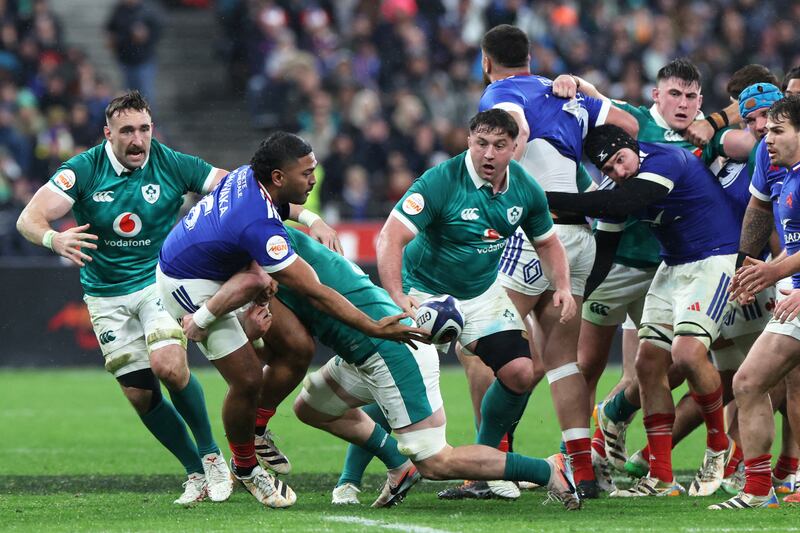
The Six Nations we have just witnessed was a topsy-turvy, rollercoaster ride, with rugby that had a genuine attacking intent, from the various teams in contention for honours. It wasn’t preprogrammed or sterile and didn’t adhere to the pre-tournament wisdom that suggested it was going to be a two-horse race.
Scotland moved the ball wide with purpose and conviction. France found options in transition that challenged the understanding of even the most skilful players. And Ireland started to find their mojo, their interpretation of a style of play, one that prioritised keeping the ball alive a little more pre- and post-contact to put dangerous players into space.
The difference is noticeable, even to an impressionable 14-year-old, who would not be drawn to thinking about defensive structures or set-piece dominance, but instead captivated by the attacking blueprint. The concern, and it is worth being honest about it, is whether school and underage rugby will reflect what they are seeing.
For a long time, the style that filtered down through Irish schools rugby was shaped, understandably, by what was winning at the highest level. Organised defences. Structured multiphase attack. Territory as a virtue. The influence of the Joe Schmidt era was enormous, but not always in ways that served individual creativity.
That is not a criticism of Joe. He coached fully-formed players, men who could go off script precisely because they had spent years developing the instincts to know when and how to do it. The system was the frame, not the painting. The problem was what happened further down the chain.
Coaches took the structure and sold it wholesale to teenagers who had not yet built the skills the system was designed to complement. Attention to detail became, in too many underage environments, an instruction to stay inside the pattern. Don’t do the unexpected; favour the `right’ thing.
There was an easy out for coaches too. Repetition is simpler to teach than creativity. And so, the safety of the system became the norm, not the foundation it was always meant to be. The risk now is that the next generation gets caught between two eras. Watching one style of rugby. Being coached, in some cases, in the remnants of another.
What gives me genuine cause for optimism is what happened in my own time coming through, and in the time of players like Stephen Grissing who came through the same school’s system, albeit in a different school.
The coaching and attitudes at the top filtered down. A generation of players emerged who were comfortable in broken-field play, with skill sets to match what they could see on the television. That cycle can repeat, but only if we allow it to.
The game is moving. The teams that are still wedded to a pre-planned, count-before-you-move phase play approach, are finding it increasingly difficult to keep pace. France did not become what they are by accident. They built generations of players who were taught that the ball was something to be used joyfully, not hoarded carefully.
Irish rugby does not need to tear anything up. The foundations, the work ethic, the defensive structure, the detail, remain essential and will always be bound by our limitations. But on top of those foundations, there needs to be permission.
Permission to play what is in front of you. Permission for a 10 to throw the pass his instinct demands rather than the pass the pattern prescribes. Permission, in short, to attempt the brilliant. The kids are watching. The question is whether, when they pull on their jersey for the first time, they will be encouraged to play the game that lit them up, or a version of the game that lit up someone else, a decade ago.
That, for me, is the most important conversation Irish rugby needs to be having right now.