

The most primal sound in the GAA is the roar during the pre-match parade on All-Ireland final day when every feeling from the build-up is distilled into one, sustained, rapturous earthquake of noise. For those couple of minutes only, the shouting is undivided. Nobody’s feelings have been hurt yet. Then the noise takes a seat and waits to be inflamed.
But when the ball is thrown in how much does it matter? How much of it is just about us, thrilled with the sound of our own voices?
When players are asked about the atmosphere at matches now the stock answer is that they try to block out the noise, however fantastical that might seem. The companion answer is that they’re focusing on playing the match and not the occasion, which sounds like a rehearsed response but always make sense. Those thoughts come from the same family as “controlling the controllables.” Nobody wants to be light-headed or overwhelmed.
But if players want to exclude the noise, why are more and more of them waving their arms towards the stands to whip up the crowd? Which is it?
READ MORE


For elite GAA teams, their relationship with emotion is more complex now than ever before. In Gaelic games, this is the Age of Control. Players are expected to make good decisions with their minds at room temperature. Achieving that biddable state in the heat of the arena is a collaborative work between the players and the team’s sports psychologist, but it is also the outcome of peer pressure: everybody is expected to keep their heads now. No ball wasted.
For football and hurling, this represented a massive ideological shift. Unlike other sports, where the season rolled on from week-to-week, and long-winded leagues determined success or failure, the GAA at every level revolved around a handful of set-piece championship matches, most of which were characterised as “battles” in the psyche of the teams.
To play these games without conscious emotion would have been seen as reckless and self-defeating. How many games were lost because one crowd “weren’t up for it.” For generations, emotion in the GAA was an essential fuel: a smoky coal with a ready flame and scalding heat. But in the Age of Control every serious team needed to reach a compromise with this; their emotions needed to be rationed and regulated, strictly sourced from an intravenous drip.
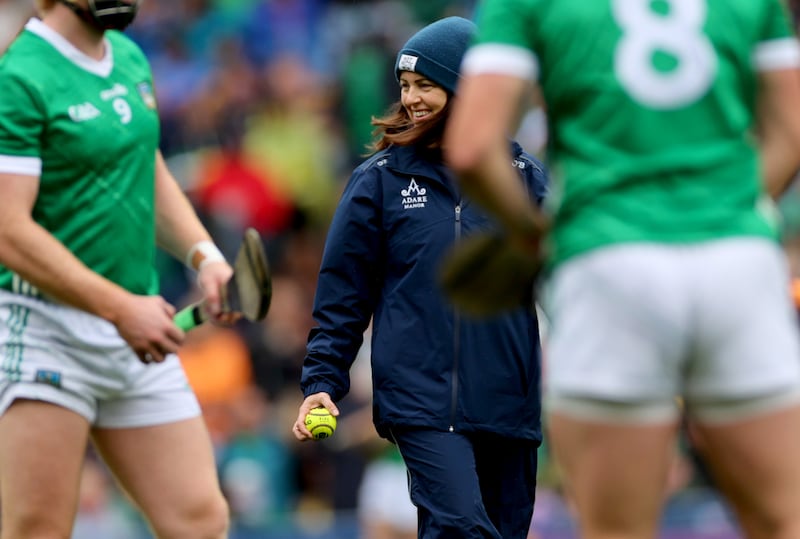
Richie McCarthy, the former Limerick full-back, spoke last week about the impact of the sports psychologist Caroline Currid on this group of Limerick players over the last 10 years. One of Currid’s repeated messages, McCarthy says, was “never play with emotion.” Her belief was that it led to inconsistency.
For decades, being hot-blooded and fiery on summer Sundays was part of Limerick’s self-image as a hurling tribe. It was indistinguishable from how they played. How often did an emotional approach work in their favour? That kind of audit was never done.
So, how does the crowd fit into this? Babs Keating said once that it was very hard to “play against the crowd in the last 10 minutes of an All-Ireland final.” If that is the case for finals it must be true for other big games in Croke Park too.
A couple of weeks ago, when Limerick were hunting down Clare in the closing minutes of the All-Ireland semi-final, John Kiely turned around to a Limerick section of the Lower Hogan and pleaded with them for more noise.
“They switched off,” Kiely said afterwards. “We needed them to do their job. There’s 15,000 of them behind me. Do your job. Support the team. When I turned around, they recognised it and straight away there was a reaction. I’ve got to know when those moments come. No point in going home today saying, ‘the crowd were very quiet today.’”
Kiely riffed on a similar theme after the Munster final, another one-score game that had gone down to the wire. “The support was just incredible,” he said. “Right when we needed it as well in those final minutes towards the end, they were fantastic, they’re great.”
None of this stuff can be quantified. But can you think of a game when the crowd noise carried an inferior team over the line? Can it ever have made that difference?
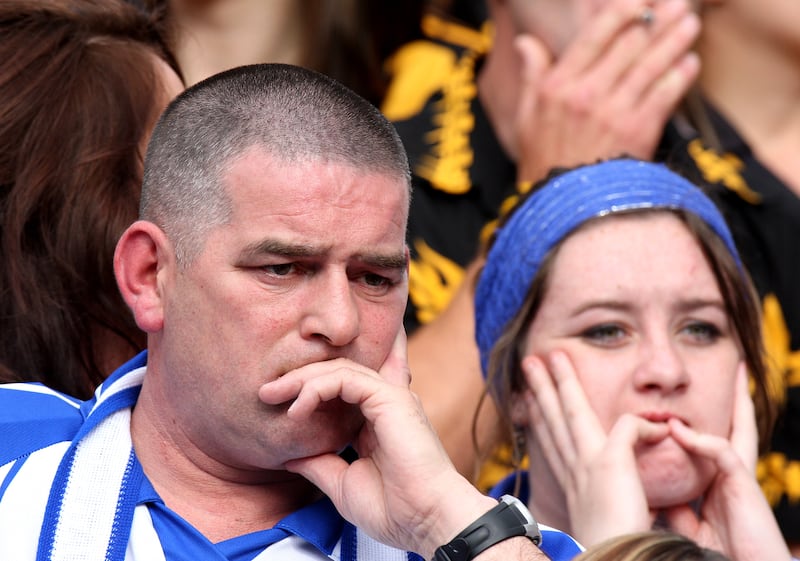
For every big game that Kilkenny played during their decade of dominance their supporters were outnumbered in Croke Park; it never mattered. When Waterford were seeking their first All-Ireland in 35 years in 2008, and arrived in Croke Park on a wave of emotion, the Waterford crowd was lionised in the build-up as their “16th man,” as if that might be a game-breaker. Kilkenny killed the crowd and the match with the same bullet, delivering the greatest first half performance in an All-Ireland final.
When Munster were on their Heineken Cup crusades in the first decade of the century, their passionate crowd was often cited as part of the difference, not just in Thomond Park but on the road. You will still see banners at Munster matches celebrating “The 16th man” but it is a long time since you heard anyone say that the Munster crowd influenced the outcome of a game. Was it just a romantic conceit to begin with?
In the new football championship fewer games than ever are being played at neutral venues. Of the 43 matches not played at a neutral ground this year, 24 of them were lost by the home team. The home crowd doesn’t always turn up; the home crowd sometimes hangs back and waits for the team to give them something shout about; that transaction is sometimes not processed. When a home team loses, nobody ever blames the crowd.
The Mayo crowd, who seemed so intrinsic to the team’s energy during the years when Mayo were chasing Dublin, will bring a fabulous noise to Croke Park on Sunday. Could that make a difference? Haven’t the Kerry players heard it all before?
Without emotion, though, the games would die an agonising existential death. Even in the Age of Control, emotion is the pulse of the spectacle. One of the great triumphs of the new Gaelic football rules is that emotion has been repatriated to what had become a sterile space. At football matches, the crowds are no longer sitting in elevator silence. They have new reasons to make noise.
Are the players listening? How could they not hear it.
Does it make a difference? That doesn’t matter.