“And now we’re told when you pass the ball back into the square, it’s only one pass. So you’re only allowed one pass. And next we’ll be told you’re only allowed to do it when the sun is shining into the east. What is it they want us to do? Do they not want goalkeepers to touch the ball?” – Kieran McGeeney, Armagh.
“The whole idea here was to try to protect the game and we’re not doing that – that’s not Gaelic football. You check a score at half-time of a game and it’s 17-0 to somebody, it’s a joke to be honest with you the way it’s gone. It’s a mix of outdoor basketball with a breeze, soccer-style defending with 11 behind the ball in zonal stuff, and a bit of rugby thrown in for a few scrums around the middle. I don’t like it, it’s not Gaelic football.” – Robbie Brennan, Meath.
“There seems to be a push from the FRC towards playing under fatigue. It seems as though they want players playing at the highest level under the highest tempo, under fatigue all the time. That’s what I feel is happening with every one of the enhancements. It always seems to revert back to that.” – Jim McGuinness, Donegal.
“We weren’t told about this rule change that apparently happened during the week. How can you implement a rule in a game that we haven’t been told about? Laois got a point off that and then we lose the kick-out and they get another point. When the incident happened, the linesman explained to me that if you take your solo and go outside the window of when you are supposed to take it, it is a free the other way.” – Andy McEntee, Antrim.
READ MORE


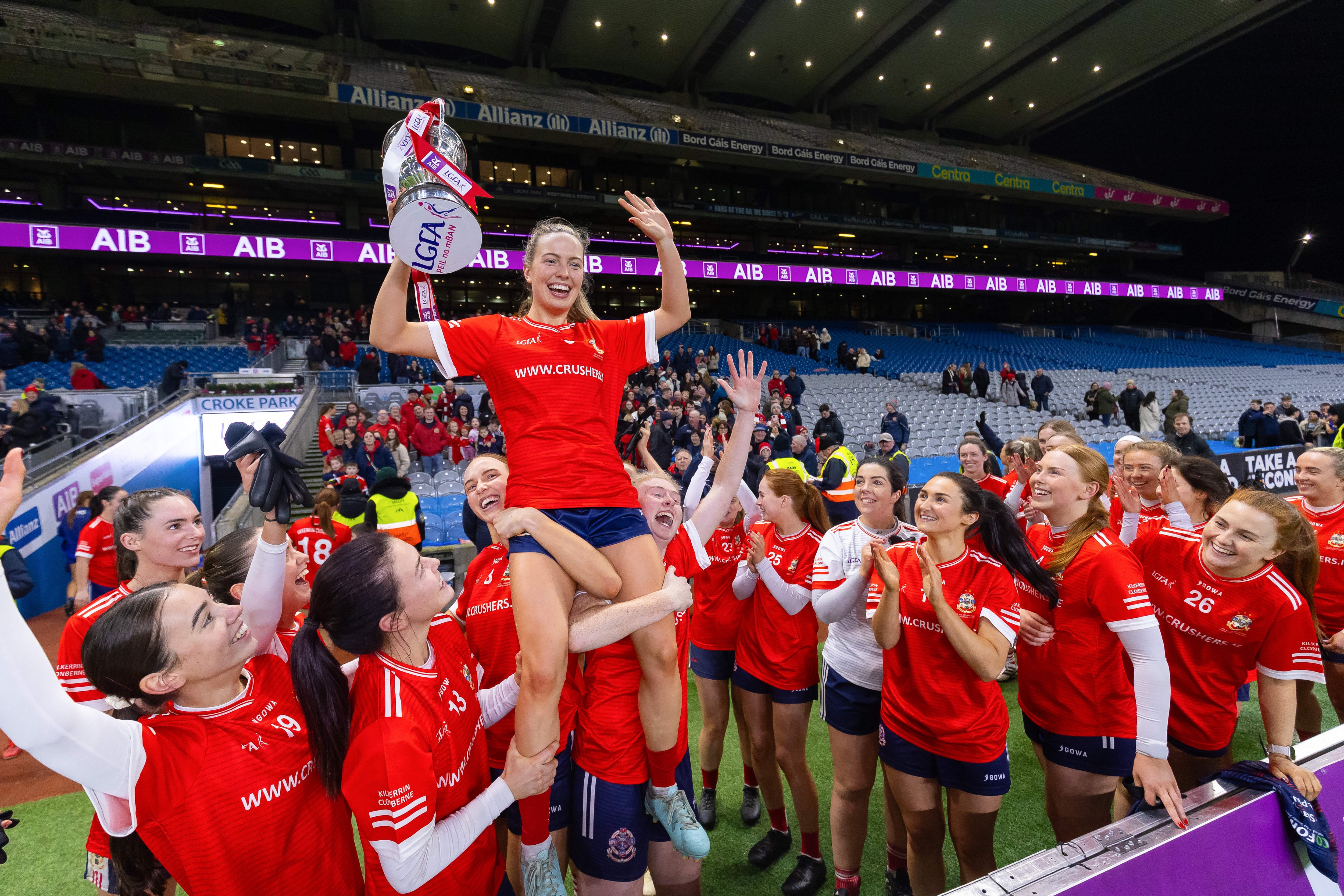

The managers are getting crankier each week. Anyone get the feeling the championship is getting closer by the minute? – Malachy Clerkin
Putting goalkeepers on the clock is answering a question nobody was actually asking
That’s not to say they don’t have a point. They have many points. The FRC have done a lot right but they’ve definitely dirtied their bib around the margins. Last week’s meddling with the time a goalkeeper can take over a kick-out was a perfect case in point. Telling referees to whistle up any goalie taking more than 20 seconds over his kick-out was answering a question nobody was actually asking.
On Saturday night in Armagh, the Dublin stopper Evan Comerford got blown for a delay when in reality, he’d actually only taken 15 second over his kick. Mistakes happen and it would be churlish to hold that one over referee Niall Cullen. The blame lies squarely at the door of the FRC, who created the conditions for it to happen.
“Listen, there was nothing wrong on that front anyway,” was McGuinness’s take on it. The Donegal manager had watched the Dublin game on Saturday night and was as confounded as everyone else by the busybodying that brought it about.
“Think about the game last night in reality. Dublin are 12 points down. They’re getting hammered in the game in that moment. And their keeper is blown for wasting time?! They need to get their hands on the ball! The last thing Evan Comerford was doing was wasting time.
“He did it under the 20 seconds anyway but that’s not the point. If Dublin are 12 points up and he’s strolling out killing time, that is a very different thing. The common sense part of, to me, doesn’t make sense.”

With championship so close at hand, the FRC could do with paring back a lot of the finicky bits and pieces. Nobody had a problem with goalkeepers slow-walking kick-outs – when it was egregious, everybody could see it and the referee could deal with it. This change wasn’t needed and doesn’t enhance anything. Scrap it and move on. – Malachy Clerkin
Clare up and running but relegation is not the end of the world
Clare’s reawakening on Sunday has at least given the All-Ireland champions and league holders a shot at staying in Division 1A of the hurling league. A lot done but more to do, as Brian Lohan’s team must get results from the two remaining matches against Cork and Tipperary.
Still, deservedly beating Munster champions Limerick was a good start, especially with half the All-Ireland winning defence still to return.
In recent years, the absolute need to be playing top-flight hurling before championship has been qualified by two lower-tier teams, Galway (2017) and Limerick (2018) taking home Liam MacCarthy. For all but one of the years since, until the current season, there has been an expanded Division One, containing all of the MacCarthy Cup counties, effectively insulating top teams against being demoted.
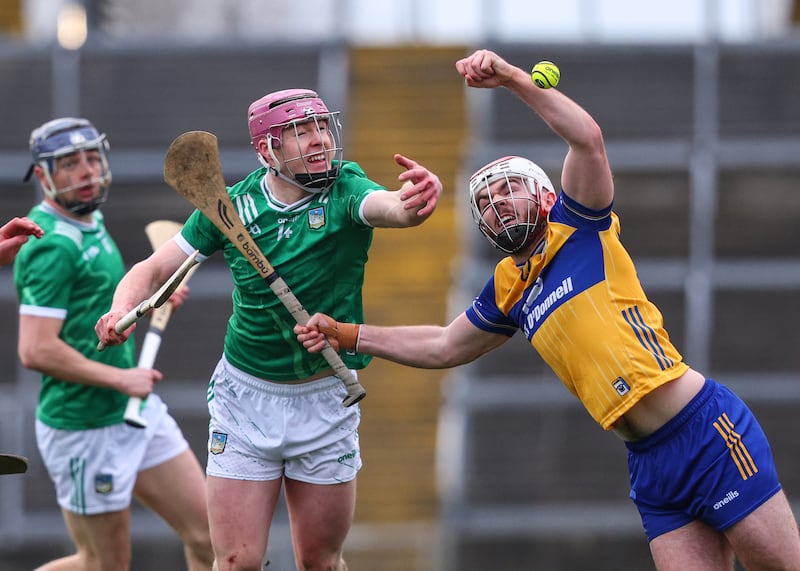
More relevantly, no county has been relegated as All-Ireland champions for 32 years. A quick summary of Kilkenny’s travails in the 1992-93 season saw them having lost three of their five regulation fixtures to Antrim, Tipperary and most eye-catchingly, Down.
Despite wins over Limerick and Offaly, Kilkenny were in the bottom two of Division 1A when the group stages ended in March 1993.
Wexford in 1997 – the first season with a calendar-year league – did finish in the relegation positions but the league was redrawn for the following season, sparing them the drop.
There were positive portents, however, emanating from Clare’s first win of this season, which included it being the county’s first league win in Limerick for 13 years.
If worse comes to worst and the champions end up retracing their predecessors’ faltering steps in 1993, at least consolation can be taken from the fact that by the end of that year, Kilkenny were back-to-back provincial and All-Ireland champions – an achievement Clare could yet emulate for the first time. – Seán Moran
Wexford footballers a Model for promotion from bottom tier
The Wexford footballers are the only remaining team in the Allianz Football League with a 100 per cent record. John Hegarty’s side missed out on promotion last year on the head-to-head metric – a controversial late penalty scored by Leitrim was all that separated Wexford from a top-two finish.
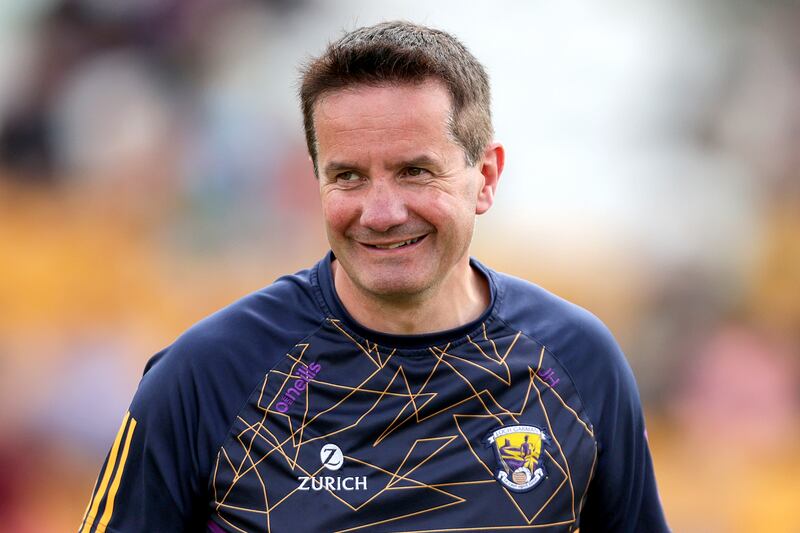
But having spent six years in the bottom tier of league football, Wexford are now within touching distance of promotion. Despite having only played four games, they are top of Division Four with eight points having won them all. No other team in the country has achieved victories in all their matches. And Wexford also boast the best defensive record in the country – having conceded only 45 points across four matches. That’s an average concession rate of just 11.25 points per game.
Clare, who have also only played four games, are next up with 56 points conceded – an average of 14 points per game while Kildare have shipped 62 points in their five fixtures – an average of 12.4 points conceded per outing.
Admittedly, the scoring rates tend to be higher up the divisions but Wexford’s businesslike start to the year has been productive – wins over London, Limerick, Carlow and Waterford have put the Model County on course for Division Three football for the first time since 2018.
“Any team that is in Division Four, their only target in life is to get promoted. In the world of Division Four, all that matters is league points,” Hegarty recently told Wexford Weekly.
It can be easy to forget that for some teams the most important games of their season take place long before the provincial championships begin. – Gordon Manning
Another clampdown on head-high tackles required in hurling
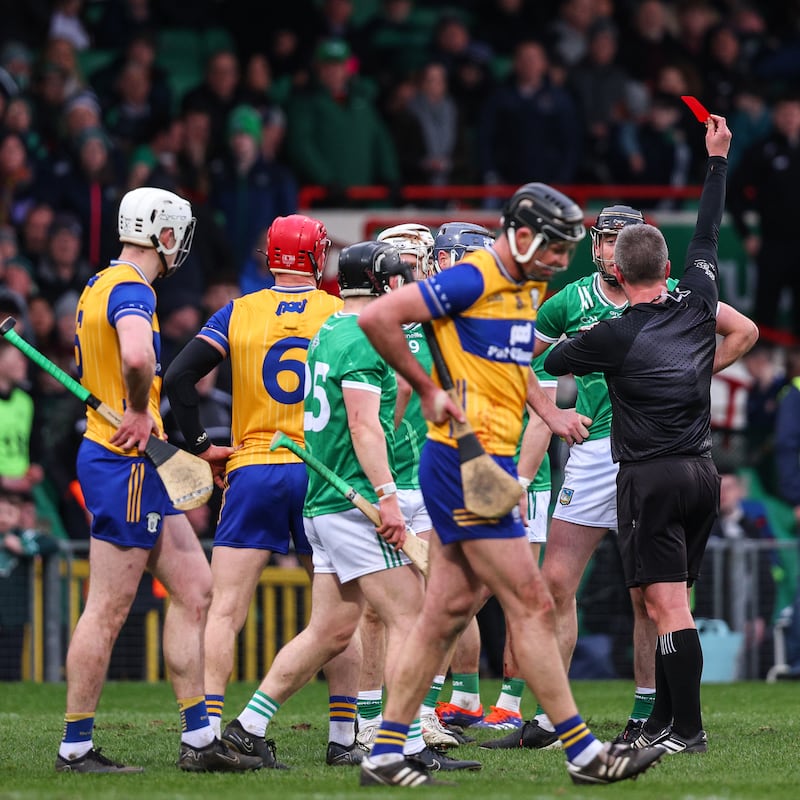
One of the great hypocrisies at the heart of the GAA is that nobody wants to see anybody sent off and yet people scream blue murder if the rules aren’t applied. According to the rules there should have been a blizzard of red cards in the top tiers of the hurling league over the weekend; in the event, there were a couple. In the same rule book that lays down the law, however, there is also a degree of latitude.
Diarmaid Byrnes was dismissed on a straight red card late in the Limerick-Clare game in the Gaelic Grounds; it is unclear if he was punished for his original tackle on Tony Kelly, or for his swinging arms in the melee that followed.
However, every other player that contributed to the melee escaped sanction. In part two of the GAA’s Official Guide, where playing rules are set down, contributing to a melee is clearly defined as a Category III offence and the penalty is to “order offender off.” In club competition this rule is often applied. But not in the Gaelic Grounds on Sunday.
The head high tackles by Tony Kelly and Mike Casey should also have been met with red cards, according to more than one rule. “To strike or attempt to strike an opponent with a hurley with minimal force,” is a red card offence. “To strike an opponent with force or causing injury,” is also punishable with a red card.
“To behave in any way which is dangerous to an opponent, including to deliberately pull on or take hold of a faceguard or any other part of an opponent’s helmet,” is also a red card offence.
However, “To use the hurley in a careless manner,” is only a yellow card infraction. Was this the lesser offence that referee Tomas Walsh adjudged appropriate in these instances? Possibly. In that case, Casey avoided a yellow card.
In the Waterford-Dublin game, however, Cian O’Sullivan was correctly sent off for making shoulder to head contact with a Waterford player. In the Cork-Kilkenny game Cian Kenny escaped sanction for head-on-head contact with Ciaran Joyce. The referee was standing just metres away. Did he deem the contact accidental? Evidently.
At the beginning of 2019 there was a concerted clampdown on the scourge of head high tackles, resulting in a number of controversial red cards at the time. The impact on behaviours that season was noticeable. In all contact sports players have a duty of care to their opponents. Without that, chaos would ensue.
Sometimes players need to be reminded of their responsibilities. Another clampdown needs to happen immediately. – Denis Walsh