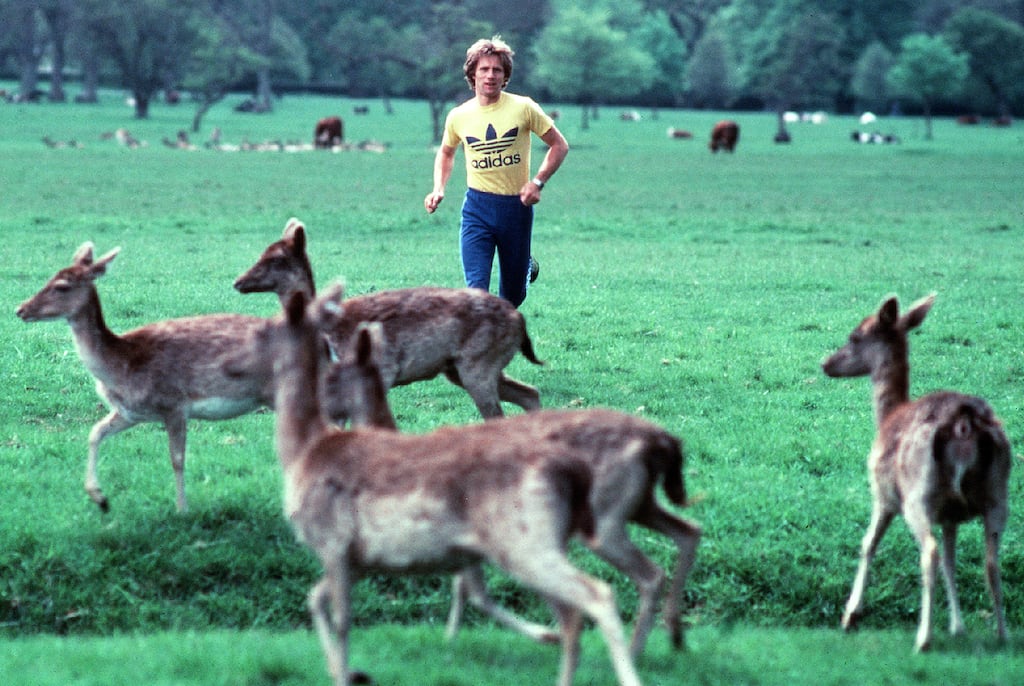

When Eamonn Coghlan was six years old, his dad Bill brought him to Dublin’s Phoenix Park on St Stephen’s Day to watch a cross-country race. Like many before him and in all the years since, little did Coghlan realise how this race would have a profound impact on his life.
The Waterhouse-Byrne-Baird Shield was, and still is, the oldest and longest consecutively run club cross-country race in the world. It was first staged by Donore Harriers in 1896, three years after the club was founded by six runners who trained together along the Royal Canal.
A 10-mile handicap race starting and finishing at the same tree beside the Dog Pond, the Waterhouse-Byrne-Baird Shield takes in five loops around the old horse gallop, one of the flatter sections of the Phoenix Park. It does get tricky in winter, always renowned as the maker of champions and of men – and, later, of women too.
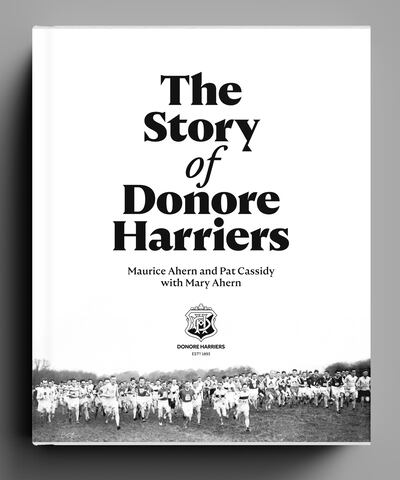
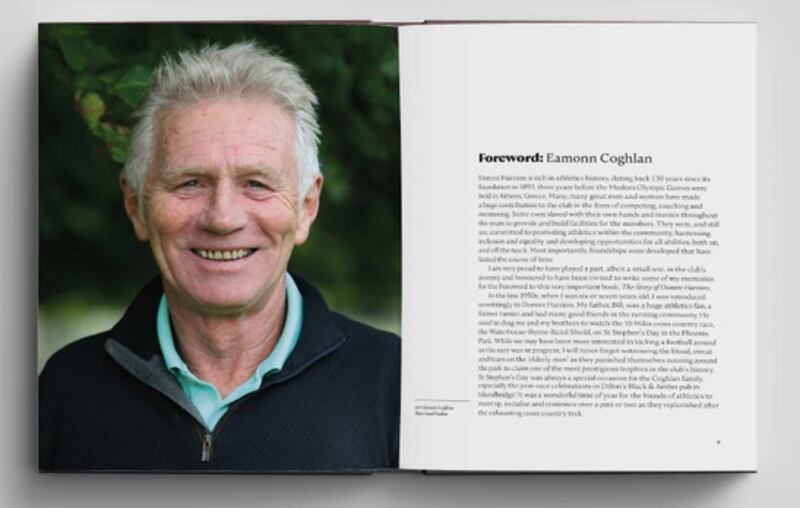
Coghlan recalls this event in his foreword to The Story of Donore Harriers, newly published under the hardback cover of the club’s distinct black-on-white colours, with 20 chapters, 396 pages, a myriad of magnificent photographs, plus the full history of club records.
READ MORE


“While we may have been more interested in kicking a football around as the race was in progress,” says Coghlan, “I will never forget witnessing the blood, sweat and tears as they punished themselves running around the park to claim one of the most prestigious trophies in the club’s history. I knew that one day I wanted to be a runner, just like them.”
Coghlan knew what he was talking about. Born and raised in nearby Drimnagh, by the time of his early childhood Donore had established itself as the most successful club for distance runners in Ireland. They ran not just to win, they ran to dazzle and amaze, all seasoned experts in the most important lesson in distance running: how to run through the pain barrier.
After first joining Celtic AC at age 11, then Metro AC as a teenager, by the time Coghlan first returned home from a running scholarship at Villanova University he realised something had to give: “My decision to join Donore was a selfish no-brainer. Donore had the best runners in Ireland, and the highly respected Eddie Hogan was their coach. I knew all these men would push me to new limits in every session, and that they did ... I knew I’d learn the trade of being tough from them.”
Founded in October 1893, three years before Baron Pierre de Coubertin dreamed up his first modern Olympics, Donore had indeed created a new breed of Irish distance runner. Coghlan also well understood the importance of cross-country running during the winter months, which ultimately served as a stepping stone to success on the track for many Donore runners.
The club’s first recorded training run took place in October 1893, when “JS Tucker, Sam Blake, the brothers Alfred and James Killingely and two unknown others set out from No 78 South Circular Road, across the Grand Canal, and into the then countryside of Kimmage and Crumlin”. They named their club after the old barony of Donore, one of the city’s original divisions dating back to the Anglo-Norman period, and for many years were based at various locations including halls and pubs in Dolphin’s Barn and Kilmainham.
[ Frank McNally on the joys of running Europe’s oldest cross-country raceOpens in new window ]
Then in 1948 Donore built its first clubhouse on a derelict site on Hospital Lane in Islandbridge, an original side entrance to the Royal Hospital. It consisted of one dressing room, one toilet and two showers, marking the dawn of a new era in other ways too. That same year Donore produced its first Olympians in Jimmy Reardon (400m) and Cummin Clancy (discus), who both competed in London, before first blazing the US scholarship trail by attending Villanova.
Donore produced two more Olympians in 1960, Bertie Messitt and Willie Dunne both running the marathon in Rome, and now boast 13 Olympians in all. The success of Messitt and Dunne attracted more leading runners from throughout the country during the 1960s, my dad Tom being one of them, after he returned from a scholarship at Idaho State University in 1961.
By then Donore had become an unbeatable force in Irish cross-country running, going on to win an outrageous 18 consecutive national team titles from 1958-1975.
Coghlan recalls another Donore experience from his earlier days. Home from Villanova for Christmas in 1974, he lined up for the two-mile Oman Cup, down the main road of the Phoenix Park: “That win was a pivotal point on my career,” Coghlan says. “It was a statement of intent, gave me the confidence to push on and reach for higher goals on the world scene.”
After Clonliffe Harriers ended Donore’s cross-country streak in 1976/78, Donore went all-in to win it back in 1978, Coghlan again coming back from the US to complete the job, just 48 hours after winning an indoor mile race in San Diego.
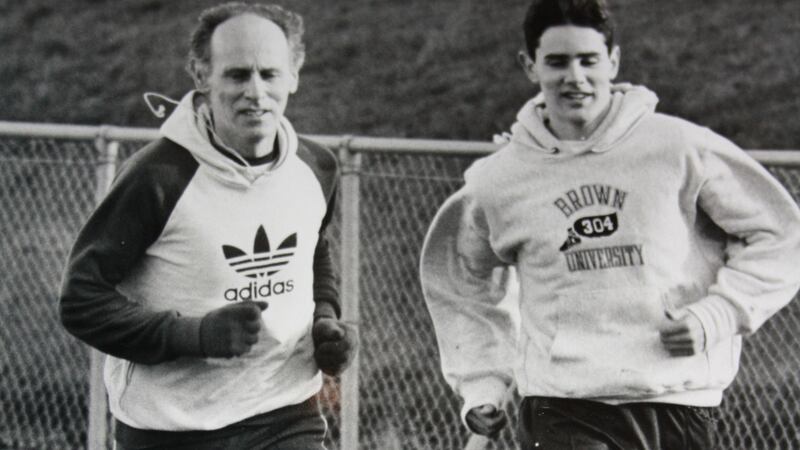
The following year Coghlan won the Waterhouse-Byrne-Baird Shield, his 49:56 still the only sub 50-minute time. He later rejoined Metro, but Donore had no ill feelings, later making him an Honorary Life Member.
In 1990 Donore built its new clubhouse in Chapelizod, next to its spiritual home in Phoenix Park. Much of its history may be wrapped up in cross-country, but Donore runners always viewed that as the essential foundation to running fast times on the track. It’s good to see that realisation with some of the Irish runners competing in Sunday’s European Cross-Country in Portugal, especially the likes of Cian McPhillips and Andrew Coscoran.
[ Booming numbers in athletics clubs is not all good newsOpens in new window ]
The book is also a reminder of the gentle impact the Waterhouse-Byrne-Baird Shield had on my life, given the fact my dad was actually trying to win it while I was being born on St Stephen’s Day, 1971. He was beaten by 13 seconds by another younger Donore clubmate Willie Smith, before leaving behind his post-race refreshments at Dillon’s Black & Amber pub and thus hurrying his return to my mother and me.
The Story of Donore Harriers is available at donoreharriers.com