
It’s hard to say exactly how far we were into the days of skorts mania but it was long enough to know for sure that there was officially no meat left on the bone. The word came through from the sports editor, who had just been in the morning news conference. He was sheepish, in fairness to him.
“How would you feel about wearing one for an article?”
“Ha! Good one.”
“It came up in conference. ‘What about if someone like Malachy Clerkin or [Redacted Male News Reporter] wore a skort and was swinging a hurley and we sent a photographer…’”
READ MORE


“…”
“I take it that’s a no?”
“&#£%?!!!”
The skorts thing had long since tipped over from the point at which a sports story hits Liveline. The appetite for skort content had reached Saipan levels. We had passed Peak Skort and were now tumbling headlong into the swamps of hysteria. So much so that it felt like the only sane thing to do at that point was to absent yourself from it. The larder of skort takes did not need further filling.
At this remove, seven months on, the whole thing feels like a fever dream. Do you remember the Sinn Féin TDs wearing shorts in the Dáil? Or that the Munster camogie final was called off at less than 24 hours’ notice and still hasn’t been played and will never be played? Or that the whole holy show made it into the pages of both the Financial Times and the New York Times? Mad times.
Now that everything has settled and camogie has returned to the prosaic realities of being a minority sport within a minority sport, it’s worth digging down a bit. Why did it make such a kerfuffle in the first place? What does it say about sport and women and Irish society that the biggest story of the year in women’s sport – by a huge distance – was about the clothes they wore?
Sometimes, there’s no explaining why these things take hold. The skorts issue wasn’t new, after all. We had news stories and columns and letters to the editor in these pages in both 2023 and 2024 calling out the nonsense of camogie players still having to wear skorts and it was all generally met with tumbleweed. It was the kind of thing that frankly, not enough people were interested in.
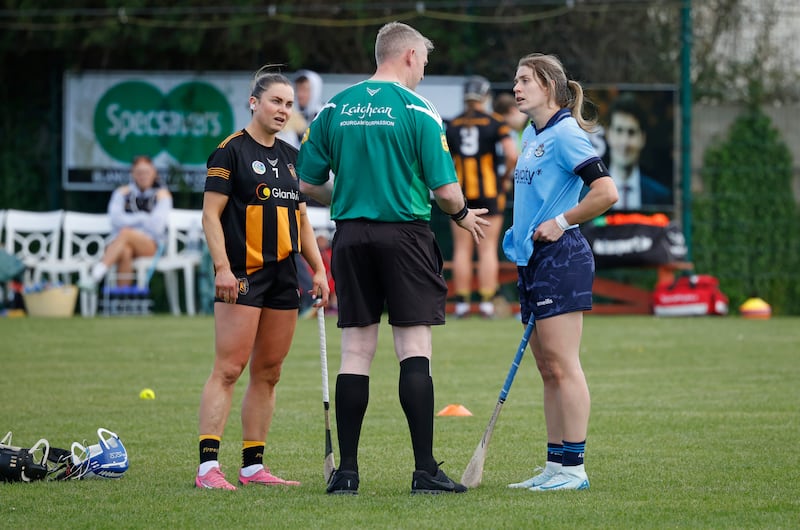
Cut to early May 2025 and it was leading news bulletins and splashed on front pages and whizzing around social media for the best part of a fortnight. What changed? There was no sudden explosion in the popularity of camogie – when The Irish Times sent a reporter and a photographer out to St Peregrine’s in Blanchardstown that Saturday, the crowd at Dublin v Kilkenny was no more than a couple of hundred strong.
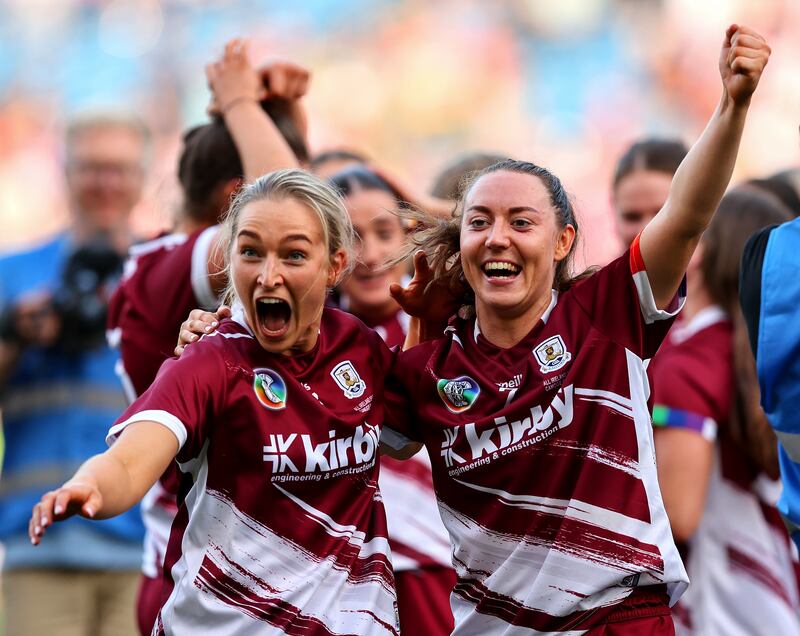
And later, after all the rí-rá, the All-Ireland semi-finals were put on as a double-header in Kilkenny in July. Cork, Tipp, Waterford and Galway converged. The crowd? Just over 7,000. A lot of people had a lot to say about camogie across that fortnight in May. Most of them had found something else to do by the end of July.
Partly, this is because the skorts thing was never really about camogie in the first place. The reason Nick Bradshaw’s photograph went around the world was that it told an old story. Two women in opposing jerseys standing either side of a man telling them they can’t play a game because of how they’re dressed. In 2025. You don’t have to know a thing about sport to know that’s insane, self-defeating and just plain wrong.
But it’s also telling that so many people’s interest in camogie – and in sportswomen generally – flared like a kitchen match and went out just as quickly. For all the progress there’s been over the past two decades, the skorts thing was a reminder that when women’s sport does manage to cut through, it’s frequently for the wrong reasons. There’s still such a long road to travel for it to go properly mainstream.
This isn’t necessarily anyone’s fault. The worst thing those of us who follow women’s sport can do is chide those who don’t. You can’t force matters by pleading with everyone who was outraged about the skorts thing to go and support their local camogie team. It doesn’t work like that. This stuff happens organically or not at all.
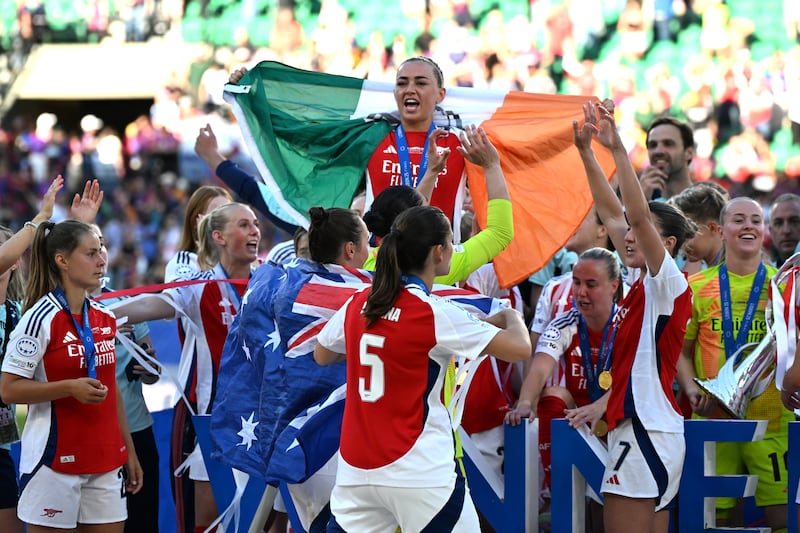
The good news is there’s plenty to celebrate. It does the heart good to sit down and take stock at the end of 2025 and to tick off the boundaries Irish women continue to push back.
Aoife O’Rourke, Orla Comerford, Fiona Murtagh and Lara Gillespie became world champions for the first time. Katie McCabe won her first Champions League. Sarah Healy won her first European gold medal, so did Ellen Walshe. Eve McMahon was the world number one ranked boat in her class. Aoife Wafer was named Player of the Tournament in the women’s Six Nations. Sophie O’Sullivan became only the fifth Irish woman to win an NCAA title.
There, right there in one paragraph, you have 10 different sportswomen setting up base camps for themselves at heights above and beyond where they’d gone before. And in nine different sports too – boxing, para-athletics, rowing, cycling, soccer, athletics, swimming, sailing and rugby. Breadth as well as depth.

There were the old reliables as well. Katie George Dunlevy and Linda Kelly continued their stranglehold over the paracycling divisions. We have taken Katie Taylor for granted for so long now that 2025 feels more notable for what she did outside the ring than what she ticked off in it. Retaining all her belts as undisputed world champion at Madison Square Garden? Sure that’s old hat at this stage. Turning up married all of a sudden? Stop the presses!
Good for her. Taylor will be 40 next July and even if the end doesn’t come next year, it can’t be too far away. Rachael Blackmore and Hannah Tyrrell called time in 2025, bringing a couple of the greatest ever Irish sporting careers to their end. One wish for 2026 would be for Taylor to do the same, to retire from boxing rather than have boxing retire her.
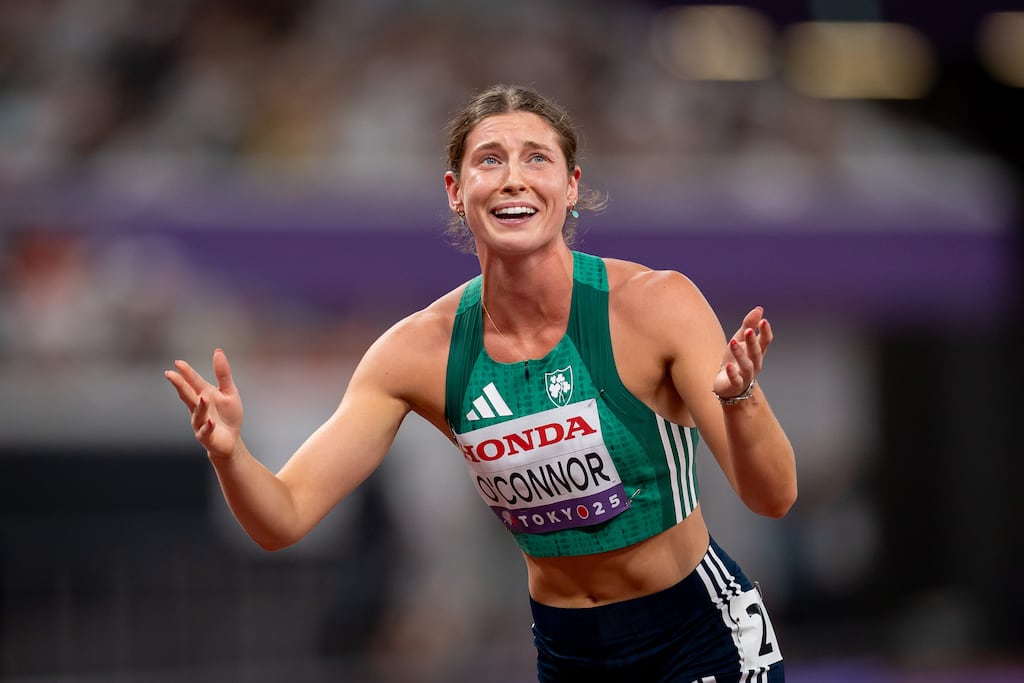
The wheel turns. Heroes fall and heroes rise. The year started with Kate O’Connor smashing her own Irish indoor pentathlon record at an out-of-the-way meet in Estonia. O’Connor had been knocking around for a couple of years but you needed to be fairly plugged into your athletics to have known what kind of potential she had. Certainly there were very few voices at the start of 2025 predicting the year’s wonders.
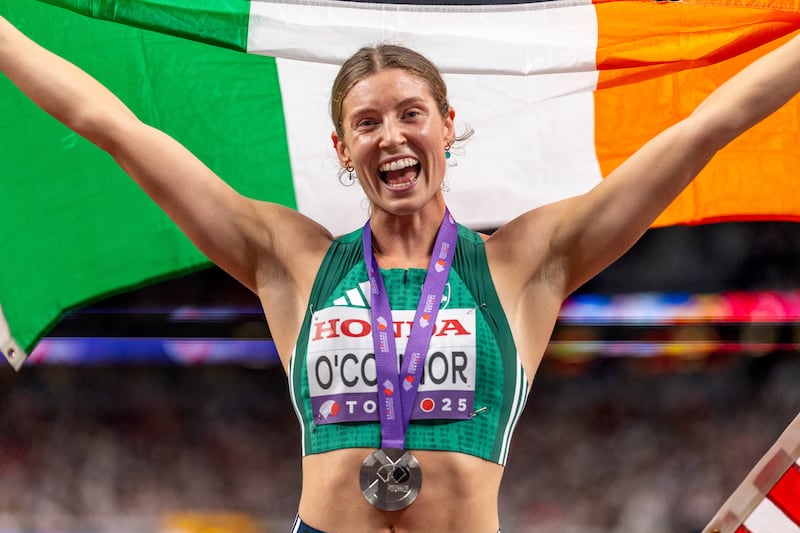
But the events kept coming and the records kept tumbling. Bronze in the European indoors, gold at the world indoors, gold in the heptathlon at the World University Games. And finally, facing off against the biggest multi-event women in the sport, she won silver at the World Athletics Champions in Tokyo. That cut through all right.
Ultimately, that’s what it takes. And yes, it’s a bit unfair that you basically need to achieve something unprecedented for it to happen. You need Kate O’Connor breaking records in a sport where Ireland has no history, coached by her dad who seems beautifully ready to cry the moment David Gillick points a microphone at him, the pair of them taking on the world and taking over podiums.
It’s an impossibly high bar to set our sportswomen in order for them to capture the public imagination. And still they keep clearing it.