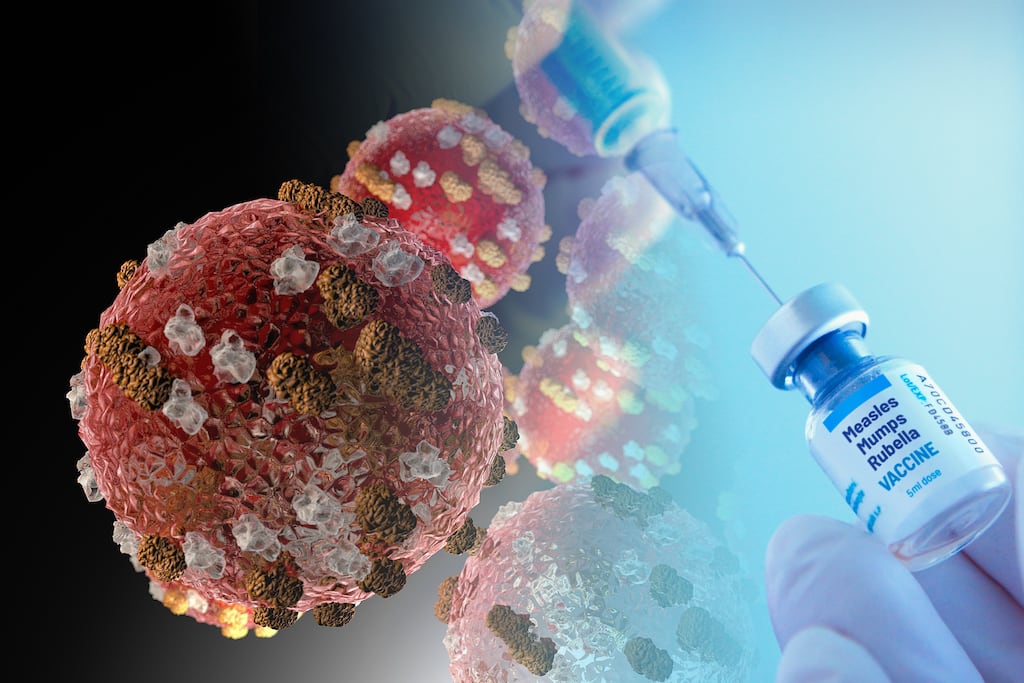
The outbreaks of measles and whooping cough in recent years were due to a continued decline in uptake of childhood vaccinations, a senior health official has said.
Dr Colm Henry, chief clinical officer (CCO) at the Health Service Executive (HSE), said the reduced number of children receiving these jabs was a problem in Europe and worldwide, as well as in Ireland.
“Rates of uptake of vaccines within the primary childhood immunisation programme have been decreasing and continue to be below the 95 per cent WHO [World Health Organisation] target required for herd immunity,” he told the Oireachtas Health Committee on Wednesday.
“For example, uptake measured at 24 months of age for the MMR vaccine is 87.6 per cent in quarter 2, 2025, and for the six-in-one vaccine [it] is 90.4 per cent in quarter 2, 2025,” Henry said.
READ MORE


He said the reasons for the decline were “manifold and complex” but “may include the impact of misinformation, especially on social media”, a “lack of perception of risk” on how serious some infectious diseases can be, and issues around access to vaccines and trust in health systems.
Dr Eamonn O’Moore, the HSE’s director of national health protection, said confidence in vaccines had been affected “right across the globe” by “remarks of influencers”.
“We’re taking a lot of time thinking about the best ways to tackle misinformation, disinformation and malinformation,” he said.
Health officials also heard calls from politicians to make the shingles vaccine freely available to older adults.
In 2024, the Health Information and Quality Authority (Hiqa) recommended against providing the shingles vaccine for free, stating it was “not cost-effective”.
In response to a parliamentary question in March, Minister for Health Jennifer Carroll MacNeill said the introduction of the shingles vaccine to the vaccination schedule was being “actively considered for a cohort of immunocompromised individuals”.
[ ‘Measles is back’: Cases double in Europe, hitting highest rate in decadesOpens in new window ]
At the committee on Wednesday, Henry said there was no doubting the effectiveness of the vaccine and there was “emerging evidence” of secondary benefits such as reducing dementia risk.
[ Vaccines for older people could reduce dementia risk by 20%, committee hearsOpens in new window ]
However, he said when the health service reimbursed something, it had to consider cost-effectiveness.
“It’s at that level we’re having those discussions at the moment. We’re looking at subgroups, like stem cell transplants, full organ transplants and other individuals whose immune system isn’t up to scratch,” he said.
“Those conversations are under way. We want to see as wide access as possible for a vaccine that clearly has benefits.”
Prof Mary Horgan, chief medical officer, said she would “really, really like this vaccine” to be made available.
“We are working actively with the office of the CCO to see if there are ways we can identify groups who would receive maximum benefit.”
A spokesman for GSK, the pharmaceutical company that manufactures the shingles vaccine, said it was “committed to collaborating with the State to ensure equitable access to vaccination for all at-risk populations and believe the offer provided to the Department of Health could have enabled a shingles national immunisation programme to be implemented”.