Suggestions that a proposed law providing for the private ownership of electricity wires is a step towards privatising the electricity grid is “nonsense”, a Fianna Fáil TD has said.
The Private Wires Bill was being misrepresented as privatisation and “we need to debunk this nonsense,” Malcolm Byrne told a meeting of the Joint Committee on Climate, Environment and Energy on Wednesday.
Paul Gavan, of the Irish Congress of Trade Unions (Ictu), said the proposed law “opens the door to the privatisation of our transmission and distribution networks by enabling private ownership and operation of electricity lines”.
He said if users of private wires avoided paying their share of fixed costs while still relying on the public network for back-up, costs could be shifted to households and small business.
READ MORE


The committee was hearing from witnesses on the proposed law that the Government has said will allow for private ownership in limited circumstances where the public benefits are clear.
The proposal, according to the Government, is to allow for private ownership in four discrete circumstances – where there is a direct connection between a generator and an electricity customer, such as a wind farm and a factory, and the sharing of grid connections between a wind or solar farm owned by one company and a battery installation owned by another firm.
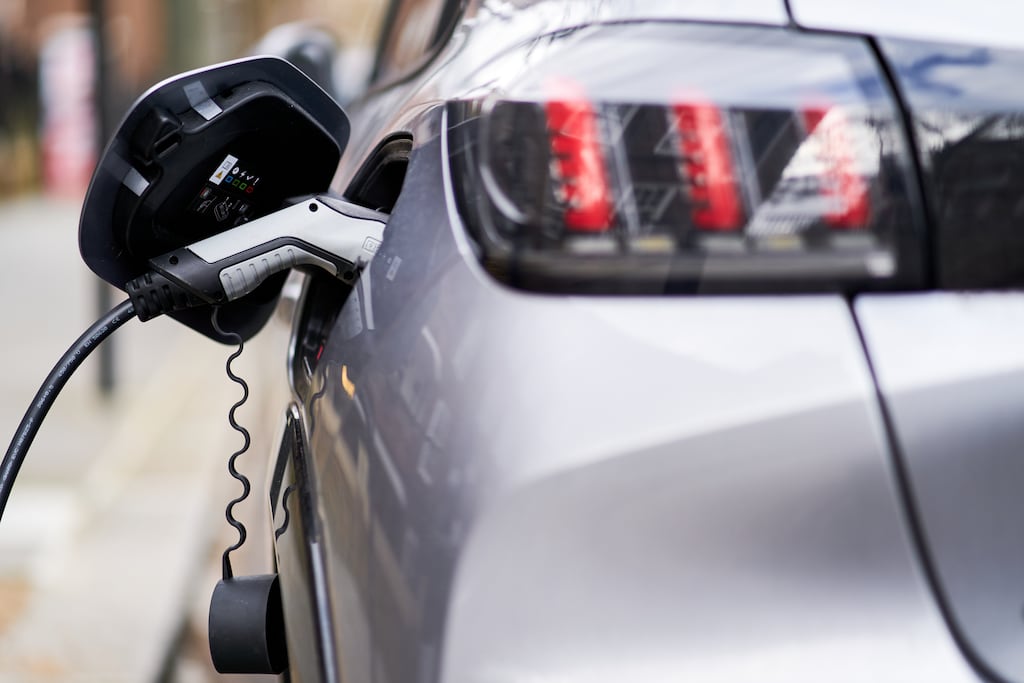
It would also cover private lines to allow on-street charging of electric vehicles, and for a firm that supplies electricity to itself providing electricity to a directly adjoining neighbour.
“I would like to make clear that Private Wires legislation is not, as some have suggested, the privatisation of our electricity grid or a gateway to this,” said David Linehan of Wind Energy Ireland.
Nicholas Tarrant, managing director of ESB Networks, which owns and runs the electricity distribution network, said the Government’s objective was to unlock private sector investment, particularly in renewable generation.
[ Nuclear energy is a distant prospect – wind and solar are here nowOpens in new window ]
Among the points made by ESB Networks to the Government, he said, was that there should be “no subsidisation of private wires by network customers”. He said ESB Networks was “still engaging” with the Department of Energy in relation to the inclusion of on-street charging points for electric vehicles in the new law.
Linehan said a 5MW solar farm has been providing power to Belfast Airport for almost a decade.
“Private wires can be particularly helpful in areas where the grid is constrained,” he said. “Thirteen per cent of wind energy was wasted last year, estimated at a cost to consumers of €450 million, due to challenges and congestion on the grid.”
Ronan Power, chief executive of the Solar Ireland representative group, said 16 per cent of all solar electricity generated, the equivalent of the energy used to power electronic vehicles last year, was wasted.
“The grid remains the backbone of our system,” he said. “However, private wires are a complementary mechanism.”
The new legislation should not treat households with rooftop solar panels the same as commercial operators, Power said, asking for a change to the current definitions being used in the proposed law.
Eoin Cassidy, of Mason Hayes and Curran solicitors, said the proposal in relation to the ESB being allowed in certain circumstances to “step in” and take charge of a private wire was of significant concern and the details should be reconsidered lest they deter investment.
Rosi Leonard of Friends of the Earth said she wanted to “hone in” on data centres and AI, and said the Bill would deepen inequalities in the energy system “for the primary benefit of one industry”.