

I’m not one of those people who get outraged whenever someone on the BBC refers to the “British Isles”. Nor does hearing Saoirse Ronan, or whoever, called British tend to render me apoplectic.
But where I am liable to break out in a postcolonial rash is when broadcasters from our neighbouring island assume that the way they speak English is the global norm, recognised as such in the rest of the anglophone world, Ireland included.
There was a fine example recently on the TV gameshow The Weakest Link. It was a celebrity version of the programme, and guests included actress Philippa Dunne, one of our own. Who was asked by the host, in his Greater London accent, to identify a word that could mean both “a greater distance away” and “a male relative”.
Philippa was stumped by this question, as well she might be. Because there is no word in English that means both a greater distance away and a male relative.
READ MORE


The expected answer, nevertheless, was “father/farther”: two different words that just happen to be pronounced the same way in England, where people stopped sounding their Rs in the 18th century, for reasons best known to themselves.
Their eccentricity might be charming if it wasn’t for the assumption that everyone else speaks that way. Which is not even true in England, where Rs are still pronounced across a wide swathe of the West Country and in a few other parts as well.
But it’s definitely not true in Scotland, Ireland or most of North America, not to mention India, Pakistan and the English-speaking countries of the Caribbean.
If The Weakest Link’s celebrity guests had included the ghost of William Shakespeare, an aggressive R-roller as we noted earlier in the week, he wouldn’t have understood the question either.
Winston Churchill would, of course. Churchill notoriously once asked the world to accept that the word “war” rhymed “jaw”. Hence his epigram in praise of negotiation: “Jaw-jaw is better than war-war”, which was supposedly both witty and wise. No wonder his record of spreading peace was about as successful as Donald Trump’s.
Luckily, Philippa won the quiz anyway, or it would have been the 800 years of oppression in microcosm, at least for me. And annoying as the father/farther question was, I learned something new from it, indirectly.
It’s not so long ago since I finally understood why a certain cartoon character of my childhood was called Eeyore – because AA Milne didn’t sound his Rs either and thought that was the sound a donkey makes.
Now, thanks to an online discussion of The Weakest Link outrage, I have also at last learned that the character Shaun the Sheep is named for a similar pun. Geddit? To London, South African or Australian ears, he’s “Shorn”.
***
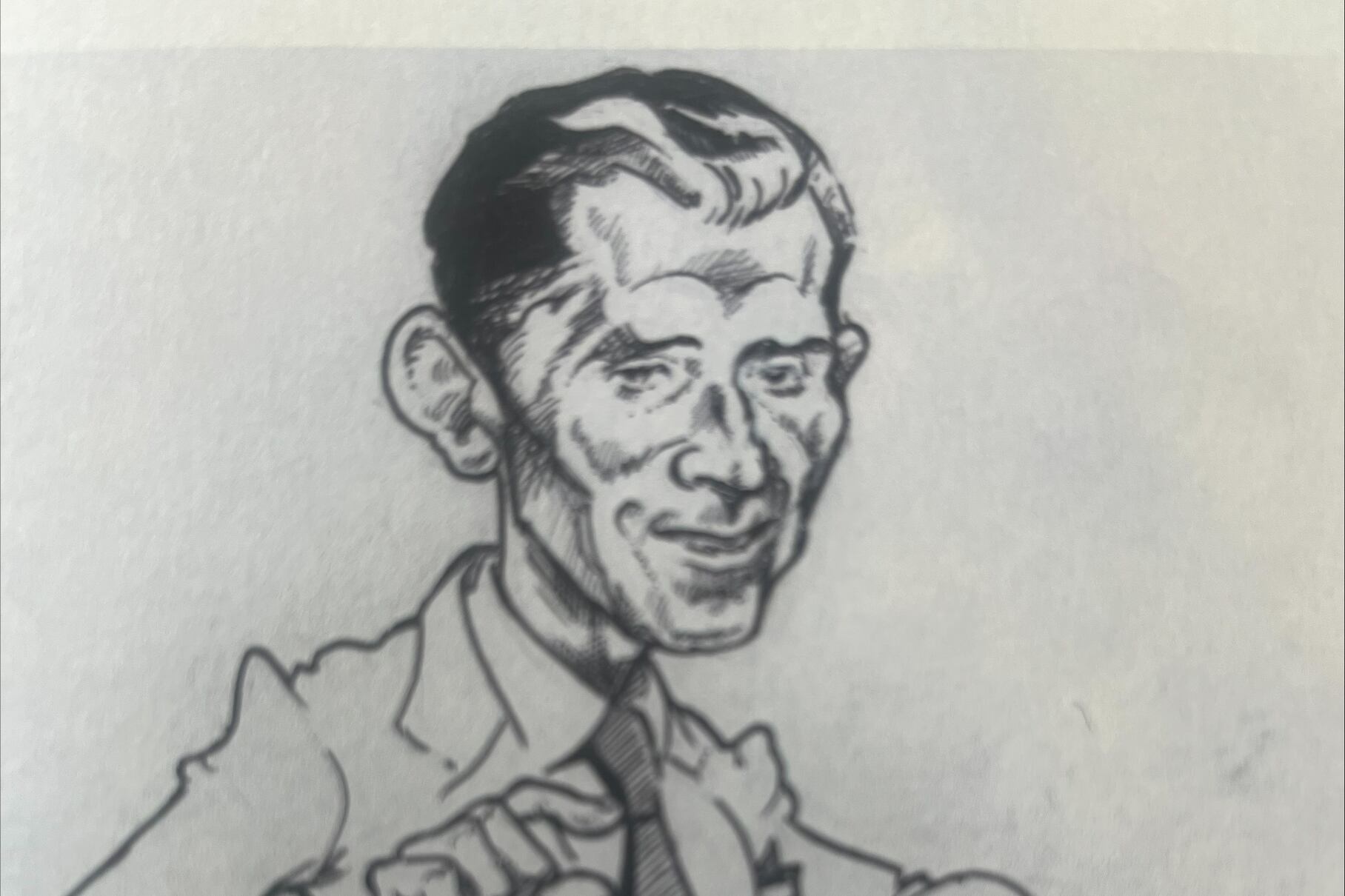
A question for readers, in the style of The Weakest Link. Which Irish playwright, currently the subject of a centenary revival, sounds like he’s just had a severe haircut? Answer: Shorn O’Casey, to whom we’ll return in a moment.
First, a more general point about rhoticity, as the phenomenon of consistent R pronounciation is known to linguists. It is also often what’s called a “sociolinguistic variable”, meaning it can be used to identify class or social standing. That’s another reason why our neighbours’ assumptions about its dominance are annoying.
In England, where “non-rhotic” accents only became the norm long after Shakespeare shuffled off this mortal coil, they also came to be considered prestigious, and still are, while the rhotic accents of the West country or Ireland were scorned as the mark of bumpkins.
The habit crossed the Atlantic, where non-rhotic speech once dominated, especially in high society. Then waves of emigration from rhotic speakers, including the post-Famine Irish, tilted the balance. So did the American civil war, which pushed the centres of power south from New England.
Today, apart from a few holdouts such as Boston, the US is a rhotic stronghold and helping to turn the habit into the global norm. My friends in New Zealand, once a firm part of the non-rhotic empire, tell me the country is being rapidly rhoticised by the young.
Meanwhile, in a scholarly work about Dublin English recently, I was surprised to learn that “popular” speech in the city, “tends not to be rhotic, or only weakly so”. This is in contrast with “fashionable Dublin English” (I’m thinking of Ross O’Carroll’s “corr” drivers here), which is rhotic to a fault, reversing the prestige norms in England.
So it seems that the descendants of O’Casey’s Dublin are less likely to sound their Rs than other Irish people, which I can’t say I’d noticed.
[ My ‘neutral’ accent is now just another foreign voice from a country far awayOpens in new window ]
Either way, I’m reminded of an old Dublin expression, used by O’Casey himself in his autobiographies to describe the trouble that greeted The Plough and the Stars in 1926. It too, I now realise, could be the basis of a question on The Weakest Link. Q: What phrase can mean both the Virgin Mary and a public disturbance in a Dublin theatre? A: “Holy Mother/Murther”.


