

Writing last week (Diary, January 29th) about the trouble that accompanied the opening run of Sean O’Casey’s The Plough and the Stars in February 1926, I suggested it mirrored the 1916 Rising itself: a case of history repeating as farce.
But among the actors who performed in the play was at least one man who had fought in the Rising 10 years earlier.
His name was Arthur Shields and he was already an actor in 1916. On Easter Monday, he was scheduled to take part in a performance at Dublin’s Abbey Theatre. Instead, he went there to collect a rifle hidden under the stage and join in the fighting.
For most of the week, he was stationed at the Metropole Hotel. On Friday, he fled into the adjacent and burning GPO just as the rest of the garrison was about to abandon it.
READ MORE


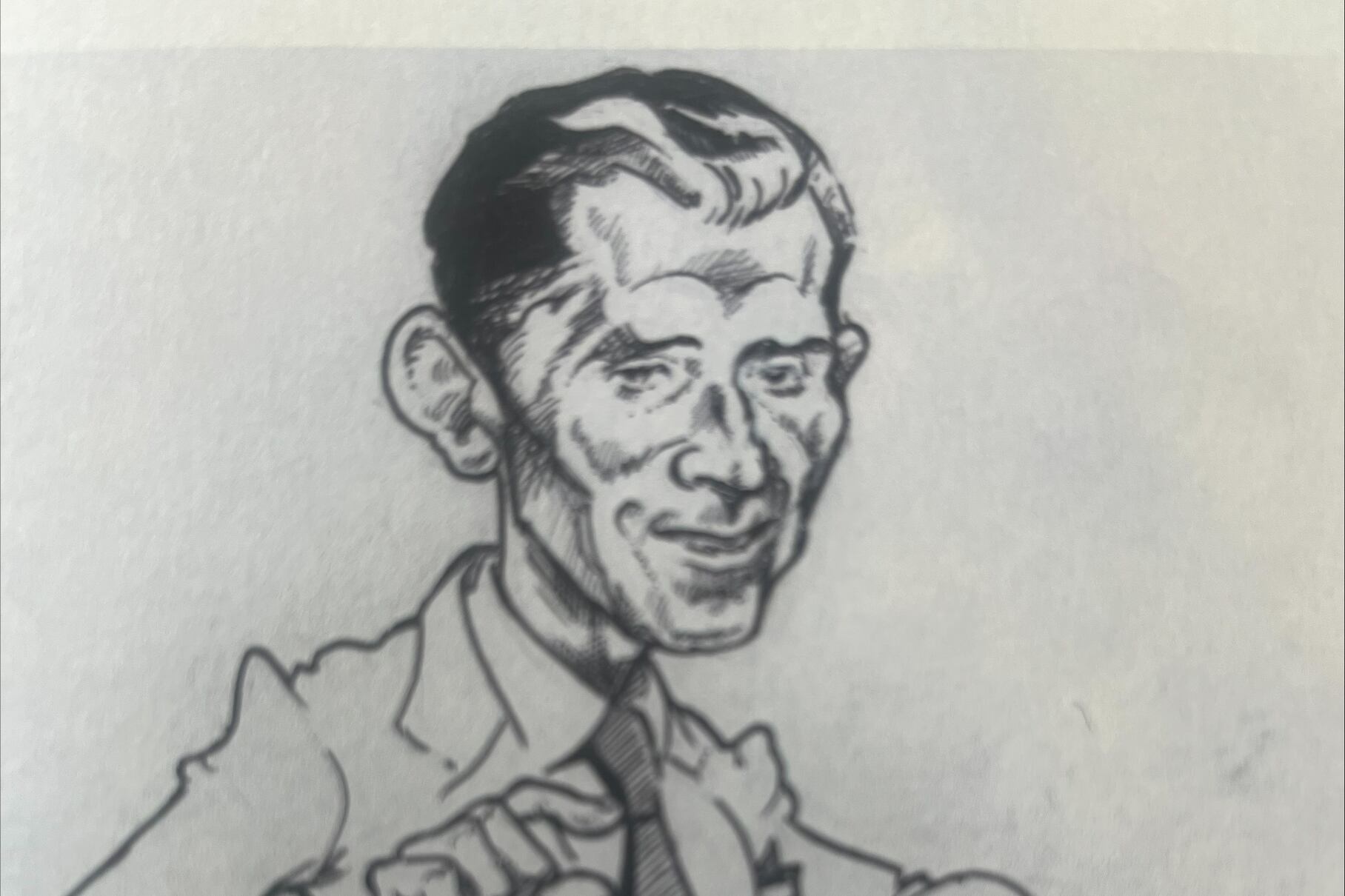

During the fraught retreat from that building, he met his friend and fellow actor Charles Saurin (with whom he had joined the Irish Volunteers in 1914, angered by the British army massacre of civilians on Bachelors Walk after the Howth gun running) and both were part of an attempted escape via house-to-house tunnelling.
There followed a fraught episode when, pinned down in a loft on Moore Lane, they were primed for a “death or glory” rush of a British machine gun post. That was called off, however, and Shields lived to participate in the official surrender, and be interned for six months, before he was released to resume his acting career.
Shields was not as conspicuous in reports 10 years later of the fighting that accompanied O’Casey’s play about the Rising – perhaps because, in the meantime, his fame had been eclipsed by that of his older brother William, by then better known as Barry Fitzgerald.
Whereas Shields doubled up as O’Casey’s Young Covey and Lieutenant Langon, Fitzgerald played the comic role of Fluther Good, whose lines included this piece of stoic philosophy: “It’s my rule never to lose my temper till it would be detrimental to keep it.”
The actor playing Fluther may have been similarly restrained during the early part of The Plough and the Stars’ week-long run. By Thursday, however, as audience member and diarist Joseph Holloway later reported, “Fitzgerald had a stand-up fight with a man on the stage and succeeded in knocking him over into the stalls”.
Another 10 years later, the brothers would be in Hollywood, invited there by John Ford to star in a film version of the play, which had Barbara Stanwyck and Preston Foster (the latter a last-minute substitute for Spencer Tracy) in leading roles.
Shields this time played Padraig Pearse, while Fitzgerald was still Fluther. But in general, the Ford version excised much of O’Casey’s intended satire.
As the New York Times put it, the playwright “could not pretend that all the men and women were heroic martyrs to a magnificent cause. While some went out to orate, to fight and to die, others dived from the shelter of their tenement warrens to the shelter of their pubs, bickering and carping, stooping to a bit of plunder when they had the chance”.
Ford’s version, by contrast, “softened Mr O’Casey’s ironical thrusts by seeing no more in his play than appeared on its surface”.
Back in 1926, the comedy on and off stage included a farcical episode in which republicans tried to sabotage the play by kidnapping Fitzgerald. The scene was a house in Seafield Road, in Clontarf, Dublin, home to the actor’s mother and sister.
On the afternoon of Saturday, February 13th, as reported by The Irish Times, three young men armed with revolvers arrived at the door, inquiring about the whereabouts of Fitzgerald, who was also listed as resident but lived elsewhere.
Not only did they fail to get their man, the report said, they had to endure a telling off from Fitzgerald’s sister, during which she refused to give his real address. They left, empty-handed and with fleas in their ears, after five minutes.
The Abbey’s matinee performance went ahead with a full cast and an even fuller theatre. But before the evening show, it was deemed prudent to stage the theatrical equivalent of a lock-in.
Cast members remained in the building, where their confinement was relived by a recital from the great German pianist Walter Rummel, who had been appearing at the nearby Theatre Royal.
The evening performance then brought the curtain down on a tumultuous week and was cheered, The Irish Times reported, “for a full five minutes”.
The Abbey is to stage a centenary revival of The Plough and the Stars later this month, opening on February 27th.
In the meantime, the lives of Arthur Shields and Barry Fitzgerald are the subject of a new play, The Quiet Men, by Morgan Jones, which was first performed in Clontarf last year. A new production of that one opens at Bewley’s Cafe Theatre on February 23rd, running at lunchtimes until mid-March.


