

My recent visit to the “Town of the Lepers” (aka Leopardstown) reminded Donegal reader Paddy Doherty of a story from 100 years, as told by his father.
Doherty Snr went to University College Dublin in 1926 intending to study medicine, but after a day or two changed his mind and got a place in the engineering department, down in Merrion Street, instead.
Soon afterwards, “a few boys from Cork” arrived there too, hoping to join him. The class supervisor had different ideas, however, and at least one of the Corkonians, Vincent Barry, was diverted to science.
Perhaps he would have done great things as an engineer too. In the event, Barry went on to become a pioneering chemist, leading a team that in 1951 discovered the world’s first successful drug treatment for leprosy.
READ MORE


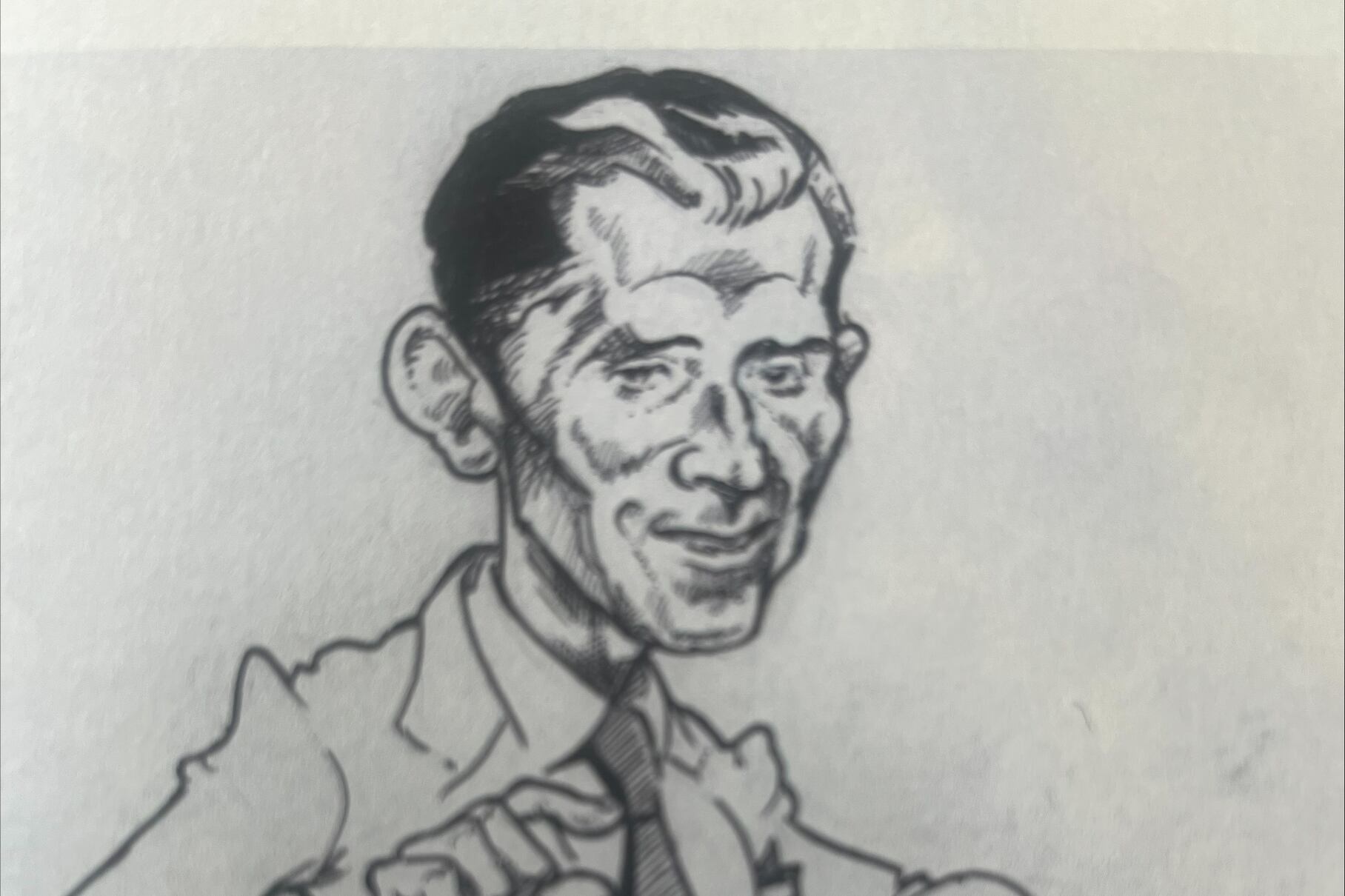

As with many great discoveries, there was an element of chance involved. He had set out to cure TB, then rampant in Ireland. A compound that worked in mice did not do the same for humans, unfortunately. But researchers had meanwhile noted a similarity between TB and leprosy.
Combining forces with the Belfast-born dermatologist Joseph Barnes, who had cared for thousands of leprosy patients in Africa, Barry’s team eventually produced Clofazamine, which as Paddy says, “became the standard drug in the fight against this ‘biblical’ disease.”
His email ends with a philosophical question: “Was it a case of Divine intervention that day in the drawing office in Merrion St?”
Citing the example of Alexander Fleming, who chanced on penicillin while trying to replicate research from Trinity College Dublin, Paddy adds: “This story of discovering something while searching for something else is often repeated, I’m sure ...”
On which theme, by a coincidence bordering on uncanny, I also received an email on Wednesday – within minutes of that one – from another reader, Michael Keaveny.
This did not involve a cure for leprosy or the discovery of penicillin, or anything so important. But for the diarist at least, it offered a possible solution to an urgent need. Or as Michael’s subject line put it: “Half a column idea (if you’re stuck).”
The idea occurred to him while he was searching for something and, instead of whatever that was, “came across both an old ruler form my grandfather’s schooldays (he was also called Michael and we were very close so it had huge sentimental value) as well as a cut-out from the now defunct Weekender newspaper featuring my junior infant class”.
This too provoked a philosophical conclusion. It set Michael thinking that, these days, “almost everything of value in our lives (keys, phones, wallet, watch, etc) can be rung, beeped, or triangulated within an inch of its life when missing”.
And such help was welcome, usually. But he wondered if the “real joy” in life was having to search for things, “because you sometimes find more that what you were looking for”.
In a posthumous appreciation of Vincent Barry, published by this newspaper in 1975, the obituarist noted what could be a challenging aspect of his personality. Namely that, when engaged in research, he “was single-minded almost to the point of intolerance”.
That looks like a brave attempt by the writer to avoid the dread cliche we were discussing here yesterday, “he did not suffer fools gladly”: another biblical plague of sorts, unleashed unwittingly by St Paul.
Speaking of fools, however, it seems that in the same column, I suggested GK Chesterton wrote a biography of Charles Dickens in 1874. Chesterton may have been a precocious talent, but not that precocious. He was born in 1874. He wrote the book in 1906.
Getting back to leprosy, my column on Leopardstown also attracted erudite comment from regular correspondent David Stifter, professor of Old and Middle Irish at NUI Maynooth.
Who pointed out, among other things, that in Baile na Lobhar, Leopardstown’s Irish name, the L-word did not originally refer to “lepers”. It used instead to be just the common word for anyone who was “weak, infirm, sick, afflicted, etc”.
Then, because of similarity to the English “leper”, the meaning changed. After that, Irish had to find a new word for sick, namely tinn, which before then had meant severe.
Leopardstown is a further corruption, having changed its spots with the added d-sound. But corruptions are not limited to Dublin, either.
In a “fun fact”, Prof Stifter draws our attention to Lover’s Walk in Cork, a laneway just north of the river Lee. It sounds romantic but etymologically is not. It’s a mistranslation of Siúl na Lobhar, or Lepers’ Walk.
Perhaps a young Vincent Barry, who was born just upriver at Sunday’s Well, strolled along it once, oblivious to the great destiny that awaited him.
But let me end with a philosophical question, like my emailers. Could it be that in turning Lepers’ Walk into a Lovers’ one, the hard-bitten people of Cork were making a point? That love too is a disease, highly infectious, and that while we await an effective drug cure, it may be at least partly treatable by exercise and fresh air?


