

There have been some memorable moments in this World Cup.
The way in which Cape Verde’s veteran goalkeeper Vozinha went around the pitch after losing to Argentina, lifting despondent players back on to their feet, was very touching.
Harry Kane’s croaky post-match interview in the Azteca Stadium, having lost his voice singing the unofficial England football anthem Wonderwall, scored high for comedy value.
But my hero of the tournament is Emil Anners Lappen, the Norwegian fan who refused to participate in the “Viking Row”.
READ MORE


The 24-year-old forestry manager was caught on camera at the Norway-Senegal game, sitting upright with his arms folded amid a sea of compatriots enacting the rowing motion that has gone viral in their homeland. They rowed in parliament. They rowed on the streets of Oslo. They rowed in the royal palace. Everyone in Norway was rowing but not Lappen.
In media interviews afterwards, he explained he was troubled by factually inaccurate claims about Vikings rowing across the Atlantic. He also believed the chant was a rip-off of the “Viking Thunder Clap” done by Iceland fans. Above all, he objected to sheep-like behaviour. “It’s very Norwegian to do what everyone else is doing,” he told the Financial Times.
It was a moment of satire up there with Monty Python’s The Life of Brian. You know the bit when the “messiah” tells a horde of followers “You are all individuals”, and one humble voice pipes up: “I’m not.”
But Lappen’s gesture also carried a serious message about peer pressure and the role of the dissenter. And it brought to mind a famous photograph from the second World War. It’s June 1936 and a crowd of workers in Hamburg are giving a Nazi salute in unison – except for one man. He is believed to be August Landmesser, a German who had fallen foul of the Nazi party due to his relationship with a Jewish woman (neither he nor she survived the regime). In the photograph, he stands amid the demonstration of compliance – stiff arms raised around him. His arms are firmly folded.

We don’t know what Landmesser was thinking – nor indeed can we be certain it is him – but the photograph has become a powerful symbol of individual resistance.
My viewing of the World Cup has coincided with a period of re-reading Plato’s dialogues covering the last days of Socrates. Yes, I know how pretentious that sounds. I mean, who even reads books these days, let alone re-reads them? But it does help to explain why I was so affected by Lappen’s stance (if sitting down, with your arms folded, can be called a stance).
Socrates, like Lappen, believed in defending a point of principle – even at the risk of public ridicule.
The four dialogues, Euthyphro, The Apology, Crito, and Phaedo, cover the period of Socrates’s trial, his sentence to death and his final words before succumbing to a prescribed poison. Throughout this ordeal Socrates – who was about 40 years older than Plato and who mentored the “father of western philosophy” – remains in good humour and unrepentant in the face of physical threats and moral blackmail.
For anyone who hasn’t read a Platonic dialogue, it may sound intimidating or dull. But the ancient Greeks knew how to tell a story – as the resurgent interest in Homer’s Odyssey attests – and Plato is a skilful narrator.
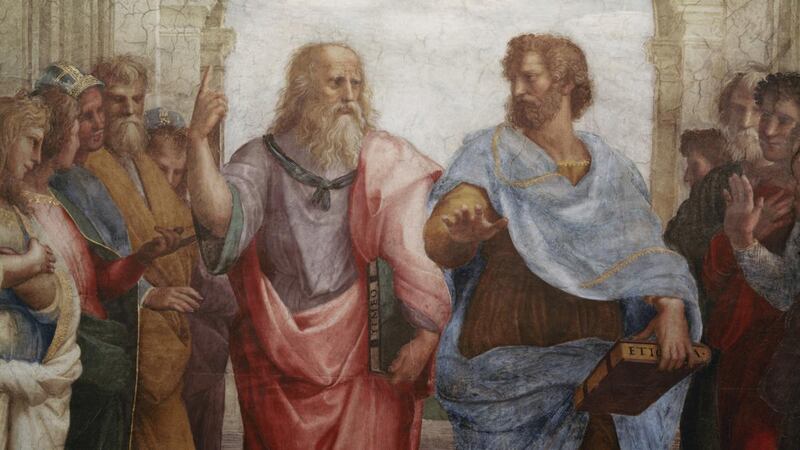
The drama unfolds in 399 BC in Athens. Three wealthy citizens bring charges against Socrates of heresy and “corrupting the minds of the young”, but we quickly learn that this trio of upstanding gentlemen are motivated by revenge after being humiliated by followers of Socrates in public debate. Socrates’s defence is so wonderfully sarcastic he exposes the jury’s mob mentality while also sealing his fate. Shamed by his words, the assembly makes a cowardly bid to put manners on the philosopher – he is condemned to death in the expectation he will try to bargain this penalty down to a fine. But Socrates is having none of it.
Everyone should be equal for the law, he says, and it would be unjust of him to have his sentence commuted because he had friends to call upon to cough up money to the court.
By recounting these historical events, Plato gives us a picture of moral integrity. When in battle, Socrates says, “the difficulty is not so much to escape death; the real difficulty is to escape from doing wrong, which is far more fleet of foot”.
Stick to your values. Don’t hold all opinions to be of equal worth. Anyone who harms you unjustly is, in fact, harming themselves. These are certainties, according to Socrates, “because I do not believe that the law of God permits a better man to be harmed by a worse”.
The message is empowering at a time when we are under pressure to accept certain things as inevitable – from extreme inequality to gross violations of human rights. Resistance is futile, we are told by the tech overlords, oligarchs and authoritarian leaders who strut across the world stage today. But Socrates exposes the lie.
Whatever the situation is, or whatever the herd demands, you have the power to fold your arms across your chest and say: I’m not going along with this.


