

Some of us will have been gifted books this Christmas that maybe should not have been published.
How literary estates are managed in the aftermath of an author’s death, or how the private material that lies locked away after an individual’s demise are handled by relatives, raises the tricky ethical question of whether commerce will trump conscience.
This was brought back in to focus this year with the publication of previously unpublished short stories by Harper Lee, famous for her 1960 debut To Kill A Mockingbird, which went on to sell over 40 million copies. There was no follow up until the end of her life, when she was incapacitated by a stroke.
The manuscript of an earlier novel, Go Set a Watchman, was found in her papers and published in 2015, the year before her death. Lee’s health was such that some insisted that she was not in a position to properly authorise this; others insisted she approved.
READ MORE


Lee had submitted the short stories – drafted in the decade before her 1960 success – to publishers but they were rejected. This has allowed those commending their publication to insist, as her nephew Ed Lee Conner has, that she would be delighted to see them published. But that is a debatable contention; there are sound reasons why certain manuscripts remain unpublished.
Colm Tóibín pointed out this year that after the poet Philip Larkin died, an edition of his collected poems included “unfinished poems and did not respect the integrity of each volume he published”, while the estate of poet Elizabeth Bishop “allowed a volume to appear after her death with many unfinished poems and drafts of poems that she would never have published in her own lifetime”. This was a reference to the 2006 book Edgar Allan Poe & the Juke-Box: Uncollected Poems, Drafts, and Fragments.
Given Bishop’s renowned meticulousness, there seemed to some to be an element of treachery. The American literary critic Helen Veldner insisted the unfinished poems were “maimed and stunted” and should not have been published.
Meghan O’Rourke, another American poet, weighed both sides of the argument and defended publication: “Publishing her fragments seems a betrayal to those who believe that Bishop’s genius is largely a product of reticence – who fear that coming upon Bishop in naked moments of aesthetic undress would destroy the spell cast by her poems. Their protective zeal is understandable. Bishop, after all, is a poet whose small body of work is inflected by a powerful reserve. But the concern is, I think, ultimately misguided. It wasn’t concealment that made Bishop the poet she is; it was her quest for exact expression”.
A new collection of poems by Iris Murdoch, Poems From An Attic, has also been published after those clearing her attic found 10 notebooks of poems that illuminate her bisexuality, hidden in a trunk.
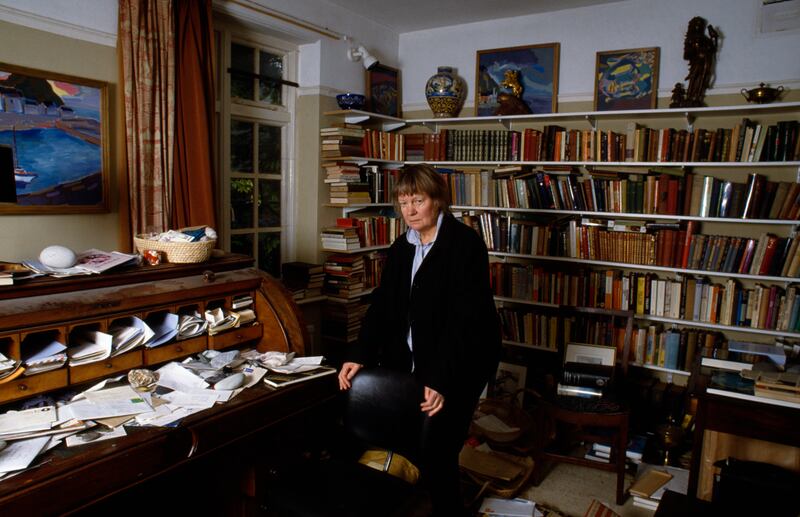
Miles Leeson, director of the Iris Murdoch Research Centre at the University of Chichester, who discovered the poems, admitted whether to publish them presented an “ethical dilemma”.
His defence of publication is that Murdoch during her lifetime had burnt some journals and excised portions of her diaries, and that she would have destroyed the discovered notebooks too, if she had not wanted them published. But that is highly presumptuous; there could be many reasons why they remained hidden but not destroyed, and who knows what her thinking was?
Historians have no claim to purity when it comes to these dilemmas. The quest to write more inclusive and “bottom up” history has been greatly assisted in Ireland in recent years with the opening of voluminous archives such as the Military Service Pension Collection, documenting Irish revolutionary veterans’ requests for pensions based on their activities from 1913-23. This has generated access to very intimate material about private difficulties, mostly concerning individuals who were not household names. That material is now part of a national archive that can be accessed by all, but that can create discomfort for living relatives, and those compiling their applications were hardly thinking that the details they shared would become public property.
For creative writers, the allure of private material that might make for a compelling story is tantalising.
The discovery by English author and poet Blake Morrison of his parents’ second world war era correspondence led to his 2002 memoir, Things My Mother Never Told Me. His Irish Catholic emigrant mother Agnes’s correspondence revealed the frankness with which she and her future husband, an English Protestant, discussed emotions, religious mores and differences and family planning.
[ Why the world needs Iris Murdoch’s philosophy of ‘unselfing’Opens in new window ]
Morrison had, in his own words, “stumbled into the archive of my parents’ courtship”. He suggested that to read this intimate correspondence not intended for anyone else’s eyes and then publish it, was “transgressive”, and “a s**t’s trick”.
Such finds are hard for writers and publishers to resist, but an element of betrayal lingers.


