Across 60 years and 12 generations, Toyota has provided more than 57 million motorists with new cars carrying the Corolla name. Millions of families on the move across the planet, putting their trust in a car built not to wow or impress, but to deliver on its promises.
It has a tendency to be regarded by the mass market as the Captain Sensible of cars. And it wears that moniker well, for many of its buyers are leading hectic family lives and prioritise comfort, reliability and value when it comes to choosing a car. For them, the Corolla ticks the boxes. It was a common sight in the teachers’ car park.
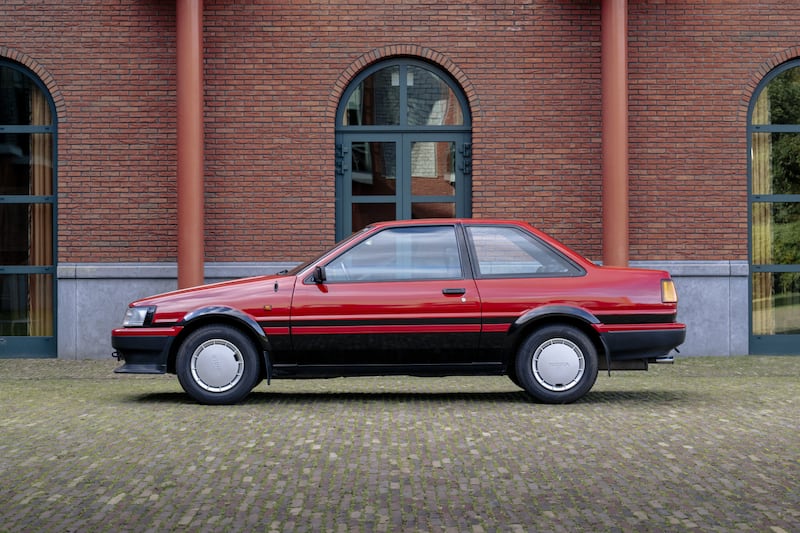
But that downplays how passionate its fan base became in the 1980s, when the fifth-generation AE86 coupe version was the “Hachi-Roku” drifting king.
This was a light, rear-wheel-drive Corolla that proved the depth of engineering pedigree behind the otherwise practically minded family car. Its reputation stands to this day.
READ MORE


Not that every generation was a racing king. Across the decades, the Corolla was a sober choice.
Unlike models like the VW Golf, there wasn’t a definable identity to the range across the generations. Perhaps the most evident design trend was taking its styling cues from the rest of the hatchback market, those C-pillar angles that were nodding tributes to Ford Escorts or Peugeot 205s of their time.
The Corolla story begins in 1966 amid the postwar economic boom in Japan, as the population grew and innovation was rampant across all sectors of industry and society.
The two-door saloon was meant to follow the traditions of European car makers in creating a “people’s car”. Within three years it was Japan’s bestselling car.
[ Volkswagen’s big-selling EV gets a new (old) nameOpens in new window ]
By the launch of the second generation in 1970, Toyota was practising its Kaizen continuous improvement policy on the production line, where any worker had the authority to stop the line if they spotted an issue with a car. Democratising quality control was the order of the day.
For the motorist, it was the first Corolla with AM/FM stereo radio, air-conditioning, windscreen washers and rear-door child locks. It also featured a larger 45-litre fuel tank, allowing for longer journeys.
Fuel would be the hot topic by the time the Corolla arrived in Ireland in 1973. It was the year fuel economy shot to the top of a buyer’s priority.
In fact, according to Hugh Oram, writing in The Irish Times in 2003, Toyota’s links to Ireland all began with a yellow Corolla in the Ballsbridge showrooms of Stephen O’Flaherty, the man who had brought the VW Beetle to Ireland in 1950.
O’Flaherty had also taken on the Toyota brand but wasn’t convinced that Toyota could ever become a big marque here.
However, Tim Mahony and his brother Denis had other ideas. The brothers heard the Toyota franchise was on the market and decided to take the plunge.
[ Toyota Rav4 PHEV review: Hail the new plug-in market leadOpens in new window ]
Initially assembled in Dublin’s Bluebell from knock-down kits, the Corolla went on to provide lifts and driving lessons, carried shopping and wet wellies. It was the forum for singalongs, laughs and rows across the island.
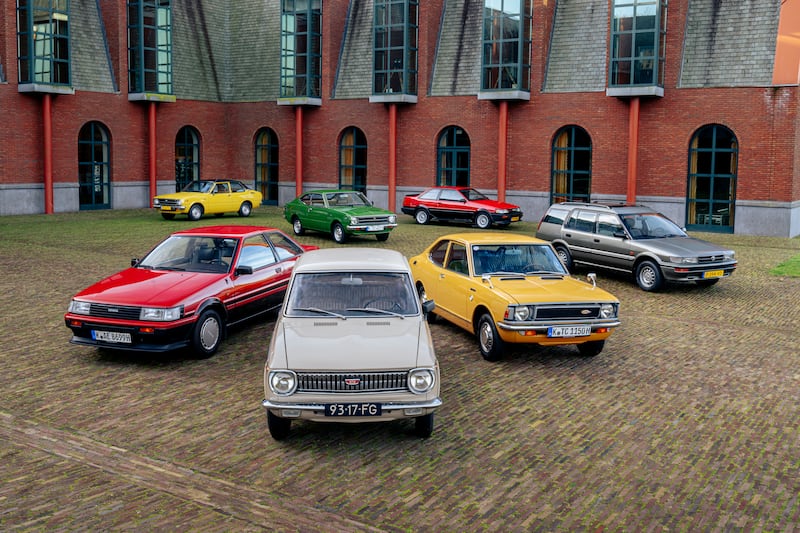
It was the watchword for reliability during those decades of the last century.
It was a message delivered in Ireland as Gaeilge. “Bí ann gan teip”, with its promise “Ní thuigeann Toyota teip”, told Irish drivers that Toyota didn’t know the meaning of failure. “Go raibh mílte maith agaibh” put a Toyota twist on a familiar Irish thank-you, playing on the miles the car would cover. It helped embed the Corolla in Irish culture.
More than 215,000 Corollas have been sold in Ireland since its arrival, making it Ireland’s bestselling model in its segment.
The reliability pitch might not have always seemed very eye-catching during the heyday of hot-hatch GTIs and XR3s, but consider the pain of sitting on the side of the road waiting for a tow truck with the alternative.
The Corolla didn’t avoid all pain on this front over the years, particularly with oil consumption issues in the early 2000s.
And of course Corolla got caught in the unintended acceleration crisis that hit the company in 2010. Or rather, the Auris and Corolla did, for the model spent 12 years renamed for Europe as part of some inexplicable marketing decision to dissociate the hatchback version of the model from its heritage. Apparently sober and reliable weren’t appealing traits to Toyota Europe executives at the time.
Common sense prevailed again in 2019 when the Corolla name returned. Though it’s only seven years ago, a very unscientific straw poll in The Irish Times suggests the Auris moniker has been forgotten.
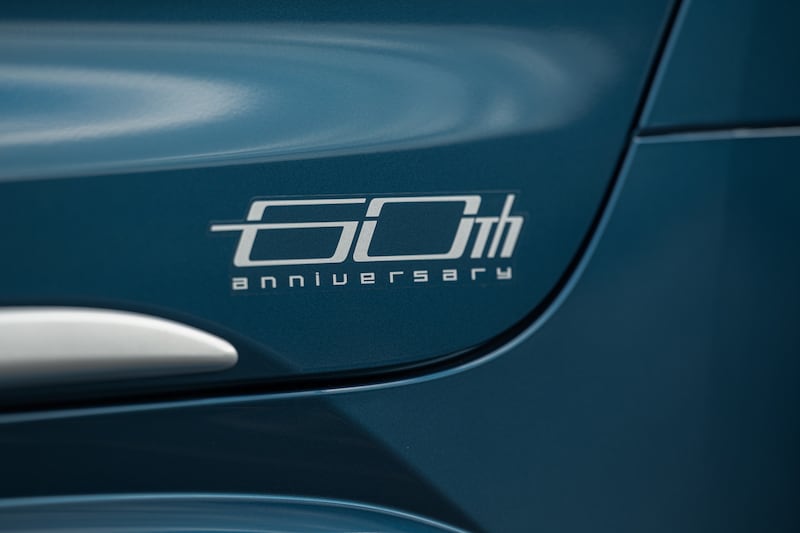
To mark the 60th anniversary – and ignoring the Auris diversion – Toyota is delivering an upgraded special edition. With anniversary logos, prices start at €34,584.
But all eyes are really set on the next generation, a concept of which was shown at last year’s Tokyo Mobility Show. It’s a radical departure from the norm, though the company’s spokespeople are adamant that the traits that defined Corolla for 60 years will be cornerstones for the new car: family practicality and reliability. This time delivered with bolder design.
These days, prices for a new Corolla start at €33,815, a long way from the prices in 1973, which were circa IRL£1,500. But when you contrast those two prices against average wages at the time, according to the CSO, a Corolla cost the equivalent of almost 50 weeks of an average industrial wage in 1973.
Today it costs the equivalent of 32 weeks of average earnings. The earnings figures are not directly comparable, but they suggest that despite decades of inflation, global turmoil and enormous technical advances, the Corolla has surprisingly become more affordable.
Future generations will try to turn heads. But for the families that chose Corolla in the past, the greater achievement was always getting everyone where they needed to be without drama. There is nothing ordinary about doing that reliably for 60 years.