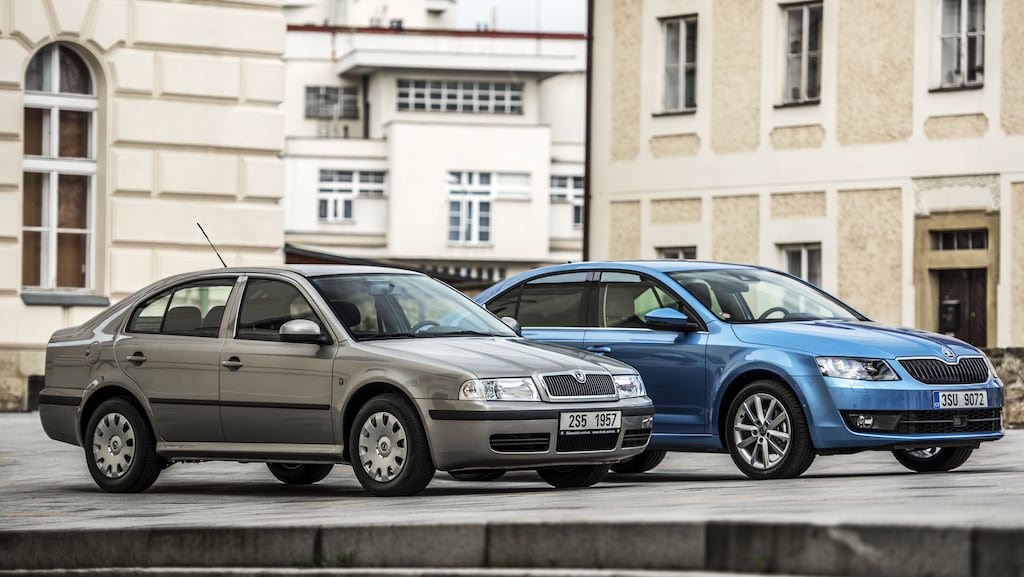
The Skoda Octavia is, and always has been, a workhorse. That’s exactly why it has long been so suited to diesel power – reliable, economical, long-lived and only occasionally wrapped up in a major international emissions scandal. Ahem.
It’s true that Ireland’s car buyers have been steadily falling out of love with diesel power for some time now. The diesel-engined market hit an all-time peak in 2012, when 74 per cent of all new cars sold that year were powered by diesel, driven by lower taxation that encouraged buyers to step into diesels as a way of trimming their motoring CO2 emissions.
Volkswagen Group’s ‘dieselgate’ scandal partially put paid to diesel’s dominance while the rise and rise of electric power after 2020 started, gently at first, knocking nails into diesel’s coffin. Now, in 2026, we’re at the point where more than a quarter of all cars sold are electric, another quarter are hybrid-engined, and diesel is left with just 12 per cent.
Even so, the Skoda Octavia diesel dominates the remaining market for diesel power in Ireland, and it is keeping this low, relatively sleek saloon buoyant in the sales charts, even in the face of endless identikit SUVs.
READ MORE



However, the end is truly now nigh. As Skoda celebrates the 30th anniversary of the Octavia – it was first introduced to the motoring public back in 1996, but it didn’t actually arrive in Ireland until 1998 – the last orders are being taken for the diesel-engined version. By the end of February next year, that will be that – no more TDI Octavias.
[ Skoda’s Superb remains true to its name – but for how much longer?Opens in new window ]
In some ways, that’s a good thing. We need to accelerate the uptake of electric cars if we’re ever going to remove driving from the carbon equation, and it’s also true to say that the Octavia diesel hasn’t always been the greatest car in the world.
Back in 1998, that first-generation Octavia came with the option of an SDI 1.9-litre diesel engine, which means one that didn’t have a turbocharger. It produced a lowly 68hp (a new Dacia Spring electric hatchback has 82hp) and would lose out to an asthmatic donkey in a drag race.
The more powerful turbocharged 1.9 ‘pump düse’ diesel engines became ubiquitous, though, with either 90hp or 110hp. The 110hp was stumpy enough that it gained a red ‘i’ on its TDI badge, bespeaking of latent sportiness. It’s true that oodles of lowdown torque gave those 1.9 TDI Octavias an entertaining turn of speed, but starting one up on a cold morning was not for the faint-hearted. A Ferrari V12 engine whines briefly as its starter motor spins everything up to speed, and then – cough-cough-snarl – catches with an orchestral burst of pure music.
A 1.9 pump düse? Not so musical. Twist the key when the temperature gauge was showing less than zero and your ears were assailed by the sound of individual cylinders trying to overcome inertia and cold fuel to achieve compression ignition.
Chug-chug-chug-chugchugCHUGAAAAAA. It sounded like a squadron of tipper trucks falling off a cliff.
Still, those old 1.9s were reliable – famously a Dublin-registered Octavia taxi breezed past the one million kilometre mark, and others must have got close to that. The diesel engines also became much more sophisticated over time, gaining smoothness, refinement and performance but still being capable of 55mpg everywhere.
The final Octavia RS diesel models, which ended production in 2024, have 200hp, 400Nm of torque, and effortless, entertaining performance. Never mind that, by then, diesel’s reputation had been ruined, and taxation was forcing it out of existence across Europe. Skoda Ireland has been promoting the use of HVO vegetable oil-based diesel substitute as an environmentally friendly alternative, but eco-lobbyists still decry that as being at best a fig leaf for Derv and at worst something far worse for the environment.
So here we are. If you’re determined to drive a diesel Octavia, you have a ticking clock in front of you. Having been the bestselling diesel-engined car in Ireland over the past decade, the Octavia TDI is about to be put out to grass.
To replace it, Skoda is about to introduce an Octavia Hybrid, using the same 1.5 litre hybrid engine as also found in the VW Golf and T-Roc. That car is clever enough that it can spend most of its time being driven by its electric motor, with the engine acting merely as a generator until it’s really needed, but the hybrid battery does compromise the Octavia’s famously massive boot space, reducing it to a mere 460 litres.
If you want one of the last diesels, Skoda will sell you one in Heritage trim, which includes the option of Cognac leather trim for the heated, cooled and massaging seats along with a heated leather steering wheel, privacy glass and nice 18-inch alloy wheels.
Waving bye-bye to the TDI Octavia, Skoda Ireland brand director John Donegan said: “The Octavia, and particularly the Octavia diesel, has created the foundations of the Skoda brand we know today. Becoming Ireland’s bestselling diesel model and helping establish Skoda as the country’s leading diesel brand are achievements of which we are immensely proud.
“Exceptional build quality, reliability and longevity, with many examples exceeding one million kilometres still in operation today, are a testament to just how good the Octavia diesel has been. While diesel power is coming to an end in the Octavia range, Skoda continues to have great confidence in diesel technology, and our customers can look forward to new diesel-hybrid innovations for models such as the Karoq, Superb and Kodiaq in the not-so-distant future.
“In the interim period, the Octavia will receive full hybrid technology later in 2027. Customers can still order one of the final diesel Octavia models, including the newly launched Octavia Heritage edition, created to celebrate 30 years of Octavia and commemorate the final chapter of diesel-powered Octavia production. Early ordering is advised. When they’re gone, they’re gone.”
Sic transit gloria chugga-chugga. Or something like that.