

I grew up in Strandhill in Co Sligo, an amazing little village. My childminder’s house was on the seafront, and I started looking at all the bodyboarding and surfing films that her sons had. They were underground tapes, hard-core Aussie movies, so low-budget they were almost like Jackass. This was the 1990s. I don’t know how these tapes ended up in Ireland, but I was really influenced by them.
Bodyboarders in the 1990s and early 2000s pioneered all of the waves that are famous today. They pioneered aerial surfing and above-the-lip surfing, and then surfing caught up.
I was 10 when I asked my mum and dad for a bodyboard for Christmas. I started doing competitions and by 15 I was on the Irish surf team as a bodyboarder. I remember I spent all my savings, €200, on this bodyboard, and I left it on a bus on Jersey in the Channel Islands. All my team-mates were saying, “You’re a shambles. You’re a mess”. That’s how I picked up my nickname, Shambles.
There’s a kind of animosity between bodyboarders and surfers. Surfers sometimes look down on bodyboarders, calling each other names, all this crazy stuff. The way I define it is if you’re on a board being propelled by a wave, that is surfing. Within that, there are different types: longboarding, which is a board over 9ft; shortboarding, which is a 6ft board; and bodyboarding, which is up to your navel.
READ MORE


In Ireland there is jibing and banter but bodyboarders and surfers get on really well. Ireland has become famous as a place where we work together. It’s something I’m really proud of.
Ireland is the 20th biggest island in the world. It’s slap bang in the middle of the North Atlantic, the most active ocean in the world, but it took a long while for people to realise there are waves here. There are all these storms going around Labrador (in Canada), Greenland and Iceland, and the swells smash into Ireland.
When Mickey Smith, a bodyboarder and talented photographer from Cornwall, started coming to Ireland in the early 2000s he discovered the waves here are 10 times better than England, which has a more established scene and a lot more surfers, because we face into the Atlantic on the west coast.
Mickey was an explorer. He’d come over here and walk the coastline, and eventually he found these crazy waves. He discovered Aileens, which is the famous wave that breaks underneath the Cliffs of Moher, and he discovered Riley’s, also in Co Clare, which is one of the best waves in the country.
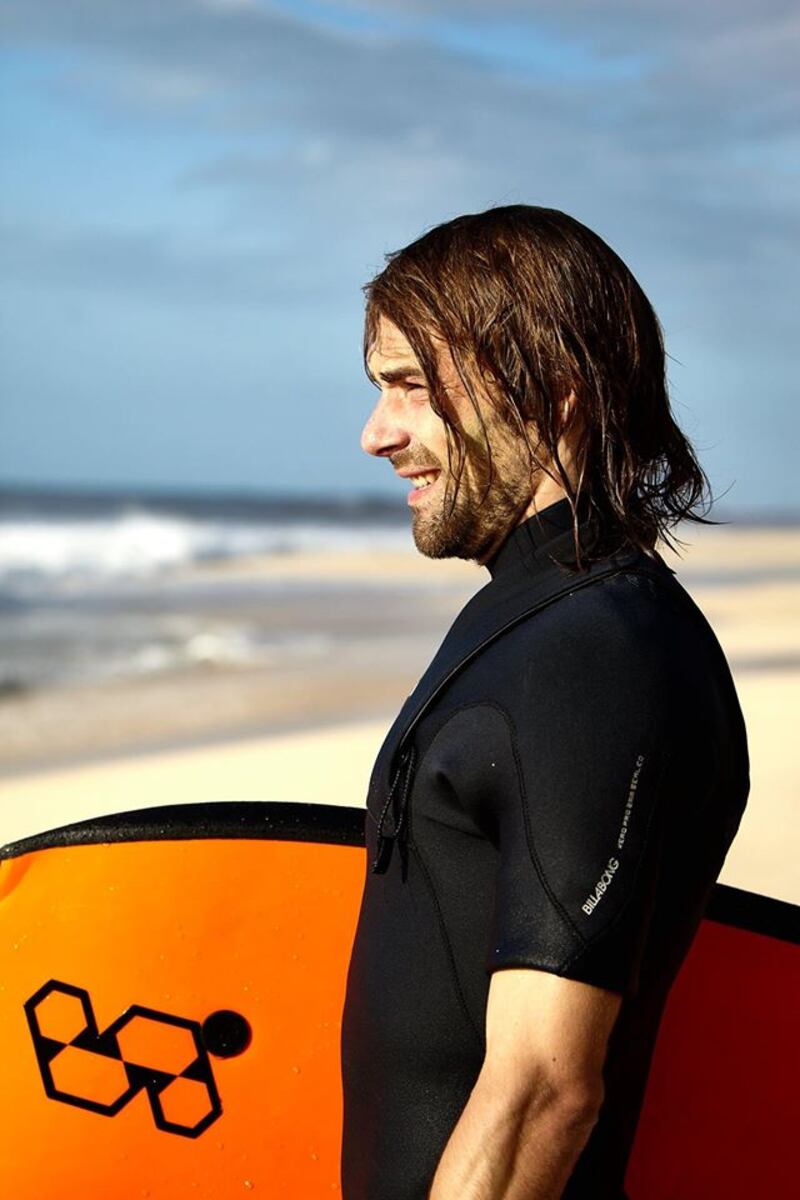
I was part of that era of big-wave discovery with Mickey. From 2004 there was this explosion in Irish surfing, this huge evolution where we started to discover these spots. Bodyboarders discovered most of the heaviest, most dangerous places because the way we like to surf is these incredible waves.
I moved away from competing and really focused on forecasting to figure out when these perfect swells were coming. Forecasting is part guesswork, part fine art: what the wind and tide are doing, what does that spot need, does it work better at low tide, high tide, west swell, north swell. The waves in Ireland are really suited for bodyboarding: heavy, hollow waves with barrels and tubes.
Making these discoveries, we all pushed each other because, obviously, we were scared. When we started, Ireland was probably the best place in the world to be a bodyboarder, because there were no crowds. It was just freezing cold.
The difference between bodyboarding and surfing is huge, but also there’s no difference. It’s like skiing and snowboarding. Ultimately, the board is really just a vehicle to get out there, to the ocean, to the sea.
My mission is to promote surfing in Ireland as a lifestyle, not just as a summer-only event.
I think in the past, Irish people tended to focus on the land. We turned our back on the ocean. We looked inwards. Yes, we are a woodland people, but we are also an ocean people. Now with sea swimming, saunas, surf schools, we are slowly as a nation turning around and seeing the ocean again.

Surfing is so good for mental health, so good for your connection to nature. If you go golfing or playing football, sure, you’re outdoors, you’re in the elements, but you’re on a highly manicured lawn that’s been touched by the hand of man. But the ocean is the wild. There are sharks, there are seals.
You’d expect, with all these images of big waves coming out and all the discoveries, that there would be a lot of young people coming up. But it’s a bit odd. I’m still the national bodyboarding champion, and I’m 40. There’s no one destroying me in the competitions. We are struggling; there aren’t that many young people involved in bodyboarding. I don’t know if it’s the internet or what, but I’d love to see more young people getting into it.
In conversation with Rosanna Cooney. Seamus McGoldrick owns and runs Sligo Surf Experience in Strandhill, Co Sligo, sligosurfexperience.com. He is working on his first book, Waking Maeve: A History of Sligo.


