The war in Ukraine dominated the meeting of the European Political Community (EPC) in Dublin on Thursday, where European leaders repeatedly demanded they should have a place at any peace talks to ensure the Continent’s interests were protected.
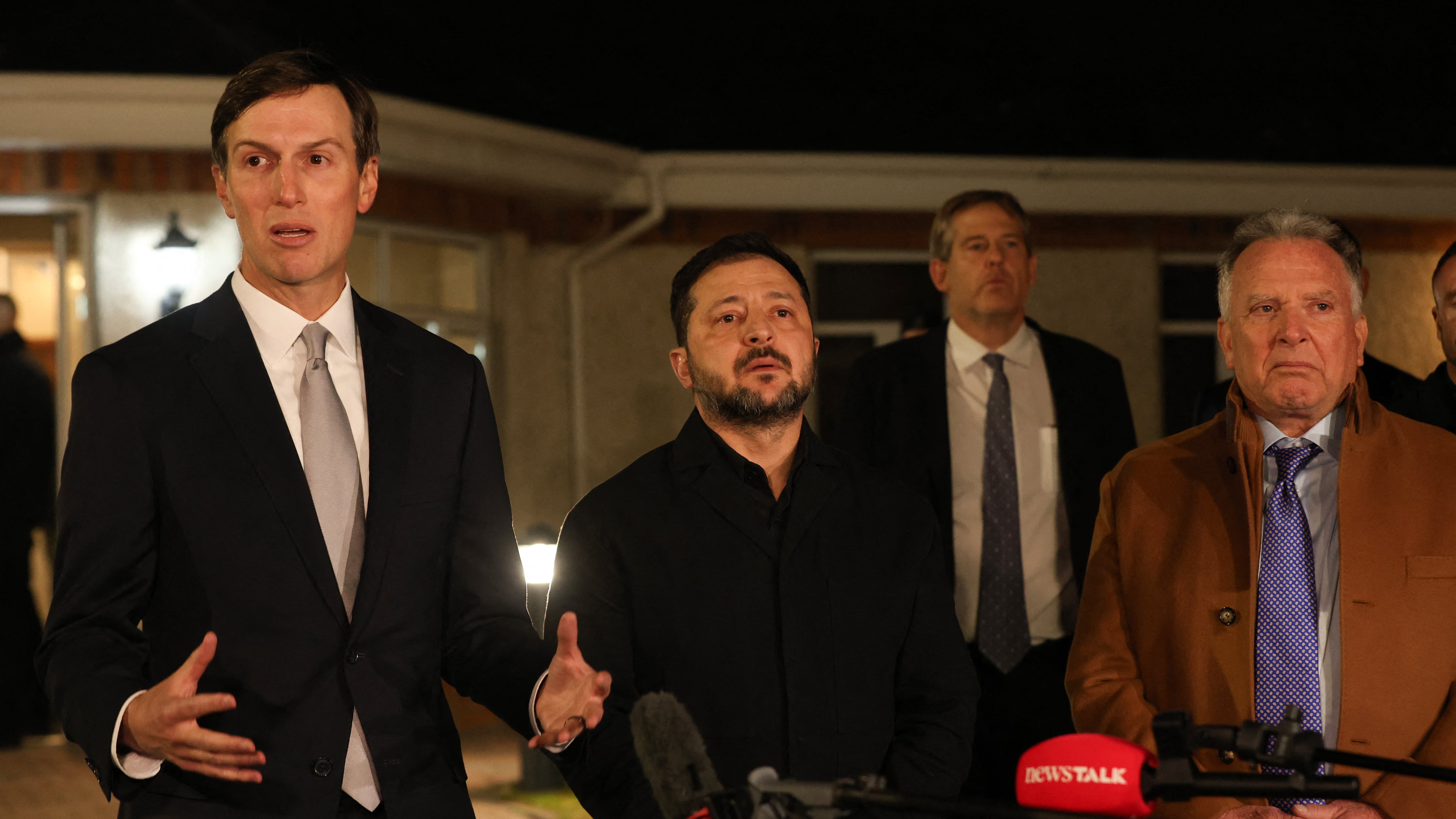
Late on Thursday night, US negotiators Steve Witkoff and Jared Kushner flew from a meeting with Russian president Vladimir Putin in Moscow to Casement Aerodrome in Baldonnel where they briefed Ukrainian president Volodymyr Zelenskiy in a meeting facilitated by the Irish Government.
But there was little sign of a breakthrough in ongoing efforts to reach a peace deal.
After the meeting in Baldonnel, Kushner said that the US side had argued for the Europeans to be included in the negotiations. Witkoff said that they were working hard on behalf of US president Donald Trump to being an end to the war, but gave no detail on any progress made.
READ MORE


“Our soldiers will come home and I am very thankful to all our negotiators. This is a real result, this is very important,” Zelenskiy said.
He said the American side made progress on talks with Putin on Europeans taking part in future talks.
“The American side, the American group made progress on Europeans. This is important that Europeans, next time, next week, Europe will be there during negotiations.
“There will be a negotiation team in, not following, not separately, they will have a voice. This is important for us because the war is in Europe, we will be a member of the EU in the future, that’s why it’s very important.”
Kushner said recent days had been “very intense” and that the meeting with Putin was “detailed and productive”.
“We’ve also been working very, very closely over the past several months with Europeans, and I think that that’s been very important. We cannot conclude this deal without the Europeans being at the table.
“We’ve been telling President Putin that we believe that’s very important, and that President Zelenskiy has been a very strong supporter, he’s been saying that from the very, very beginning, and I think that we’re able to achieve that with President Putin and he’s willing to give it a try.”
Kushner looked forward to the post-war rebuilding of Ukraine and said that the “potential of Ukraine is incredible”.
The Ukrainian delegation told allies on Thursday that they got no sense from talks in Abu Dhabi earlier this week that Russia had softened from its maximalist aims or that Putin was genuinely interested in working out a peace settlement, according to two senior European sources briefed on the readouts Ukraine provided to allies afterwards.
A renewed insistence from Moscow that negotiations should encompass broader questions about the Continent’s security architecture has spooked several European leaders, who fear Putin is seeking leverage to undermine Nato’s presence along the eastern flank of the alliance, or shift the focus from efforts to first agree a ceasefire.
“We will not build a new security architecture simply because the Russian president or someone in the United States wishes it. That is out of the question,” Poland’s prime minister Donald Tusk told reporters.
Describing the US-brokered discussions between Moscow and Kyiv as “negotiations” was an exaggeration, he said.
European leaders were insistent they should be represented at negotiations between Russia and the US that would affect security arrangements in Europe.
António Costa, the president of the European Council – the group of European Union heads of government which is the bloc’s highest decision-making body – told the final press conference last night: “The future of European security can never be discussed without Europe.”
Later he added: “I think the Americans accept that there should be a European voice at the table.”
But leaders appeared no closer to a consensus on who would represent their interests in the event Europe got a seat at the negotiating table.
[ As Dublin becomes centre of Ukraine discussions, what are the big issues?Opens in new window ]
Italian prime minister Giorgia Meloni told reporters that the EU seemed to be “all over the place” on Ukraine and the bloc should speak with a single voice on the conflict.
Costa denied there were divisions and the Taoiseach said that representing the European view was a “team effort”, pointing to the importance of non-EU countries such as the UK, Canada and Norway.
One senior source in Brussels said the focus on picking a dedicated envoy was still a bit premature. Any settlement to end the war – a prospect that appeared remote – would require the input of the EU institutions, Nato and European countries, the official said.
On Thursday morning, amid a security lockdown around the convention centre which closed of parts of Dublin city centre and seemed to persuade many people to work from home for the day, Taoiseach Micheál Martin welcomed a procession of European leaders as well as Canadian prime minister Mark Carney and the heads of international organisations such as Nato and the EU.
The Taoiseach also held a series of bilateral meetings, including with the British prime minister Andy Burnham over the course of the day.
About 1,000 people attended an “anti-war” protest in Dublin city centre, but the protesters were prevented by gardaí from getting near the conference venue and later the National Gallery, where the Government was hosting a dinner for the leaders. There were minor scuffles at one stage and two men were arrested for public order offences.