

The first weekend visitors of the season to Skellig Michael, the monastic island off the Co Kerry coast, were treated to a blast of sunshine and blue skies on Saturday.
The island, an Unesco world heritage site, opened to tourists last Tuesday but bad weather and choppy seas meant Saturday was just the third day visitors could land here this year.
It was not until 15 minutes into the 75-minute boat trip from Ballinskelligs that there was an audible yelp from passengers being ferried over a heaving sea on the Force Awakens, a boat named after the Star Wars movie filmed on Skellig Michael in 2014.
“That has kind of died away,” says boatman David Walsh on the number of Star Wars fans who venture out to Luke Skywalker’s fictional refuge.
READ MORE


A kind westerly wind made Saturday’s landing on the east pier smooth for the boat and 14 others that hold permits to land 180 people – 12 to a boat – every day on the towering crag George Bernard Shaw once called an “incredible, impossible, mad place”.
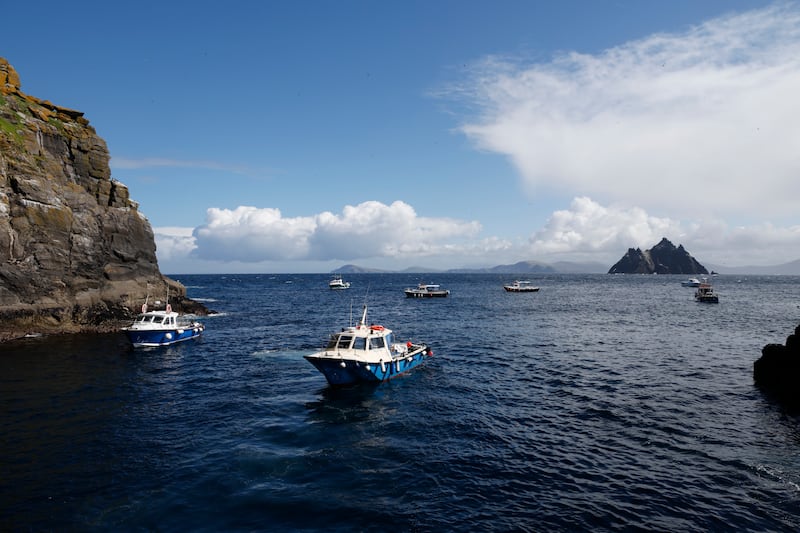
“That is for safety of the visitors,” says Maggie Keane, the island’s supervisor guide, explaining the visitor cap, “but also because it is a special protection area for birds. It is a very fragile site.”
Bad weather last September, and a row at the start of last year’s season between boatmen and the Office of Public Works, the Government agency and custodian of the island, shortened the 2025 landing season.
The island usually opens from mid-May to the end of September but given how bad September’s weather was, Walsh thinks the island should open from mid-April.

“We would be very lucky to get 80 to 85 [landings] this year,” he says.
Walsh’s father Brendan, who drives the boat, first brought visitors to the Skellig in 1982 when it cost £8 a passenger (it is €160 a head today).
“There were no guides, no permits needed. You just got a boat and came out here,” he says.
Others already landed on Saturday were the island’s birds including razorbills, storm petrels, Manx shearwaters and, of course, the Skellig’s famous puffins (there are about 8,000 here), the bright-beaked, burrowing seabirds whose moos and moans provide a soundtrack for tourists ascending the 600 steps to the monastery atop the Skellig.
Visitors laugh awkwardly when Keane explains how the monks ate puffins and their eggs (among other things) to sustain themselves when they lived here in their beehive huts between the 6th and 12th centuries.
At any one time there are three guides on the island along with a number of workmen. Guides work two weeks on, one week off and there is not much in the way of modern conveniences, though there is a solar panel to run a fridge.
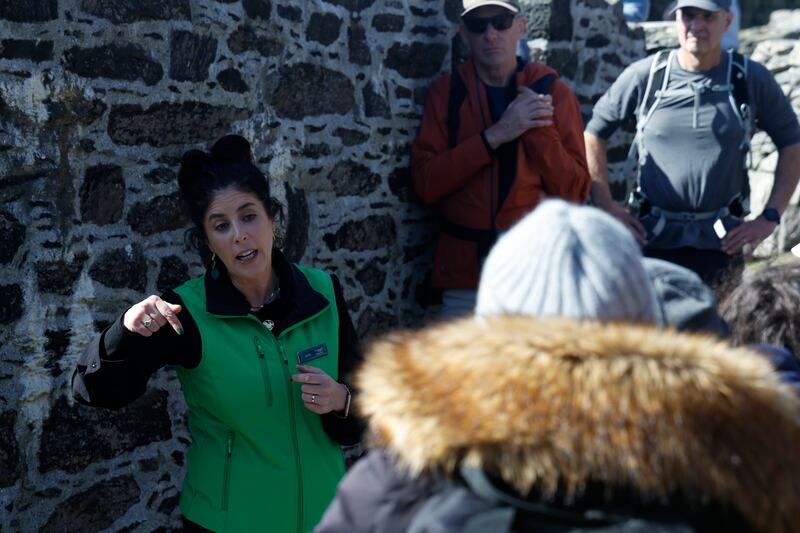
“It is a great view for breakfast,” says Keane.
Visitors come to the Skellig for different reasons, she adds, “but you leave with a different perspective.”
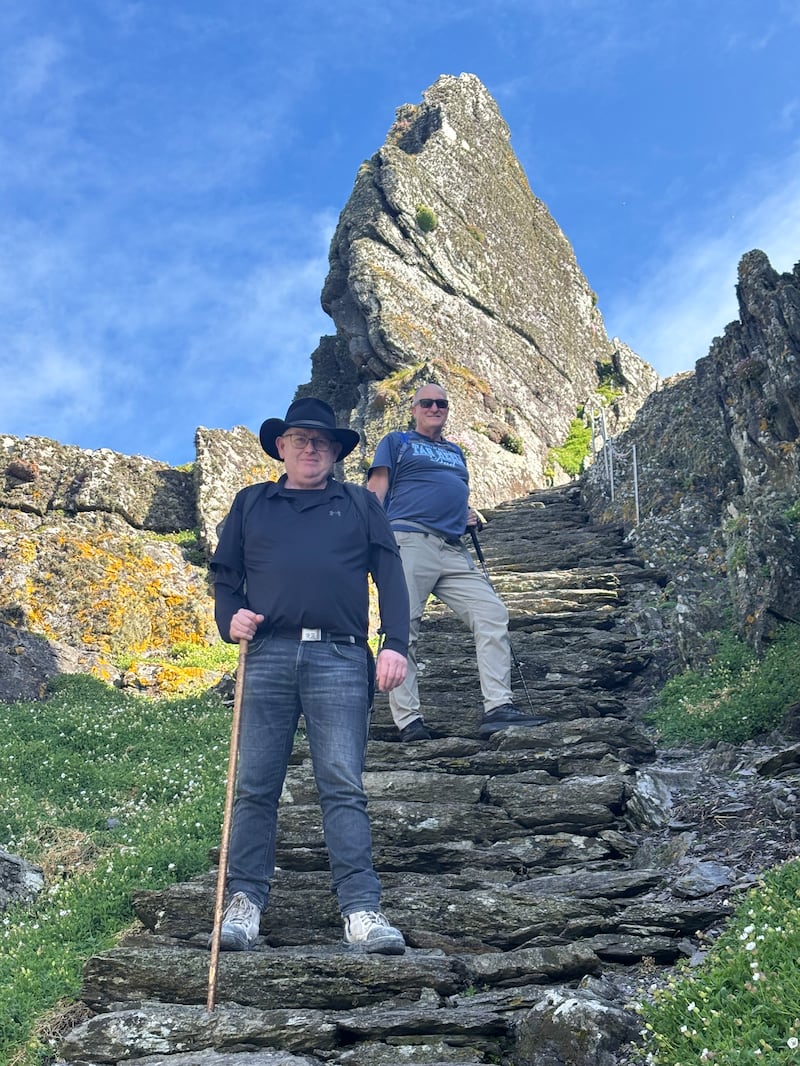
Charlie Bonin (63), from Australia, descends the steps from the monastery slowly – “I have a dodgy knee” – with Irish brother-in-law Barry Healy. The Skellig “was on his bucket list”, says Healy.
“I said if I didn’t do it now, I would be too old,” says Bonin.
Lucy Karanfilian, from New York, made sure she was the first person up the steps into the monastery.
“It is such an extraordinary place,” she says.
Rebecca Gill, from Cork, says it is “lovely to get a glimpse of what life was like hundreds of years ago in Ireland”, while Denis O’Riordan, travelling with her, notes that it seems “so untouched from nearly 1,000 years ago”.
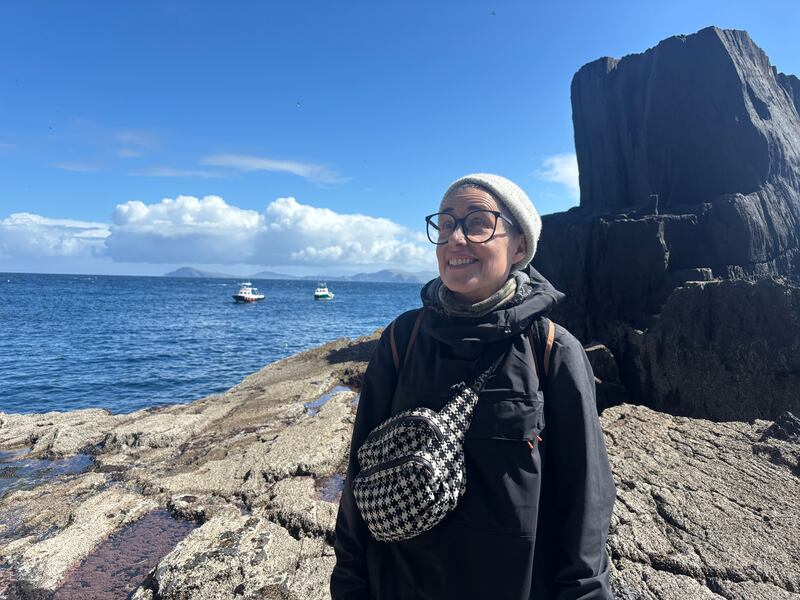
At the monastery, John O’Neill, from California, ponders the reclusive lives of the “tough” monks in such a remote, weather-beaten spot. “How did these men live out here?”
He thinks it “appropriate” that he and his companion Terry find themselves on this particular island on a holiday away from the US under president Donald Trump.
“Skellig Michael has been a place of refuge for many centuries – it feels like that a bit for us too,” says Terry, smiling.


