“Our job is to deal with people from the first moments of their lives to the last moments and everything in between,” said emergency medical technician (EMT), Domhnaill Joyce as he picketed the country’s largest National Ambulance Service (NAS) centre with other Siptu members during Tuesday’s nationwide strike.
The ambulance strike, which is due to run until 8am on Wednesday morning, involves almost 2,000 paramedics, advanced paramedics and EMTs. While emergency cover was being provided, the Health Service Executive (HSE) said people should expect significant delays to non-emergency calls and should consider making their own way to emergency departments or obtaining support from other services like GP clinics, injury units and pharmacies.
Joyce has been with the NAS for 15 years, having come from the ambulance service at Dublin Airport. He says the scale of change he has witnessed in that time is at the very heart of the dispute.
“This service developed from a situation where a lot of hospital porters switched to driving ambulances because of the overtime,” he says.
READ MORE


“Twenty years ago we had a grey woolly blanket in the back, a stretcher, splints, a bottle of oxygen and a bottle of Entonox, which was all there was for pain. Now, we can administer morphine, ketamine, all sorts of advanced drugs but back then if you’d given someone a paracetamol you’d be shot.”
These days, he says, “everyone is third level, they’ve all been to university. Back then it was all about following protocols. The classic example would be that everyone involved in a road traffic collision would be taken out on a spinal board and then you get them to hospital but now the training is about you making assessments about injuries and what care is needed at the scene.
“The responsibility comes when you have to make decisions, provide the care required to hopefully save someone’s life on the side of the road, that’s what we want recognised,” he said.
Though paramedics start on much the same money as nurses – about €38,000 – the nurses’ pay scale takes them to €56,000, which is €9,000 more than the paramedic’s basic pay will reach.
[ Ambulance strike under way as group warns move poses ‘significant risk’ to livesOpens in new window ]
Paula Lawless, a paramedic who has been working on ambulances for 30 years, is at the top of the scale and also gets some allowances including for working weekends. But, she says: “For a young person starting out, that’s not going to be enough to buy a house.”
The HSE says that two previous proposals, formulated when the two sides were at the Workplace Relations Commission, were recommended by the two unions involved (Siptu and Unite) to their roughly 2,000 frontline members. However Joyce, a Siptu shop steward, says the deal came with strings and looked forward to the introduction of further change while the staff want recognition of changes they have already adopted to be addressed first.
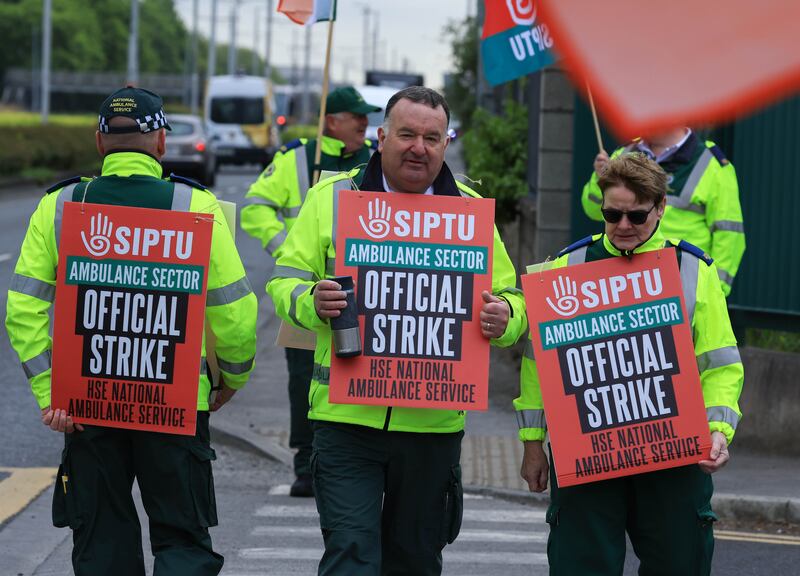
“The roles of nurses and guards have changed too, but it’s been addressed in their cases while we’ve been left behind,” he says. “Nurses are making the same sorts of decisions we are but they are usually making them in hospitals with the support of other staff, we’re making them on the sides of roads.”
The major emergencies, he suggests, account for “maybe 20 to 25 per cent of the work,” while the rest of it is hugely mixed but all centred on patient care. Joyce has, he says, delivered three babies while “sometimes we might be bringing somebody out of their house for the very last time and dealing with them, their families, the staff at the hospital or hospice. We’re very proud of the role we play”.
In a statement, the HSE said it and the Government “accepts the need to both increase and modernise pay arrangements for our staff working in the National Ambulance Service (NAS) but is also obliged to ensure that in exchange for significant increases in pay, our services can continue to transform to meet the needs of the public”.
The unions say management’s determination to move on to future workplace change before addressing what has happened to date is the issue.

Senior NAS officials expressed concern for patient safety ahead of the strike. However, Siptu sector organiser John McCamley says close to half of staff are actually working under the emergency cover protocols which, he says, go beyond what was required of the union side. “There is an ambulance parked there,” he said, pointing to one a few metres from the picket line, “and if an emergency call came in that couldn’t be dealt with, we have an arrangement for two of the staff to leave the picket and answer the call.”
As of early Tuesday afternoon, no talks to resolve the dispute were planned. A 48-hour strike is planned to start next Tuesday, May 19th, with a 72-hour one to follow the Tuesday, May 26th, after that.


