


In the summer of 2022, Colin O’Mahony was fit and healthy. He completed a section of the Camino de Santiago, the ancient pilgrim walking route in Spain, with his friend.
He sent updates home from their trip, dubbing them Colino on the Camino. It wasn’t long after when he noticed a pain in his lower back and decided to get it checked by a doctor as a precaution.
The couple weren’t very concerned, says his wife Julie. When he received a diagnosis of renal cancer two weeks later, it came as a complete surprise.
“By the time it was discovered, it had spread ... to his liver, his lungs and his bones,” she adds.
READ MORE


!['By the time it [the cancer] was discovered, it had spread ... to his liver, his lungs and his bones,' says Julie O’Mahony, of her husband Colin's cancer diagnosis. Photograph: Nick Bradshaw/The Irish Times](https://www.irishtimes.com/resizer/v2/FGUK7XFLUBAT5I7XJGN3FC4U6A.JPG?auth=3c0af1a2c13c373502934e4370761baf935e3a7fc21a6a9da0f53cbcc5535264&width=800&height=533)
Colin’s oncologist said the treatment he needed was a cancer drug called Keytruda, also known as Pembrolizumab, but it was not available on the public system for his specific diagnosis and their private health insurer Laya told them it would not cover the cost of the drug.
“He badly needed treatment. We were looking at funding it ourselves. We were going to borrow money, get a price for it; we just knew that’s what he needed,” says Julie.
In the end, after campaigning, Laya did a U-turn and provided the drug to them.
In a statement, the insurer said cover for cancer drugs, including Pembro, is subject to a “case-by-case review, evaluated under multiple criteria prior to approval”.
“Decisions are made in the best interest of patient safety and clinical effectiveness,” the Laya spokeswoman said.
Colin took the cancer drug for just over a year and a half, providing him with valuable hope and time with his family until his death in March 2024.
“At the start, he was stable, so it bought him time. We have four daughters and they’re teenagers now, but they were young enough at the time,” Julie says.
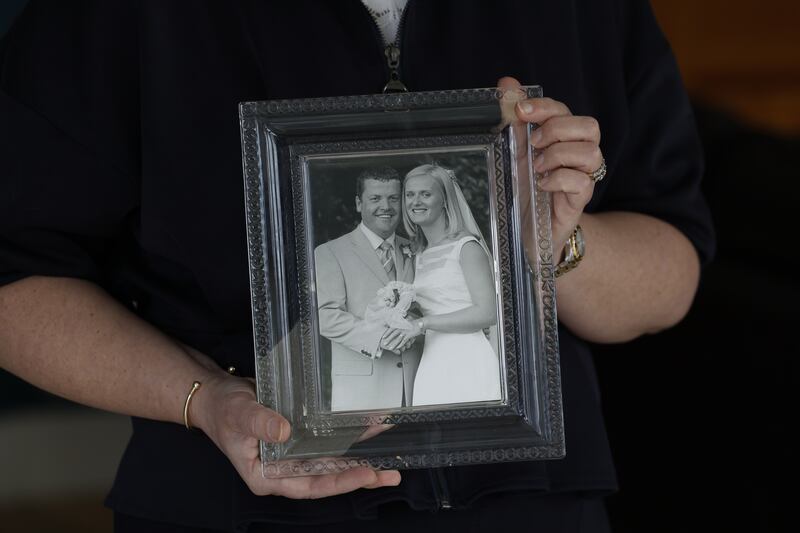
Colin O’Mahony was not the only cancer patient in Ireland or abroad who has had difficulty accessing Pembro, a blockbuster drug that for many people can save or prolong their lives.
A year-long investigation by the International Consortium of Investigative Journalists (ICIJ) and 49 media partners across 37 countries, including The Irish Times, has uncovered how the exorbitant costs of the game-changing cancer drug means for many patients it is inaccessible, and for many countries the costs are mounting.
MSD – known as Merck in the US and Canada – the company behind the innovative medication, has, like many other pharmaceutical companies, deployed tactics to extend its exclusive ownership of the product and recommend high doses of the drug.
In Ireland, Pembro became more publicly known after Vicky Phelan, the cervical cancer campaigner who died in 2022, travelled to the United States to access the drug, at her own expense. The drug, she said, provided her with three additional years she believed chemotherapy would not have given her.
Since then, the drug has become one of the most commonly used anti-cancer drugs in the world. At home, the State’s expenditure on the medication has increased 800 per cent over the past decade.
Data obtained under the Freedom of Information Act found the health service in 2017 spent €9.7 million on Pembro, rising to €86.3 million in the first 11 months of last year.
The number of claims for the drug during that same period increased from 1,219 to 9,255, meaning more patients than ever before are being prescribed the medication.
But this rapid increase creates problems for the State.
Ireland’s medicines bill now stands at between €3 billion and €4 billion annually – twice the State’s entire defence budget – with senior health officials acknowledging that this trajectory cannot be allowed to continue.
In 2022, the National Centre for Pharmacoeconomics (NCPE) pointed to Pembro as one reason behind the surge, noting spending on the drug increased by more than 40 per cent year-on-year between 2018 and 2022.
“This is due to an increasing number of licence extensions being granted for Pembrolizumab, resulting in increased utilisation,” says the independent agency that evaluates drug treatments in Irish healthcare.
Once a drug is approved by the European Medicines Agency (EMA), the NCPE evaluates its cost-effectiveness before it can make a recommendation to the Health Service Executive (HSE) to reimburse it for public patients.
Decisions published by the body show the difficult decisions they must make when weighing up the cost-benefit of using each drug.
In some cases, such as the use of Pembro for triple negative breast cancer – an aggressive type of invasive cancer – it voted to approve the drug “notwithstanding the exceptionally large budget impact”.
But in other cases, it decided against the use of the drug as it did “not represent an optimum use of HSE funds”.

In response, some patients have sought to crowdfund their own treatment.
A spokeswoman for online fundraising platform GoFundMe said that since 2019 there were seven fundraisers set up by people in the State to raise funds for Keytruda, though none have been set up in the past two years.
Ireland is in a uniquely frustrating position for patients and oncologists, given a large proportion of global supply of Keytruda is manufactured in a 44,000 square metre site in Swords, north Co Dublin.
Mairéad McCall, managing director and head of the country leadership team at MSD Ireland, told the Taoiseach in 2022 that Irish sites manufacture about half of MSD’s top 20 products, according to a letter she sent him.
The public health system reimburses only 16 indications – a regulatory term for why a treatment is used – for Pembro, which includes various types of cancers such as melanoma, Hodgkins’ lymphoma and gastric cancer. A further 10 indications are currently under consideration by the NCPE.
For those with private health insurance, the picture is different.
The three main health insurers – VHI, Irish Life and Laya – tend to cover the cost of these products to patients as soon as they are approved for use by the EMA.
This creates a two-tier system: patients without insurance are unable to access these drugs unless the pharmaceutical company decides to provide it to them on compassionate grounds.
The speed of the reimbursement assessment process has faced consistent criticism. Approval generally takes 617 days, rising to 694 days for cancer treatments, according to 2025 research from the Irish Pharmaceutical Healthcare Association (Ipha).
The Government last month agreed to a new five-year medicines agreement, which Minister for Health Jennifer Carroll MacNeill said would speed up access to these new medicines.
Jim McGrath, director of commercial policy at Ipha, which represents pharmaceutical companies, said the current system can result in “delayed care, longer hospital stays, lost workdays among other impacts” for patients.
However, he added the new agreement “marks a real turning point” and for the first time there is a “Government‑backed commitment to achieving the legal 180‑day timeline for reimbursement decisions”.
A spokesman for MSD Ireland also welcomed the agreement, adding the organisation is committed to working to “support timely and equitable access to innovative medicines”.
‘There will always be competing demands in a finitely resourced healthcare system’
— Ronan Mahon, health economist at University of Galway
The amount the State pays for drugs is confidential, but it is typically lower than list price. Sources in the industry have said there are often significant discounts provided for oncology drugs, with prices reduced by up to 60 per cent in some cases.
The lack of transparency is a key problem, according to an Irish study, published in March, which found just 8 per cent of breast cancer patients surveyed believe the cost of Pembrolizumab, which works out at €107,231 per patient per year, is acceptable.
Health economist Ronan Mahon, lecturer at the University of Galway, said these financial dilemmas were “unavoidable” because “every euro spent on one treatment is a euro unavailable for another”.
“There will always be competing demands in a finitely resourced healthcare system,” he says.
“We would want such decisions to be made in a way that is consistent, transparent, evidence-based and that maximises population health, which I think the HSE is endeavouring to do.”
The industry maintains that pharmaceutical companies are businesses and their goal is to turn a profit, particularly given the high research and development costs.
Johanna Herrmann, senior vice president and chief communications officer at MSD, said the company has made “significant investment” in Pembro: $30 billion (€26 billion) in internal development efforts, $14 billion in research collaborations to study the drug with other compounds and $2 billion in capital expenditure.
It would appear that investment is paying off with MSD’s full-year sales for last year reaching $65 billion, according to the company’s latest financial results.
Rob Davis, chairman and chief executive of the company, said the business “benefited from demand for our innovative portfolio, including for Keytruda”.
The exclusivity for Keytruda is due to end in the US in 2028 and in Europe in 2031, after which point more affordable biosimilars – biological medicine highly similar to another already approved biological medicine – are expected to come on to market, affecting the company’s profit.
Last year, pharmaceutical companies, including MSD, waged a significant lobbying campaign at European level against proposed changes to the number of years a company maintains exclusivity over new drugs they produce before cheaper, generic options come on to the market.
The European Commission had proposed cutting the eight years’ “protection” over their data from research and clinical trials to six years.
In the end, a large majority in the EU parliament voted to set the minimum amount of regulatory protection at 7½ years, just six months less than the current period in what was viewed as a victory for the pharmaceutical industry.
Potential tariffs being posed by US president Donald Trump was also a concern for organisations and the countries in which they operate.
Taoiseach Micheál Martin held a call with Davis on April 3rd, 2025, in which the Taoiseach “outlined Ireland and the EU’s position in relation to tariffs and trade developments” and Davis gave perspective on “developments and ongoing contracts with the US administration”.
A note on the call, obtained under the Freedom of Information Act, said the pair “also discussed EU competitiveness issues, including proposed reforms to pharma, support for innovation to the EU, as well as wider trends in health and drug pricing”.
But there are other ways in which the State – and taxpayers – could reduce the expenditure on the drug, according to researchers.
MSD recommends “flat-based” dosing, which is 200 mg of Keytruda every three weeks. But clinical trials internationally have suggested that weight-based dosing – meaning the lower weight of a patient, the less drug that is administered – is just as effective.

Researchers for the World Health Organisation estimated in a modelled projection that the world could save $5 billion if lung cancer patients received Keytruda based on their weight versus fixed-dosing amounts.
In Ireland, a study conducted in Cork University Hospital, published in 2020, found 28 patients underwent flat-dosed Pembrolizumab in 2018 and 2019.
“While the cost per flat dose of Pembrolizumab was €8,086, the median hypothetical weight-based cost per dose was €5,758.50,” the research found.
“We calculated that if weight-based dosing were used, it would translate into a total cost saving of €635,417.50 for the entire cohort receiving Pembrolizumab during the period.”
This is just one hospital, so it’s reasonable to consider the potential national savings if this format of dosing was used across the State, says Seamus O’Reilly, one of the senior authors on the study.
MSD’s Herrmann says strategies to save healthcare costs are “vital” but adds that it is “more vital” to provide appropriate care to patients.
“In a life-threatening and challenging disease such as cancer, it is critical that the dosing for a cancer therapy is established through well-designed clinical trials evaluating the effectiveness and safety of the therapy.”
Outside of dosing, O’Reilly, a consultant medical oncologist and clinical lead at Cancer Trials Ireland, called for an optimisation of cancer drugs given that they are expensive, innovative and used for a very common illness.
“The first thing is we could have more clinical trials; a lot of the drugs are provided by the company. The other thing is biosimilars, which are similar to the drug but are cheaper. Maybe there should be collective bargaining about the cost of biosimilars,” he says.
O’Reilly believes this issue is going to become more acute as European approval was given in November last for subcutaneous versions of Keytruda – a method of delivering medications under the skin that offers faster administration than through an IV.
“The cost differential for them is significant,” he says, but adds that the quick nature of how the drugs are administered could have other benefits such as patients not requiring hospital stays.
The development of new versions of medicines, including subcutaneous varieties, as original patents expire is common in the pharmaceutical industry and typically slows the adoption of cheaper competitors.
Regardless of the difficult financial decisions, there is one overarching theme from clinicians, researchers, industry bodies and patients: the current system is “inequitable”.
More than two years after the death of her husband Colin from cancer, Julie O’Mahony says families have enough to contend with after receiving a cancer diagnosis and conversations around accessibility of treatment add to the stress and trauma of that time.
“Everyone should be given the strongest chance possible given how prevalent cancer is, given the money in the country, given how hard everyone works,” she says.
“Everyone should be able to get access to treatments if you need it because that’s what we kind of expect. You don’t expect you’re going to have to fight for it on top of everything else.”


