

In the heart of Dublin’s north inner city sits the oldest continuously operating maternity hospital in the world.
Having first opened in March 1745, the Rotunda Hospital is one of the busiest in Europe, delivering an average of more than 8,000 babies every year.
But with successes come challenges.
In an interview with The Irish Times earlier this year, the Rotunda’s master, Prof Seán Daly, outlined the need for the hospital to expand to meet the demand for its services.
READ MORE


Pregnant women were, he said, being transferred to Drogheda hospital to deliver their babies because there were no beds in any of the Dublin maternity hospitals.
This, Daly added, was becoming a more common occurrence, as demand on the hospital was rising even as the State’s birth rate decreased. Little wonder, then, the Rotunda has identified the need for a new critical-care wing.
The news that planning permission for the extension has been turned down by An Coimisiún Pleanála will come as a blow to the Rotunda’s attempts to continue meeting the needs of the population it serves. The proposed four-storey critical-care building would have caused irreparable damage to the character of Parnell Square, the planning authority decided.
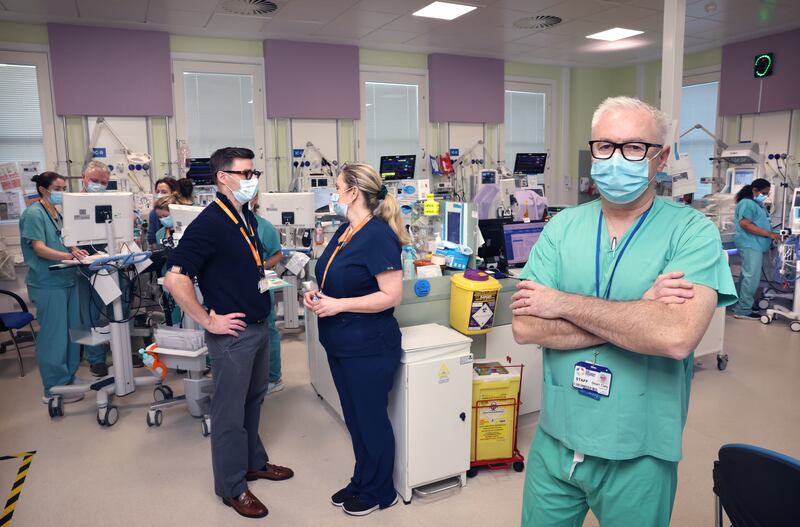
When objections were lodged against the plans last year, Daly wrote to 46 politicians – including Minister for Health Jennifer Carroll MacNeill – begging all of them to “review the planning process with respect to healthcare-related infrastructure”.
Asked what would happen if things did not go the hospital’s way in the appeal process, Daly was emphatic in saying there was “no plan B” and the facility would not be moving.
In 2015, then minister for health Leo Varadkar announced plans to relocate the Rotunda to Connolly Hospital Blanchardstown, a decision that faced criticism at the time over the potential loss of maternity services in the north city.
Since then, there has been little to no conversation about any possible move. Daly and Carroll MacNeill have stated their preference for the Rotunda to stay in its current location due to the short emergency transport route between it and the Mater hospital.
Adding to this, the Rotunda’s location allows it to cater to specific cohorts of people: those living with high levels of deprivation, people struggling with addiction and migrant communities.
The health system already faces difficulty in encouraging disadvantaged individuals to engage with the services it provides. If the Rotunda moved to a different location, how much more difficult might this become?
Concerns and criticisms of the State’s planning system have been well flagged. Much-needed housing developments have languished in the system for years, even as the numbers living in State-funded emergency accommodation keep growing. The same could be said for vital infrastructure, such as the Greater Dublin Drainage Scheme.
So what happens next? Carroll MacNeill said all options will be considered, but a judicial review would delay the project for years and the Rotunda needs to expand immediately.
The Rotunda’s motto is the “maternity hospital of choice”, and if a woman chooses to go there they will be cared for, Daly said.
“We have about 580 women coming from Kildare. Now, you could argue that Kildare isn’t in our catchment area but we don’t take that view. If women want to come to the Rotunda we will look after them.”
But if demand continues to increase, and nothing changes in terms of capacity, the continuation of this policy would appear to be at risk. Unless more critical care beds are provided, it seems likely an increasing number of women will be transferred to hospitals outside of Dublin in an effort to ensure they receive the care they need in a timely fashion.


