
“I call this the fish finger of venison,” says chef Jess Murphy as she cajoles a sizzling loin of venison about a pan. At her Galway restaurant Kai, Murphy is cooking one of her two current best sellers; a venison loin from her evening menu. A venison mince kofta from lunchtime is similarly popular. “Loin cooks really quickly as it has no fat on it,” says Murphy. “We serve this with pomegranate molasses stew and Roscoff onions – it’s a really popular dish.”
Murphy sources her venison from Gourmet Game in Scarriff, Co Clare. “I’ve been working with Eamonn [Giblin] there for 17 years. I actually heard about him from my beautician who shoots game. She was like. ‘I know this guy in Clare who does venison, do you want his number?’ So since then I cook it a lot of it: mince, haunch, loin, the whole shebang.”
Hunting game was not an unusual activity for Murphy as a child growing up in New Zealand; she has stories that are definitely not for the faint of heart. “I’d go duck shooting with my dad and I’m now the creepazoid at a dinner party telling hunting stories. Growing up I used to make bullets for my dad and my brother for pocket money and my stepbrother Philip would hunt boar as we have a lot of wild boar in New Zealand.”
Kai’s practices on sustainability and local sourcing have been recognised by Michelin via its green star programme. For Murphy, venison is the most local and sustainable meat you can find. “These animals are grazing on wild plants and medicinal herbs – you can’t find a more sustainable meat. It’s also higher in protein than beef, with less fat. Everybody’s going protein mad at the moment – but why drink oat milk with protein powder in it when you can eat something amazing that’s growing wild on this island?"
READ MORE


Niall O’Sullivan, head chef of the Grain Store restaurant at Killruddery House in Co Wicklow, is all too familiar with the over-population of deer in that county. Deer are frequently seen along the N11 road and, from foraging, he has seen damage caused by deer in upland areas.
O’Sullivan has cooked in Australia and worked for many years at Isabel’s and Bang in Dublin, where venison was on the menu.
“We have it a lot on the menu here in Killruddery and I like to marinate it for tenderness and flavour, even the loin. Loin is very tender anyway but also very lean, so marinating adds oil and flavour. Then I seal it on a hot pan before it goes into the oven. I think 120 degrees is a bit of a sweet spot for lamb and venison, and it should be cooked to 55-58 degrees. Give it a little rest and then carve – it should be top to bottom pink and super tender. Absolutely delicious. I also love to make venison tartare; that sells really well at our supper clubs.”

Butcher Pat Doyle runs Wild Irish Game, one of best-known suppliers of game birds and, principally, venison. He has five refrigerated trailers in rural locations which act as collection stations for hunters to drop in deer they have shot. These are then brought to his processing plant in Clane, Co Kildare and the meat is sold to retailers and restaurants all over the country.
[ Seven great classic restaurants to visit around IrelandOpens in new window ]
“Most of the high value stuff – loin for example, is sold in Ireland and a lot of it to restaurants. We also sell venison in Aldi, Lidl, Dunnes and Super Valu. We also export but most of the prime cuts are sold here in Ireland, and this has been one of our best years for sales,” says Doyle.
He sees high beef prices as helping venison sales. “Yes, it offers great value and a venison steak is as good or better than beef.”
While direct comparisons can be imperfect, on thevillagebutcher.ie, shoppers can buy 500g of diced wild Irish venison for €7.99, while the same weight in diced beef would be €10. A 500g fillet beef medallion would be €29.99, while a 400g wild venison fillet would be €19.99.
[ ‘Wild Irish venison is one of the most sustainable red meats you can eat’Opens in new window ]
The deer shooting season traditionally begins in autumn and ends in April, but licences called Section 42 permits are now available to shoot male deer in the summer months in areas where damage is being done, so fresh venison is available year round. “Last year we supplied Dunnes with fresh product 52 weeks of the year and there is demand for it all year, although most chefs still like to put venison on their menus in the winter months.”
In the past, venison was sometimes regarded as either an elite food from country estates or a meat that tasted too gamy. Animals living off wild vegetation have a more musky, earthy taste. And the longer their carcass is hung before eating, the stronger this flavour becomes.
“When I was a child we were eating venison hung for probably two weeks and that’s why some people might remember not liking the taste,” says Doyle. “Now we hang it for just a week – you get a lovely red meat and a taste similar to beef, if not better."
For O’Sullivan, education is key to getting more people eating this wild food. “I think the perception for many people is that venison is a restaurant item rather than something you cook at home. More education is needed – tasting events might help get the message out more and help people eat more sustainably and locally.”
I eat venison a lot and as a farmer we grew up eating all sorts of game
— Michael Keegan
In recent years, the increase in deer numbers has posed serious challenges to farming, biodiversity and road safety, particularly in several “deer hot spots” in Tipperary, Galway and Kerry, as well as Wicklow. In response to this, the Irish Deer Management Strategy Group (DMSG) was set up last year by the Department of Agriculture, Food and the Marine, the National Parks and Wildlife Service, and Coillte. The idea was to bring together land owners and hunters to try to tackle deer numbers where they are doing particular damage.
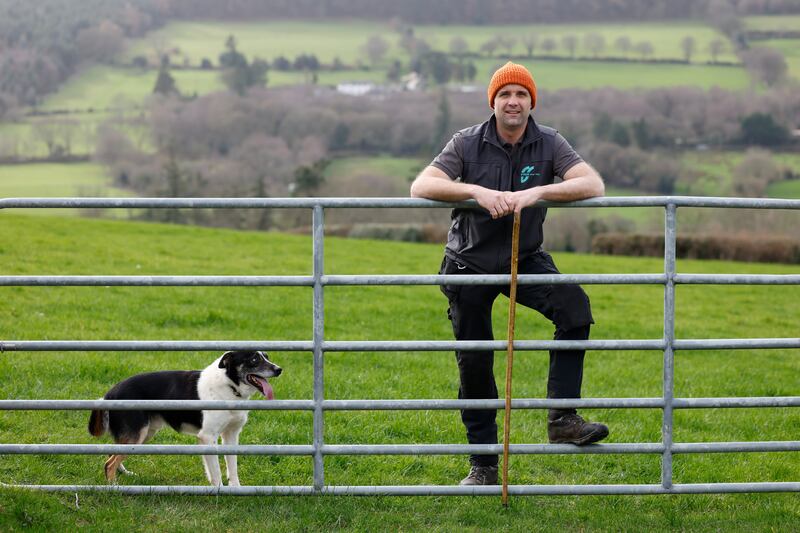
Farmer and hunter Michael Keegan, from Enniskerry in Co Wicklow, is leading the DMSG on behalf of Farm Relief Services, a farmer-owned co-operative that supplies skilled labour.
“In some parts of the country, deer are causing damage to farmland, destroying young trees and over-grazing upland areas. We’re now seeing deer coming down to lower ground, on to roads and in some cases causing accidents.”
How and why has the population suddenly expanded? “Deer have no natural predator so numbers have been steadily increasing. Then, during Covid there were travel restrictions so a lot of lads weren’t shooting.
“Our primary function is to provide structure,” says Keegan. “National Parks and Wildlife Service issue the licences and determine shooting seasons, but after that it’s pretty much left up to the hunter.”
The Deer Management Strategy Group has appointed 15 local coordinators to oversee deer management units in the identified deer hotspots. “It will take time – population reduction will not happen overnight, but on the plus side we have all this venison and it has to go somewhere.”
In Britain, some NHS hospitals have partnered with Forestry England to use venison from culled deer in high-protein, low-fat meals such as casseroles served to patients. As a very healthy and sustainable meat, should we be promoting it more in Ireland?
“I eat venison a lot and as a farmer we grew up eating all sorts of game,” says Keegan. “For urban people, I know many are less familiar with it but I would love to see more venison being eaten. At the moment though, our focus in the DMSG is tackling areas that are having high impacts from deer. But part of our remit is to look at venison markets and try to promote consumption further down the road.”
[ Irish deer populations have become rampant, and the trees are paying a priceOpens in new window ]
“Venison is an amazing product and right on our doorstep,” says Murphy. “I’d love to see venison mince in supermarkets, venison in ready meals; lasagnes, burgers ... We need to take the snobbery out of venison and mainstream it.”
Two venison recipes
Niall O’Sullivan’s loin of Wicklow wild venison, Killruddery farm Jerusalem artichokes, oyster mushroom dressing
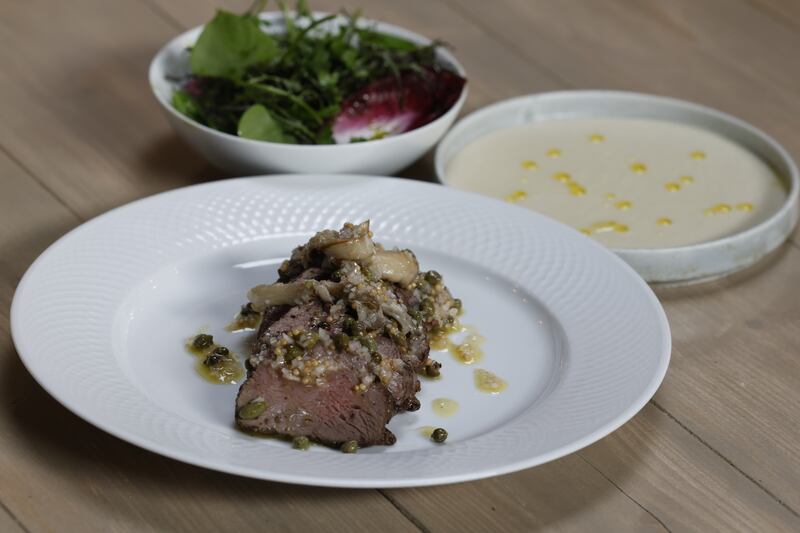
I like to marinate venison loin even though it’s so tender you can cook it without a marinade. This is a dish we serve at the Grain Store in Killruddery using artichokes from the farm and oyster mushrooms from Ashford Mushrooms.
Ingredients, serves 2
- Loin of red deer wild venison 240g
Marinade
- 100g vegetable oil
- 3g maldon salt
- 3g juniper
- 3g smoked paprika
- 3g fennel
- 3g mixed peppercorn
- zest of an orange
- Thyme/rosemary or douglas fir
Jerusalem artichoke puree
- 100g artichoke. peeled and sliced
- 4g salt
- 25g shallot
- 5g garlic
- 5g thyme
- 25g butter
- 100g milk
- 100g cream
Oyster mushroom dressing
- 80g of oyster mushrooms (we get ours from Ashford Mushrooms in Wicklow)
- 20g of diced shallot
- 10g of capers
- 5g pickled peppercorns
- 2g of grain mustard
- 10g of Burren Balsamics balsamic vinegar or similar
Method
- For the marinade; blitz the spices and salt before adding the oil, herbs and orange. Completely cover the venison and marinate for three to four days before cooking.
- For the Jerusalem artichoke puree; warm a splash of oil in a pot before adding the garlic, shallot and salt. Cook without colour then add the butter and artichokes. After a couple of minutes add the dairy and cook until tender. Blitz this mixture in a blender or nutribullet until it has a smooth consistency. Keep warm and leave to one side.
- Take the venison loin from the marinade and seal the exterior lightly on a hot pan. Transfer to a roasting dish and into a pre-heated oven of 120c until the core temperature of the loin is 54-58 degrees. Let the loin then rest for eight to 10 minutes
- For the oyster mushroom dressing, cook 80g of oyster mushrooms in a hot pan and season with salt. Allow to slightly cool, then add the diced shallot, the capers, the pickled peppercorns and the grain mustard. Warm these together then add the balsamic vinegar and enough olive oil to make a dressing. Check the seasoning and leave to one side.
- To serve, have your oven at 180c, pop your rested venison in the oven for four to five minutes, then remove. This meal is to share so carve your venison into six to eight slices. Place the venison slices on a plate topped with the oyster mushroom dressing and finish with a touch of maldon salt. Serve the artichoke in a bowl on the side. This dish is great with a side of your favorite potatoes or seasonal winter herbs and leaves with a citrus dressing.
Jess Murphy’s venison with pickled blackberries and horseradish cream
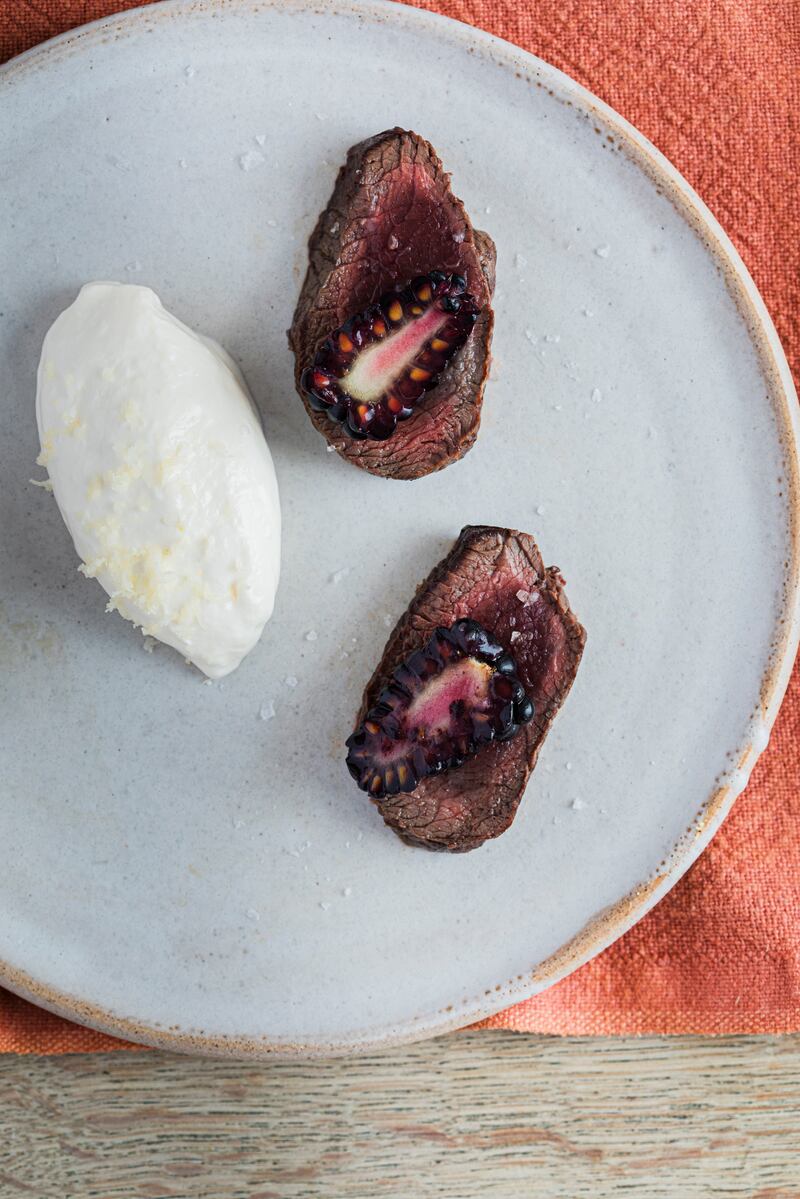
We use venison haunch for this and soak it in Buckfast, sriracha, onions, ginger and brown sugar for three days. You might think I’ve lost my mind, but it’s amazing! Buckfast is a real west of Ireland thing. We even have a Buckfast negroni on the night-time menu – we are always looking for the next sophisticated way of drinking it.
Ingredients, serves five to six
- 500ml Buckfast
- 200ml sriracha sauce
- 50ml rice wine vinegar
- 40g dark brown sugar
- 4 smashed garlic cloves,
- A thumb-sized piece of fresh ginger, peeled and grated
- 1kg venison haunch, sliced into steaks
- 2 tbsp olive oil sea salt and freshly ground black pepper
For the pickled blackberries
- 75g light brown sugar
- 150ml apple cider vinegar
- 400g fresh blackberries
For the horseradish cream
- 200ml cream
- 20g fresh horseradish, grated on a microplane
- 2 tbsp honey
- 1 tsp English mustard powder
- Pinch of ground white pepper
Method
- Whisk together the Buckfast, sriracha, vinegar and sugar, then stir in the garlic, ginger and seasoning. Add the venison steaks, cover with cling film and marinate in the fridge for 24 hours.
- To make the pickled blackberries, put the sugar and vinegar in a bowl and whisk until the sugar has dissolved, then add the blackberries. Cover the bowl and let it sit out overnight – at this time of year it’s usually cool enough to leave them out on your countertop. The next day, transfer to a clean jar and keep them in the fridge for up to two weeks to use with roasted meat or melty cheese.
- To make the horseradish cream, whip your cream until it’s on the stiff side. (I love using raw cream for this - it adds a farmyard funk like a good butter would.) Stir in the grated horseradish, honey, mustard powder and a pinch of ground white pepper - you don’t want to overwhip it at this point. Keep in the fridge until you’re ready to serve.
- Ideally, you want to cook the venison on a super-hot barbecue. (We use a Japanese charcoal grill for this in Kai). Otherwise, you can pan-fry the steaks by heating the olive oil in a large frying pan, then adding the steaks and cooking for two to three minutes on each side. You have to remember that venison has no fat, so I cook it until it’s medium-rare, then let it rest for 15 minutes and use the pan juices as a dressing.
- Serve with pickled blackberries and horseradish cream. A side of sweet potato mash and fried onions is never a bad idea. You could also pop this in a bowl with sticky rice and serve it with a fried egg. Or try it in a sandwich - there is room for all God’s creatures between two slices of bread. It adds a farmyard funk like a good butter would.) Stir in the grated horseradish, honey, mustard powder and a pinch of ground white pepper - you don’t want to overwhip it at this point. Keep in the fridge until you’re ready to serve.


