
There was a palpable sense of purpose among the contributors and attendees at the Feeding Ourselves local food symposium in Trinity College Dublin.
Small food producers from all over Ireland gathered to discuss ways to strengthen local food systems so that organic beef and dairy farmers and vegetable growers can make a livelihood from selling their food directly to customers at local food markets.
“It’s about giving people access to high-quality, nutritious food and allowing farmers to make a fair living,” says Fergal Anderson, founder member of Talamh Beo, who runs Leaf and Root farm with his partner Emanuela Russo in east Galway.
Talamh Beo (Living Land in English) is a group of farmers and food researchers promoting healthy soils and biodiversity, fair incomes for farmers and community food hubs where people can buy locally produced nutrient-dense food directly from farmers.
READ MORE


Anderson believes that there is great potential in Ireland for more food to be produced for sale locally as part of thriving rural communities.
Currently in Ireland, up to 90 per cent of food – mainly dairy products and beef – is produced for export, while it is estimated that 80 per cent of food on the Irish market is imported.
These small producers – who make up about 500 of the 125,000 farmers in Ireland – argue that there is a broken relationship between food producers and consumers.
The buying power of supermarkets – and the criteria they use in choosing fresh local produce – sometimes makes it impossible for small producers to make enough money to survive. And the numbers of commercial vegetable growers in Ireland has dropped a staggering 85 per cent in the past 25 years.
The backdrop to this movement of local food producers is increasing evidence that chronic health conditions such as diabetes, heart disease and some cancers are impacted by nutrient-poor diets.
[ The rural Dublin family farm where the best chefs in Ireland source their produceOpens in new window ]
Rupa Marya, adjunct professor of land, food and medicine at Trinity School of Medicine, spoke at the food symposium. She says our food system is making us sick.
“In the average Irish diet, 60 per cent of the calories are from ultra-processed foods and your life expectancy goes down the more ultra-processed foods you eat,” she says.
Anderson adds that in Ireland, we have normalised access to ultra-processed food. “For example, you have to walk the gauntlet of ultra-processed foods and sweets to pay for your fuel in shops all over this country,” she says.
The 2025 EAT-Lancet Commission – released in October – suggests that adopting a plant-rich “planetary health diet”, cutting food waste in half and shifting to sustainable farming could feed growing populations, ease pressure on the planet, and reduce rates of chronic diseases.
At its publication, Prof Janas Harrington, chair of the Cork Food Policy Council and senior lecturer at the School of Public Health in University College Cork, said the report is a “critical science-driven call to action for transforming food systems”.
She added that its planetary health diet has “robust evidence that healthy, sustainable diets can prevent millions of premature deaths.” The planetary health diet is a plant-rich diet with moderate intake of animal foods.
Marya says there is evidence linking the rise in colon cancers – particularly among young people – to low-fibre diets. She is currently involved in developing a kitchen in St James’s Hospital, Dublin, which would use locally sourced organic food to make meals for staff, patients and visitors.
[ Can hospital food make you ill?Opens in new window ]
Trinity College Dublin is also developing its own food-procurement policy for its cafes and restaurants with the aim of increasing supplies from local organic farmers and food producers.
The development of small abattoirs is another initiative to help small-scale producers to process their food for sale locally. Siobhán Hubbard produces organic pork, lamb and chicken at Newbard Farm in Co Waterford.
“The number of abattoirs in Ireland dropped from 156 in 2022 to 96 in 2025 and since all local-authority abattoirs came under the ambit of the Department of Agriculture in January 2025, small producers who are not An Bord Bia approved can’t get their meat processed locally,” she explains.
So, now a group of 68 small farmers have come together to work with three privately owned abattoirs who are committed to working with small-scale artisan and organic producers of poultry and meat.
A project exploring new routes to market for organic farmers in the midwest is another initiative aiming to link customers more directly with producers.
“We brought together direct organic producers of meat and dairy in the Urban Co-op in Limerick. We are also looking at how chefs and catering companies can work more with local suppliers,” explains Caitríona Scully from the Department of Agriculture funded Midwest Biodistrict.
The Laying the Foundations project, which continues until October 2026, is also exploring how public and private canteens – including those supplying school meals – could better support local and organic producers.
Meanwhile, Talamh Beo’s Local Food Policy Framework promotes agroecological approaches to farming. These organic and regenerative farming practices, which don’t rely on expensive fertilisers, include areas for local wildlife and biodiversity to thrive.
The Republic currently has one of the lowest number of organic farmers in the EU, even if numbers doubled from 2 per cent to about 5 per cent of farmers in 2025. The Irish Organic Strategy’s aim is to have 10 per cent of land under organic farming by 2030.
The elephant in the room at the food symposium was how the majority of farmers in the State are still producing meat and dairy in intensive agricultural practices propped up by EU subsidies and/or bank loans driven by a food processing industry increasingly challenged by environmental regulations for clean water, air and soil.
“Seventy five per cent of world farming is dedicated to livestock and animal feed and controlled by a multibillion, highly subsidised industry driven by animal feed and fertiliser companies and agri-food giants,” says John Gibbons, journalist and author of The Lie of the Land: A Game Plan for Ireland in the Climate Crisis.
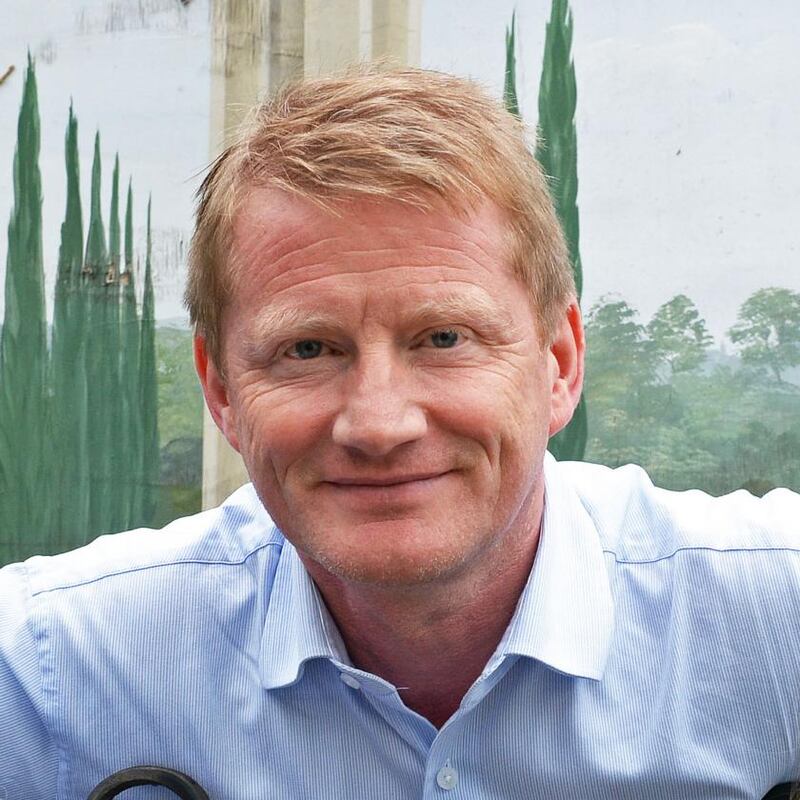
Speaking at the symposium, he argued that in spite of claims that intensive farming is feeding the world’s growing populations, some studies claim that peasant farmers around the world are responsible for feeding 70 per cent of the world’s population.
“We have no choice but to radically change our food systems to keep global temperature [rise] below two degrees,” says Gibbons.
The Government’s failure to publish the completed phase two of the Land Use Review, which sets out future multifunctional use of farmland including biodiversity and climate measures, leaves farmers without a strong future focus.
Publication of future farming scenarios, including a focus on cattle and nature through extensive rather than intensive grazing, breeding pigs and poultry or growing protein crops for animal feed and willow on marginal land for bioenergy, would help many farmers envision future directions for their farms.
“It’s about rebuilding relationships and reconnecting land, food and people,” says Thomas O’Connor, from Manna Organic Farm in Co Kerry.
“Currently, a lot of money goes into agribusiness and not necessarily to agriculture. We need honest local conversations with farmers about industrial intensive agriculture producing commodities which have dismantled local food production systems.”


