

I thought readers might like to see this little fellow (or girl) we found in our garden under a bird feeder. He became still and closed his eyes as I approached. I assume, therefore, they don’t hibernate. Mary Dunne, Gormanston, Co Meath
You sent this in during the second last week in November. Temperatures were above average everywhere last November, it being warmest in the east and south. It is the cold that triggers hibernation in hedgehogs and obviously it hadn’t been cold enough by then for your visiting hedgehog. But hibernate they do when temperatures drop to just above freezing. They become immobile, their bodies cool and their normal physiological activities are slowed down – for instance, their heart rate decreases considerably from about 190 beats per minute to just 20; the body temperature, which is normally 35 degrees drops to 10 degrees or less, and respiration almost stops (they will breathe about once every few minutes). Climate change with warmer winters is delaying the onset somewhat.
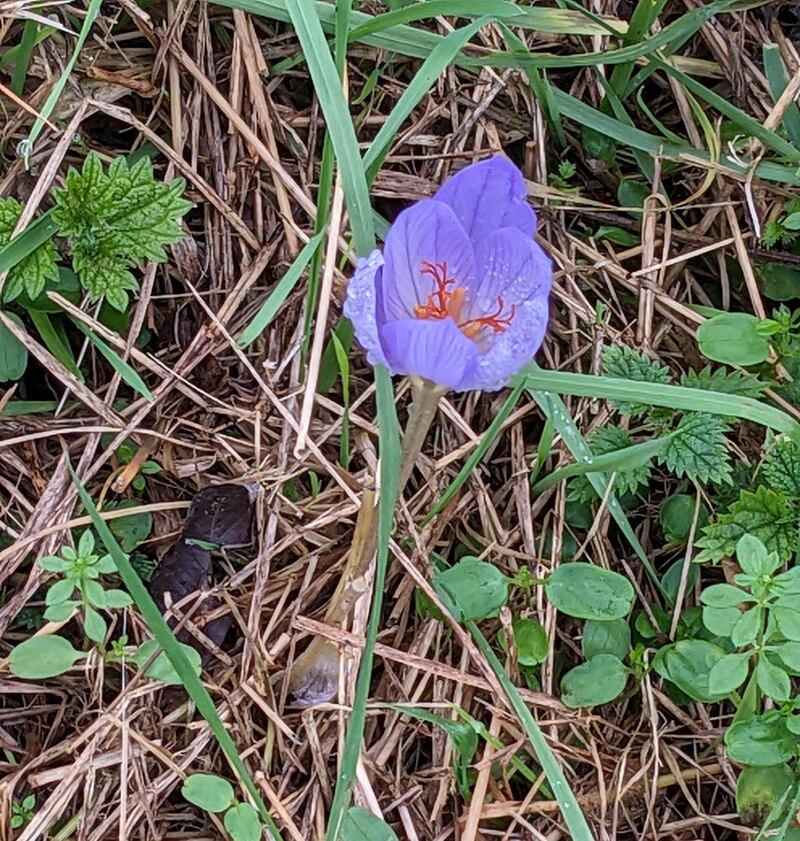
I saw this plant growing beside the Boyne river on November 8th. Is it really a (very) early crocus? Frances Gill, Meath
It is a crocus but not as we know it in spring. This is Bieberstein’s crocus – Crocus speciosus – an autumn-flowering plant that has violet-blue flowers with dissected orange stigma branches. It is planted in gardens for autumn colour. This is an escape that has naturalised in the wild.
READ MORE


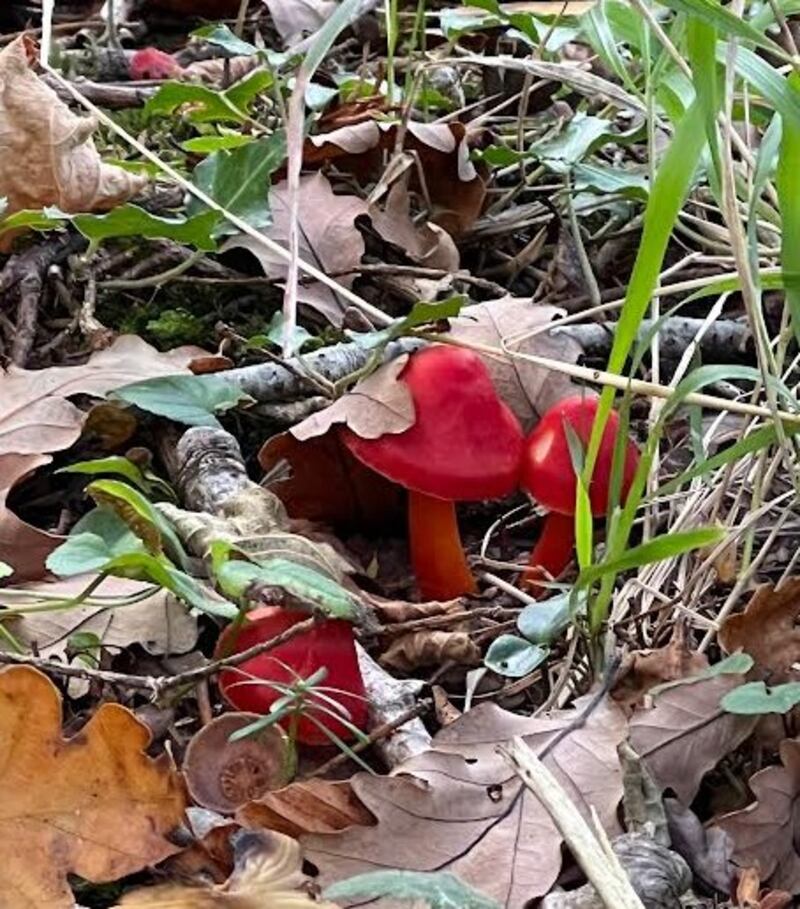
We came across this most beautiful red fungus in Killarney National Park last week. Google says it’s rosy russula. It looks like poison, but is it? Paul Murphy
Google needs its eyes tested. Rosy russula has a white stalk and white gills. This is a waxcap, the splendid waxcap no less, Hygrocybe splendidissima. It is the most spectacular of the waxcaps, bright red all over, cap, stalk and gills. You cannot tell if a mushroom is poisonous by looking at it, only by eating it. Don’t chance it.

I spotted this frog in our back garden in early November. There is one every year. I’m not sure if it’s the same one but we only ever see one on its own. Are they solitary creatures? Sean Flood, Donabate
If you had a garden pond, where they were all loudly and lustily mating next spring, you would not be calling them solitary creatures. This one no doubt has gone into hibernation by now, as winter has definitely arrived. Warming weather in spring will waken it and mating will take place in whatever waterbody this frog itself originated.

I photographed these whooper swans in Farrihy Lake in west Clare in early December. Certainly, no peace on Earth here – more like war and peace! John Glynn, Kilrush
Whooper swans with their straight necks and black and yellow bills are easily distinguished from mute swans and that is before they ever emit their characteristic whooping calls. They arrive here from Iceland in October and stay until April. Recent censuses show positive trends, with Ireland hosting a significant portion of the Icelandic population. Our wetlands and grasslands are crucial wintering grounds for them. They feed on aquatic vegetation, but they are not above grazing on agricultural grasslands and fields where there is spilled grain. They are our original native swans and their not-understood comings and goings long ago inspired such tales as the Children of Lir with their lovely musical swans, and the Wooing of Étaín (or at least her departure up through the chimney from a heavily fortified Tara with Midir – both of them in the form of swans that then vanished).
Please submit your nature query or observation, ideally with a photo (not a video) and location, via irishtimes.com/eyeonnature or by email to weekend@irishtimes.com


