All-in professional wrestling filled all 904 plush seats of Queen’s Theatre, on Pearse Street in Dublin, every Sunday night through the late 1940s. One week, however, the show failed to begin. The minutes dragged on and the usually good-natured crowd grew restive. It was more than an hour before the wrestlers finally stomped their way onstage.
Monday’s newspapers explained why. According to Billy Willis, a Dublin wrestling promoter, “It was because of the Ellimans.”
But Willis had been misquoted, and the following day’s papers issued a correction. “What I said was,” he clarified, “the delay was because of the elements – not the Ellimans!” Storms over the Irish Sea had held up the boat bringing the wrestlers from Liverpool.
Perhaps the Ellimans knew before the mistaken newspaper reports, but its subtext was clear: the family had arrived. It was just over 50 years since its founding father had first set foot in Ireland. Maurice Elliman had come with no money, no English and no livelihood – and his name was not yet Elliman.
READ MORE


When he died, in 1952, so many people attended his funeral that traffic lights on the route to the cemetery were switched off, gardaí escorted the cortege, and President Seán T O’Kelly sent a representative.
Maurice was, in the words of the Irish Press, the father of the Dublin film trade, “one of many Jewish entrepreneurs who became movers and shakers during the early decades of cinema and film, spanning from Eastern Europe to Hollywood, and from producers such as Samuel Goldwyn and Louis B Mayer to actors including Groucho Marx and entertainers such as Harry Houdini”.

His son Louis, the third of his 12 children, was to surpass his father in both fame and success. Louis grew up to transform the business his father had founded into an entertainment empire. Louis Elliman, the Historical Dictionary of Irish Cinema notes, could reasonably be described not only as a key figure in Irish cinema, but also as the greatest Irish theatrical impresario of the first half of the 20th century.
The family business ultimately comprised 34 cinemas, including the Metropole and the Savoy, on O’Connell Street in Dublin, and three of the city’s theatres: the Queen’s, the Theatre Royal and the Gaiety.
[ Royal flush: Frank McNally on Judy Garland, the Theatre Royal, and Mulligan’s pubOpens in new window ]
Maurice was my grandfather, and Louis was one of my eight Elliman uncles. My father was the family’s seventh child, and with no job for him in the family business when he finished school, he was sent to study medicine at Trinity College Dublin. A newly minted doctor, he found both work and his wife in London, which is where I was born and raised.

Family visits to Dublin were frequent and treasured. It was where my father was his most relaxed and where his Dublin accent exuberantly resurfaced. And it was where I was part of a clan of uncles, aunts and cousins, where I saw films at Elliman cinemas, sat in on rehearsals at the Theatre Royal – I particularly remember the Bolshoi Ballet – and cheered, gasped and laughed at Gaiety pantomimes.
[ Did you know there was an unused theatre under Busáras?Opens in new window ]
It was only years later, compiling a family history for my triplet daughters, that I came to understand how foundational a role my grandfather and uncles, particularly Louis, played in shaping Ireland’s entertainment industry and establishing Dublin as a vibrant cultural centre.
Their story begins like those of many of the three million Jews who fled pogroms, prejudice and persecution in eastern Europe between 1880 and 1914. In 1892, when he was 20, Maurice left his village in Lithuania, bribed border guards with a bottle of vodka and trudged more than 1,000km to Hamburg, in Germany, where he boarded a ship that docked first at Liverpool and then at Dún Laoghaire.
With his three words of English – “rabbi”, “synagogue” and “Jew” – he sought out a Jewish community. Directed by strangers whose helpfulness contrasted starkly with the hostility he had fled, he reached Clanbrassil Street, in south Dublin, within the couple of square kilometres known as Little Jerusalem, one of 2,000 eastern European Jews who found refuge in early-20th-century Ireland in these years.
He secured lodgings on Lennox Street and worked as a weekly man, or pedlar, buying and selling household items door to door in the Dublin suburbs, workdays ending at 11pm.
Saving his pennies, he brought his mother and brothers from Lithuania to Dublin, married and bought a greengrocery at 42 Aungier Street.
It was then that an infant technology – an early, hand-operated projector called a bioscope – caught his interest. He acquired one from a friend, equipped himself with a canvas tent and screened bioscope shows at travelling fairs.
Its success convinced him of the potential of cinema, and in November 1911 he opened Dublin’s second cinema, the Cinema Theatre, in rented premises on Pearse Street. By instinct and sheer good fortune, Maurice had embraced a new industry that fast became a social institution.
Most of his 12 children played a role in the family business, but it was Louis, his third child, who was the undisputed star.

Outshining his pioneering father, it was he who, almost single-handedly, turned Dublin into a key entertainment destination. He brought to what was still a relatively isolated country major stars in dance, music, stage and screen, giving audiences performances, shows, concerts, plays and pantos equal to any on Broadway, in New York or in the West End of London.
When the second World War closed the sea lanes, and stars stayed away, he nurtured Irish talents, many of whom went on to global fame – although one future star, at least, later thanked him for turning him down, as the rejection sent him to England, where he achieved great success.
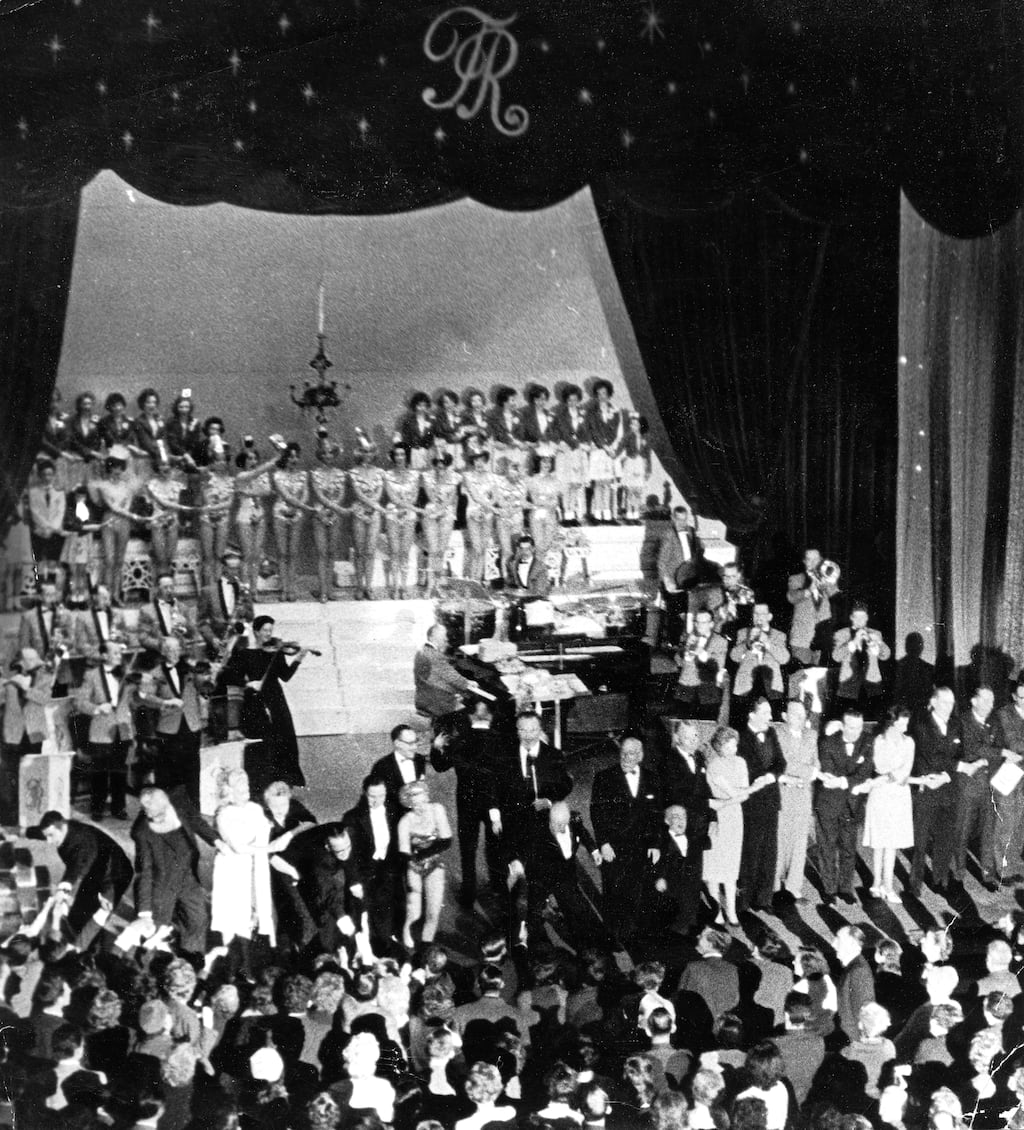
By the time peace returned and international stars again lit up Ireland’s stages, Louis was, in the words of the Irish Independent, “Ireland’s Mr Show Business”. From the late 1940s to the 1960s, a performance at the Theatre Royal, on Hawkins Street, was a must for top-ranking US and British film stars, classical artists and big bands.
[ Dublin’s disappearing venues: A promised 500-seat theatre is shrouded in mysteryOpens in new window ]
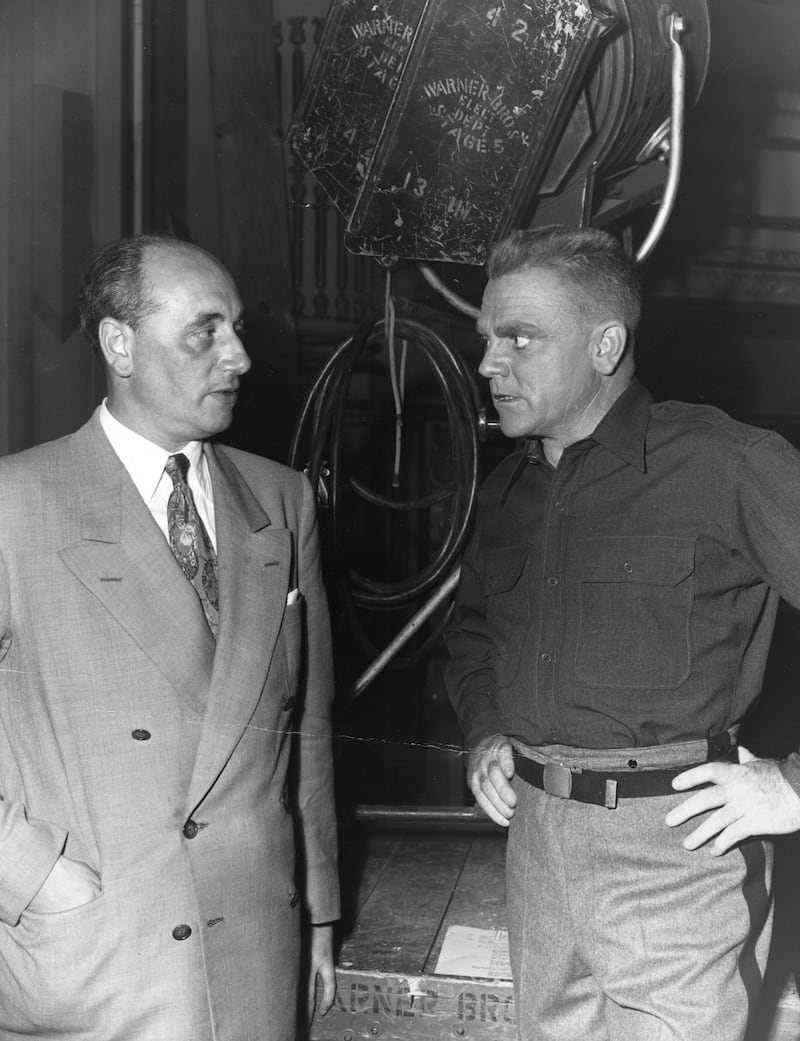
When, in 1950, Louis visited Hollywood, which was then basking in its golden age, he was feted by the heads of MGM, Paramount, Fox, Universal and RKO. He was sought by industry influencers and invited to party with glossy stars of film and stage, many of whom later performed at Elliman-run theatres in Dublin.
In May 1958, he cofounded Ardmore film studios in Bray, Co Wicklow, as the cornerstone of an Irish film-production industry, bringing a more complex and nuanced Ireland to the outside world.
“Opening a film studio is something very, very new in this country, and really we don’t know how to do it,” he joked at the launch. “Should we cut a ribbon or give someone a key?”
Among the early big-name stars who made films there were James Cagney and Michael Redgrave, with Shake Hands with the Devil; Robert Mitchum, Anne Heywood and a young Richard Harris, with A Terrible Beauty; and Stuart Whitman, Maria Schell and Rod Steiger, with The Mark.
Louis was very much Maurice’s son in his quiet authority, his unpretentiousness and his reserve, ethics and values, but he had been nurtured in a different world entirely.
Whereas Maurice had grown up fatherless in Lithuanian villages, victim to hatred, violence and extreme poverty, Louis was the son of a respected community figure, a free citizen in a free country, educated in its secular schools, and never lacking food or shelter.
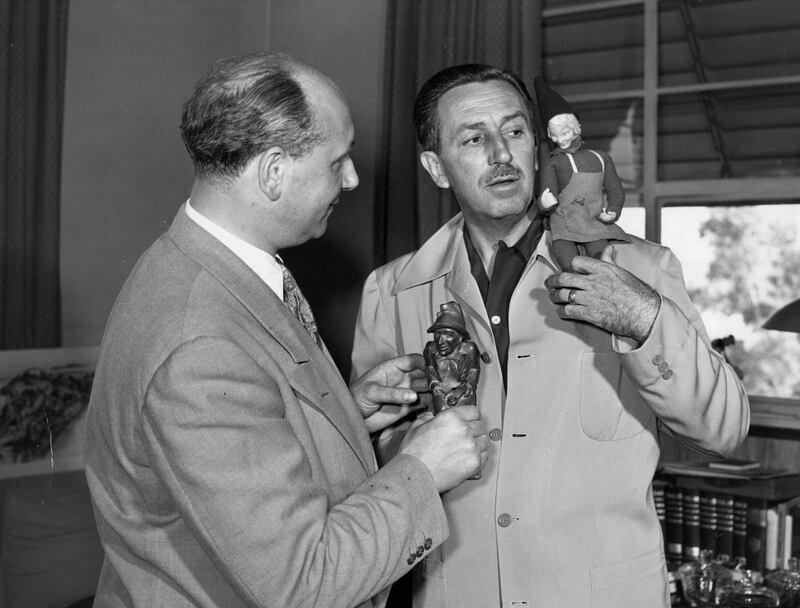
And whereas Maurice was an immigrant whose primary identity was always Jewish, Louis was a native-born Irishman, and he took equal pride in his Irishness. He was not only a friend of Irish entertainers – Milo O’Shea, Micheál MacLiammóir, Noel Purcell, Jimmy O’Dea, Maureen Potter and more – but also interacted with national figures such as Éamon de Valera, Seán Lemass and even Archbishop John Charles McQuaid.
Charismatic and unassuming, with great powers of imagination and an unerring sense of what would succeed, Louis made an indelible mark on Irish entertainment – so much so that, more than 60 years after his death, he is believed by some still to frequent the Gaiety Theatre, on South King Street.
[ The bishop, the box and the shining orbs: the many ghosts of the GaietyOpens in new window ]
“He’s usually seen in the boardroom or by the fireplace in the dress circle bar, where he liked to sit,” George McFall, who was the Gaiety’s stage manager for 48 years, told The Irish Times in 2017, when he was 88. “There were so many great performances on the Gaiety stage that they had to have left something of themselves behind.”
Wendy Elliman is the author of The Outsiders Who Built Irish Entertainment: Maurice and Louis Elliman, published by Vallentine Mitchell