

“I think I’m easy-going,” says the Canadian pianist Kris Davis, smiling. “But one thing that does annoy me is people who have a lot to say,but no interest in taking action.”
It’s not a problem that seems to have affected Davis herself. A musician with much to say creatively, and who has taken many steps to raise awareness of her own work and that of others, Davis is like a one-woman music industry. As well as being, at 46, one of the foremost jazz-and-beyond pianists of her generation, she is a highly acclaimed composer, bandleader, side-person, record-label boss and educator.
Over the past two decades, she has released more than 30 albums as leader or co-leader, spanning jazz, free improvisation, contemporary classical, turntablism and new and electronic music. They feature Davis in an impressively wide variety of settings, from solo piano to duos, trios, string quartets and larger ensembles.
She has appeared on numerous other albums, often by prominent figures in New York’s creative music community – including the saxophonist Ingrid Laubrock and the guitarist Mary Halvorson – and become something of a leading light, especially in concert. “One method for deciding where to hear jazz on a given night has been to track down the pianist Kris Davis,” wrote The New York Times. Audiences here can employ the same technique on March 19th, when she makes her Irish debut as leader at the National Concert Hall, in Dublin.
READ MORE


In addition, Davis has performed and recorded with such jazz greats as the bassist Dave Holland, guitarist Julian Lage and trumpeter Dave Douglas. In 2022, she was part of the Grammy-winning quintet, led by master drummer Terri Lyne Carrington, which released New Standards Vol 1: a selection of 11 works designed “to amplify the voices of women composers in jazz”.
In 2016 Davis set up her own independent label, Pyroclastic Records, a progressive and much-admired imprint that has released landmark albums by Davis and many of her peers. Three years later she was appointed associate programme director of creative development at the Berklee Institute of Jazz and Gender Justice, in Boston, which aims, among other things, “to engage in the pursuit of jazz without patriarchy”.
Davis is at once an artistic innovator, leader and advocate, a musician unafraid to be both prolific and panoramic. “I want to keep as many things going as I can,” she once said. “Until I drop dead from exhaustion.”
She was born in Vancouver, though her family moved east to Calgary, Alberta, when she was five. Her first name, though non-gender specific and often misread as male, was chosen simply because “my mum liked it”, she says from Hamburg, Germany, where she is performing with the renowned NDR Big Band. Her surname is the result of her first marriage, to the drummer Jeff Davis. (For the past 14 years she has been married to the guitarist Nate Radley; they have a 12-year-old son.)
Davis’s father was a computer programmer who started his own business and her mother a project manager for multiple IT companies. Kris and her younger sister were not brought up in a particularly musical household, though their mother, who had played clarinet as a child, encouraged Kris’s desire to play. Davis began classical piano lessons at seven and later worked closely through high school with a private teacher called, rather wonderfully, Melody.
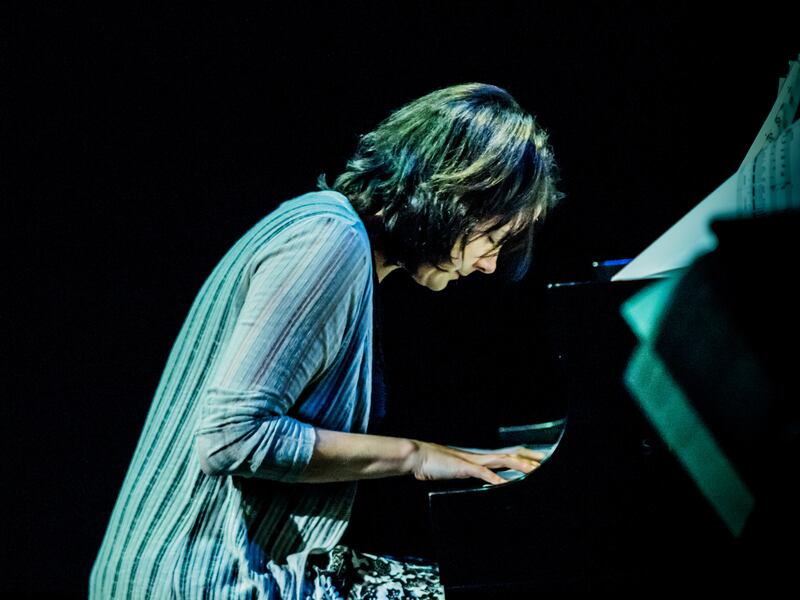
“My mother taught me to trust my intuition and that life is short – so dream big and don’t be afraid to take risks, help others in need and treat people the way you would like to be treated,” Davis once said.
Quite some credo, I remark. “Yes, she’s my greatest influence and a very special person.”
She discovered jazz through her junior high school band. “There was a really inspiring music teacher called Kevin Willms, who made you want to be in the band room, hanging out jamming after school,” says Davis. “He’d also give us really good records to check out. That’s how I first got into Herbie Hancock and Keith Jarrett.”
Davis found jazz liberating. “Classical music was so isolating; I would take these piano exams every year, and play recitals, and I just had terrible stage fright,” she says. “I liked the community aspect of playing jazz, of making music together. I also liked the improvising. You could play a wrong note, play it a bunch of times, and it was right. That was an important discovery for me.”
Soon after, at just 13, she resolved to become a professional jazz musician. “I was featured on a ballad at the first school band concert and I just remember feeling that this is what I want to do forever,” she says. “So that was it: I was on a path and kind of just kept going. I was very shy and quiet, but I was determined too.”
Through her teens Davis transitioned out of classical music into jazz; she took what she calls “an autodidactic approach”, learning standards and transcribing solos by her favourite pianists, who now included Bill Evans and Bud Powell. She studied jazz piano at the University of Toronto, winning a Duke Ellington scholarship along the way and supporting herself by playing near-nightly cabaret, restaurant and hotel gigs.
Aged 20, she attended the famed international jazz workshop in the Canadian Rocky Mountains resort town of Banff; it was another epiphany. “All the tutors that summer – people such as Joe Lovano, Ben Monder, Tony Malaby and Angelica Sanchez – were free improvising, but with very specific ideas, and it was completely new and confusing to me,” she says. “It made me want to explore another way of thinking about my instrument, and curious about how to blend composition with improvisation. It was an important moment that shifted my focus.”
Davis moved to New York after graduating, and continued her quest. Technically gifted and comfortable playing both straight-ahead and free, she was soon in demand within Brooklyn’s creative music circles. She also began to concentrate on her own compositions, becoming increasingly influenced by contemporary classical modernists such as Scriabin, Messiaen, Berio, Cage and, particularly, György Ligeti.
“The discipline of learning to play the music of these composers not only opened up new approaches to composition, it also changed my physical relationship to the keyboard and the way I heard music,” she says. “The way they used and explored limitations – whether intervallic, rhythmic or harmonic – also really inspired me. I realised limitations can set you free.”
In 2009 Davis began a two-year master’s in classical composition at the City College of New York. It led, in 2015, to the album Save Your Breath, in which she assembled an unconventional octet of mostly bass clarinets, alongside organ, guitar, piano and drums, to explore original compositions that embraced new music and free improvisation, tonality and dissonance.
Three years later she completed Eight Pieces For The Vernal Equinox, a through-composed work for solo piano. Earlier this year, Davis released The Solastalgia Suite, another adventurous eight-part contemporary composition, this time written for piano and the Lutoslawski String Quartet from Poland.
Sometimes there seems very little that Kris Davis cannot do. “Risk-taking is a comfortable space for me,” she has said. “If the music starts to feel too comfortable, that’s when I start to feel uncomfortable.” Davis is always looking to go beyond borders and expectations; Wayne Shorter’s offbeat definition of jazz – “I dare you” – could have been written for her.

Three recent albums, all released on Pyroclastic, exemplify that range and ambition. Duopoly, from 2016, is a compelling series of duos with such modern maestros as Bill Frisell, Craig Taborn, Tim Berne and Don Byron. The poll-winning 2019 release Diatom Ribbons conjures an ensemble including Esperanza Spalding, Marc Ribot and JD Allen, and such contrasting elements as deep grooves, dense harmonies, prepared piano and spoken-word samples, into one of the finest jazz releases of the last few years.
And 2024’s Run the Gauntlet, with her agile trio of Robert Hurst on bass and Johnathan Blake on drums, is Davis’s encomium to “the trailblazing women that were beacons of possibility during different stages of my development” – jazz pianists and composers such as Carla Bley, Geri Allen and Marilyn Crispell.
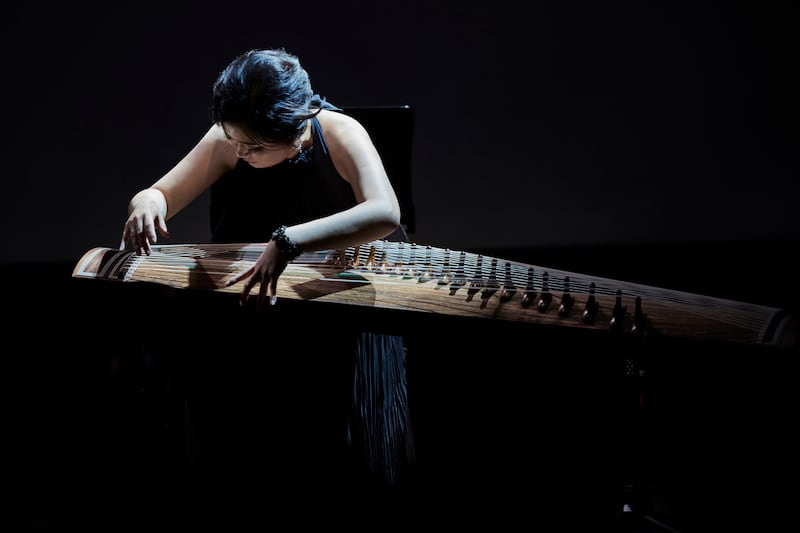
At the National Concert Hall, Davis will present a new multigenerational unit, with long-time collaborator Tom Rainey on drums and rising star DoYeon Kim on gayageum, a Korean plucked zither. It’s another Davis twist and step forward: an ancient-to-modern jazz piano trio, with a repertoire of traditional tunes and original compositions to match. Should the audience also expect some freely improvised interplay as well?
“Yes – though I sometimes feel that when people say the music is free, or ‘out’, it’s often misunderstood,” she replies. “There may be some new or unfamiliar sounds for listeners, and lots of moments of freedom, but the set of music we’ll be playing is still very organised. All three of us are really intentional improvisers.”
The Kris Davis Trio plays The Studio at the National Concert Hall, in Dublin, on Thursday, March 19th.


