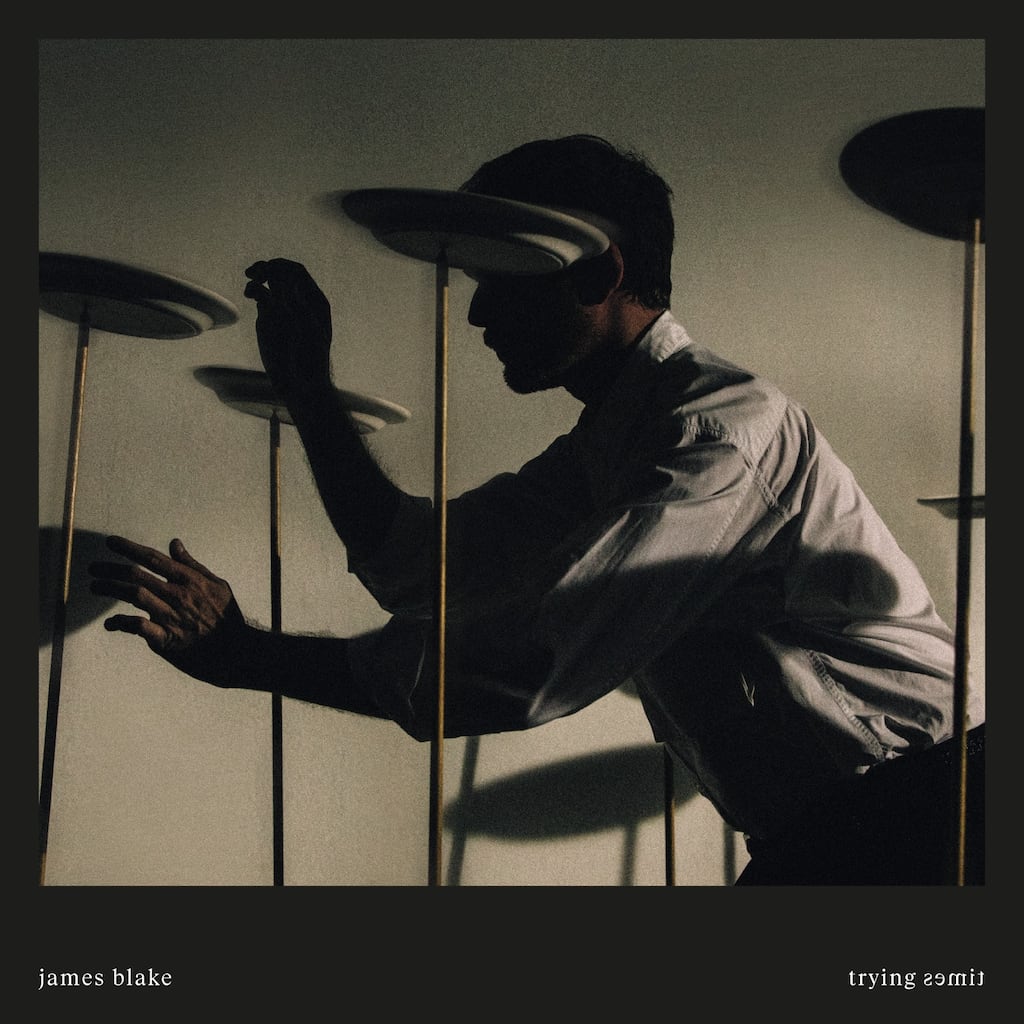
James Blake has always been an inside-out introvert, an artist who lives in his own head yet is in a very public relationship with the outgoing Hollywood star Jameela Jamil, has larked about in music videos with Billie Eilish’s brother, Finneas, and has a sid hustle producing grime superstars such as Dave.
The Streatham rapper lends his melancholic flow to Trying Times, Blake’s quietly mesmerising seventh album, his first since he left the major label he’d been with throughout his career to go independent.
That decision was, at one level, a calculated business one – he has a huge following; why does he need anyone’s help? – but also a gut response to what the Los Angeles-based English producer sees as the spiralling inequities of the music business. He’s mad as hell and he can’t fake it any more.
“The brainwashing worked,” Blake tweeted in March 2024 in reference to the music industry’s relationship with “big streaming” and the pressure on artists to give away their work. He added that musicians are finding themselves in the increasingly absurd position of being put under pressure to strike gold with a viral hit on TikTok. Their life has become a game of clicks and likes.
READ MORE


“If we want quality music, somebody is going to have to pay for it,” he said. “Streaming services don’t pay properly, labels want a bigger cut than ever and just sit and wait for you to go viral, TikTok doesn’t pay properly, and touring is getting prohibitively expensive for most artists.”
Those are the words of an artist gearing up to make the angriest record of his life. But on Trying Times any fury he may be feeling is of the quietly simmering variety rather than the kind that might encourage you to storm the barricades. This is a comedown album with no bottom floor – only endless depths.
Blake croons wonkily on the its stuttery opening track, Walk Out Music, and samples You Want It Darker, Leonard Cohen’s swansong, on Death of Love, unspooling Cohen’s baroque lament for the end of days into a fragmented, hallucinatory meditation on the feelings that hit you just before heartache hardens into resignation and the understanding that you just have to move on.
He’s a sad chap – but also a soul man, as he reminds his audience on I Had a Dream She Took My Hand, where he lifts the melody and backing vocals from It Was Only a Dream, the 2019 single by the Los Angeles retro group Thee Sinseers. In so doing he turns a sultry banger into a haunting lullaby: lights-out music straight from the Red Room in David Lynch’s Twin Peaks.
Later, on Days Go By, he samples Dizzee Rascal’s I Luv U but flips the track into a negative image of Dizzee’s boisterous persona, the icy, stabbing synths brushing up ominously against the rapper’s bouncy voice.
The Dave collaboration, Doesn’t Just Happen, is the coiled spring at the heart of the record, a clenched fist of the tune, bunched up with tension and built on an ominous string motif. “If being a good man was easy ... I’d still be me,” Dave says, his self-doubt existing in powerful empathy with Blake’s torridly understated music. It’s a scream into the void where you can’t hear a thing, and all the more unsettling for that contradiction.
Blake has always been intensely self-aware about the demands of the industry and his place in it. Early in his career he realised that his use of soul samples could lead to the idea that he was a sort of English Moby – a notion he was keen to put to rest. “There is a very big difference between what Moby has done and what I did,” he said. “Some of the Moby samples are a lot more accessible and cynical. He’s not changed the song very much.”
In that same interview, from around the release of his first LP, Blake frankly discussed the pressures young artists come under to have a hit. It was a game he was not going to play then and one he is even less inclined to have much to do with today.
“Look at it from my perspective. Imagine you’ve got four or five songs that you’ve produced and are happy with the results. And you are confident they sound like finished tracks. Then someone tells you they are demos, because they are not produced the way every other pop record is produced,” he said.
“At that point you either go, ‘Okay, put me in a studio with a producer and we’ll clean them up.’ Or you say, ‘No, I’m going to stick to my vision and follow them through.’ I didn’t think twice about it. If they didn’t want it, they didn’t have it.”
Blake has spent the past 15 years proving how right he was. In 2013 he saw off David Bowie and Arctic Monkeys to win the Mercury Prize for his second long player, Overgrown. It is true that, over that period, he has perfected a sound so distinctive – a scrupulously organised fresco of falsetto, glitches and droning, drowsy beats – that he can sound as if he’s parodying himself.
But he goes about the predictable act of sounding like James Blake with renewed gusto here: an angry, slightly older man whose songs blend stillness, beauty and quietly roiling rage. If this is the sound of an artist breaking free and no longer suffering the indignities of life on a major, then it’s instructive that it has brought him to a place of calm and wisdom. Out in the world on his own, Blake sounds revved up – but, more than that, he seems at peace.