What’s in a name? Quite a lot, judging by the steadily increasing number of people in Ireland seeking to change their names by deed poll.
For some, including survivors of residential institutions, transgender people and others seeking safety, changing their name can be a “very emotional” process, says Brendan Creed, who deals with many of the hundreds of applications to enrol deed polls coming annually into the High Court central office.
Others’ motivation may not be as serious, including some who changed their surnames to Messi and Ronaldo, perhaps aspiring to the same league as the soccer superstars. “We have,” says Creed, “a fantastic soccer team on deed poll paper”.
A small number of applicants, he estimates around 1 per cent, may have been involved in crime themselves, related to or associated with well-known criminal figures. “Most of the criminal gangs have been in here.”
READ MORE




Perhaps in response to the deadly feud between the rival Hutch and Kinahan crime gangs, Patrick Hutch, a brother of Gerry “The Monk” Hutch, changed his name by deed poll in 2019. Family members of convicted criminals have also sought name changes with a view to ending any association with them.
A deed poll is a signed declaration binding the applicant to a particular course of action from when it is signed. While usable for any course of action, the vast majority are now made for name changes. They involve a sworn statement to stop using your old name and to use your new one at all times and for all purposes.
There is no automatic requirement to enrol a deed poll with the central office, but some authorities, including social welfare, will only accept enrolled deed polls.
A condition of enrolling an adult deed poll is that the courts can publish it on a public register. However, a deed poll is valid even if not enrolled.
“As an adult, you have free rein; you can change your name to whatever you like as long as it is not profane or rude,” says central office registrar Naomi Tamblyn, who has discretion over whether to permit enrolment applications.
Some applicants want just one name, or even one letter. “I had a woman who wanted to be called Z, but the tradition here is to have a first name and surname. You cannot be just X. You cannot be Adolf Hitler.”
One man who wanted to be named after a wild animal was permitted his choice on the basis that he used the animal’s name both as his first name and surname.
“I don’t make a judgment on what the person is doing, but the documents must be filled in correctly,” says Tamblyn. “A name is very personal. We don’t ask, we don’t judge, you don’t need to give us your reasons, but you can if you want.”
“Some people want to be a whole new person,” Tamblyn says. “Some come in and just say, ‘I hate my name.’ I’ve never signed off on two names that are the same. Then you have some who go back to their original name. For some, it’s just a bit of a whim.”
There are different criteria for changing a child’s name by deed poll. Children aged between 14-17 who live permanently in the Republic can enrol a change of name by deed poll provided their application includes a signed consent of their parents. A court order dispensing with the need for consent may be sought if parental consent is not available. Necessary documents must also be certified by either a Garda, a solicitor or a commissioner for oaths.
Tusla brings some applications, including for teenagers who have settled well in foster care and want the same surname as their foster parents.
For children aged under 13, parents living permanently in the Republic can effect a change of their child’s name. One parent fills out the form and the second signs their consent, which must be in front of a witness aged at least 18, and documents must be certified.
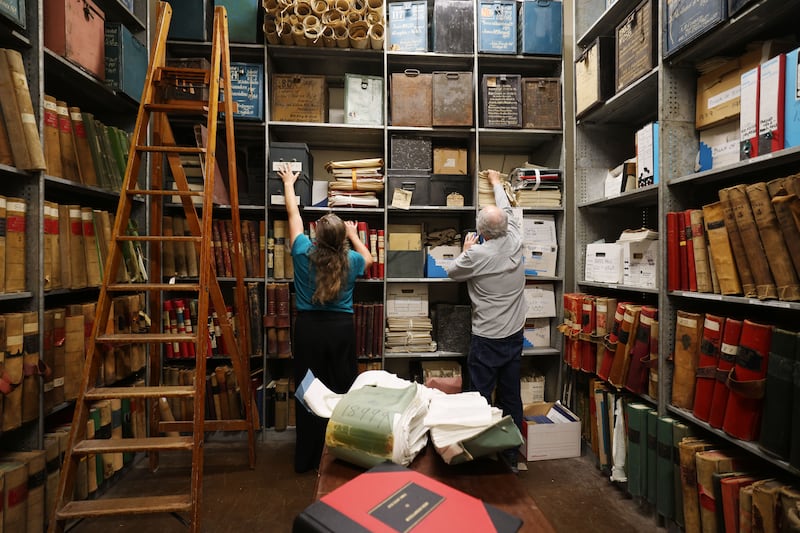
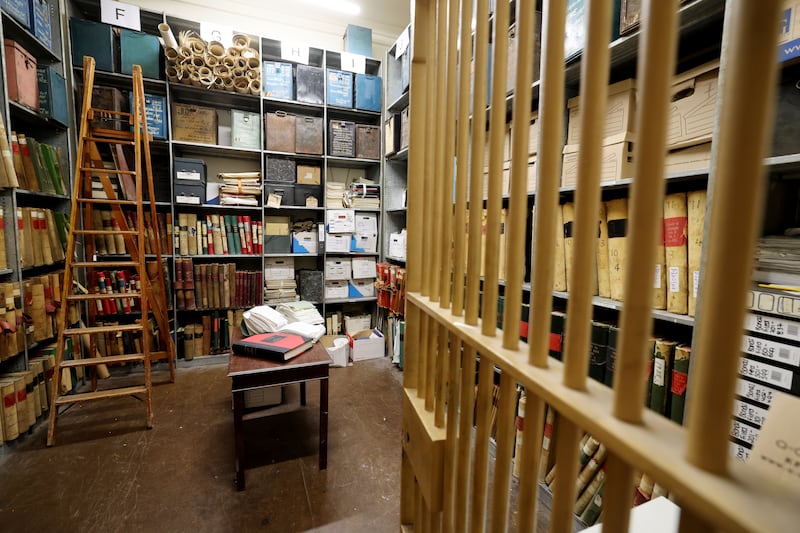
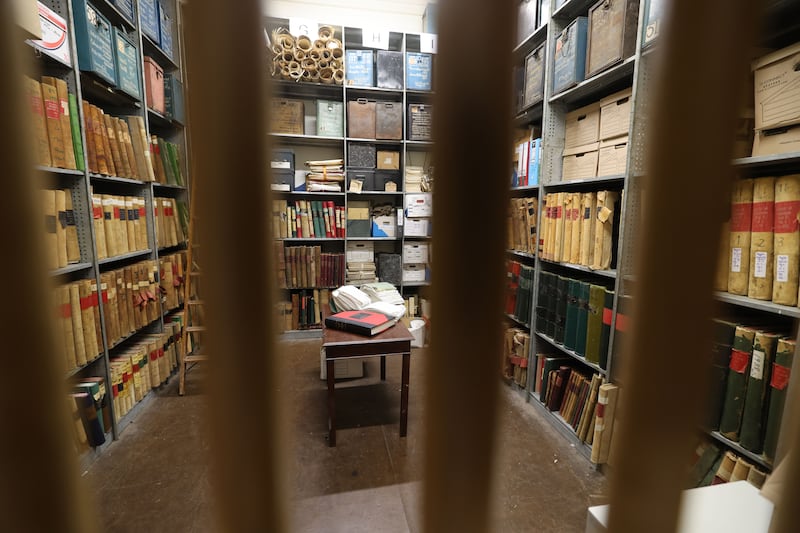
Deed poll documents dating back decades are kept in folders known as deed rolls in a strongroom beside the central office on the ground floor of the Four Courts.
Once the thick steel door is unlocked and the internal barred gate is opened, there is a sense of entering a past century. Huge ledgers containing indexes of court documents, large creamy paper scrolls and locked metal boxes relating to individual cases, many dating back to the foundation of the State, sit on some shelves in the high-ceilinged room. Other shelves store documents in more modern filing systems.
The central office has seen a steady rise in deed poll enrolment applications to more than 1,000 annually in recent years. So far this year, more than 870 deed polls have been enrolled, and others await final processing. Most are finalised within ten weeks and cost €60, rising to €80 if an additional sworn statement is required.
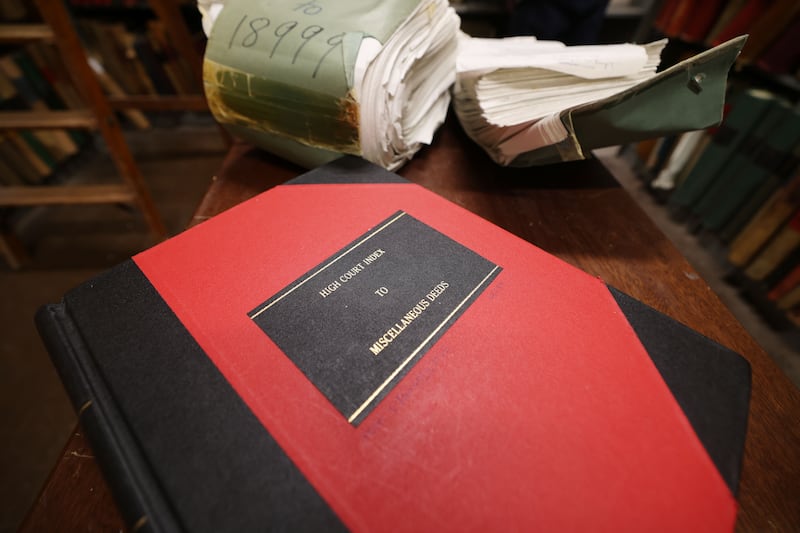
A public register of enrolled deed polls since 2014 is available online, while the office holds records from earlier decades, including a book with an alphabetical index of deed polls enrolled since 1922. Among those early entrants is a small number of men knighted by the English monarchy. Historians, researchers, gardaí and people hoping to find out more about their family history can request a search of deed poll documents for a fee of €25.
In recent years, many enrolment applicants are refugees or immigrants who got Irish citizenship and wish to have their children’s names changed to a more Anglicised or Irish version.
“It is a bit sad sometimes to see parents come in and say they want their child to have a more English name so they will fit in better at school,” says Tamblyn. “It may be to make their lives easier, but you would hope it is not because they have been the victims of some sort of racism.”
Because some applicants cannot speak English, they can find the process difficult to navigate. The central office, Tamblyn says, has tried to make it as simple as possible, and staff help applicants ensure forms are correctly completed.
The office encourages applicants to engage solicitors, especially where minors are involved, but mistakes by solicitors in certifying affidavits are “common”, she says. “Solicitors need to get the paperwork right; everything we reject is because it is a breach of rules or procedure.”
A considerable number of applications result from estrangement from a parent, she says. Some people who have their father’s surname want to change it to their mother’s if their father was not involved in their life.
Others want to alter their name to its Irish or English equivalent, and an estimated 10 per cent of applications are by transgender individuals.
It is “impossible” to overstate the broad range of reasons for deed polls, says Creed. He dealt with two girls who told him they decided, after just completing their Leaving Certificate, their “prize” would be to change their names. Other applicants were doing final exams for medicine and wanted a certain name on their degree.
A heavily pregnant woman who came into the office told him that, while in a Dublin hospital waiting for her baby to arrive, she decided to change her name by deed poll so it would be “correct” when her baby was born. Pregnancy was an impetus for others to seek name changes, he said.
The office will prioritise urgent applications, including where a wedding is approaching. In one such case, the wedding was just a few weeks away, but the man could not prove his name.
There is no uniformity across Europe when it comes to changing names, says Creed. “In France, for example, if you change your name by deed poll, your new name goes on your birth certificate. That does not happen here.”
Deed poll enrolment applications here show the extent to which Irish society has changed, reflected by some seeking a new identity or to leave behind a difficult past.
“It is fantastic to see the relief in their face when they have gone through the process. One man told me: ‘I should have done this 30 years ago, but I’m here today’,” says Creed. “Some people have come in and said, ‘the witch doctor gave me my name’. ”
“It’s a very emotional process for some people; I see them coming in ashen-faced. This is the biggest thing they have ever done. Some want to tell their story, I’m very sensitive to that, but I would try to focus on the practicalities: what is needed for them to change their names. For some, it is about achieving closure on something that has been very traumatic.”