
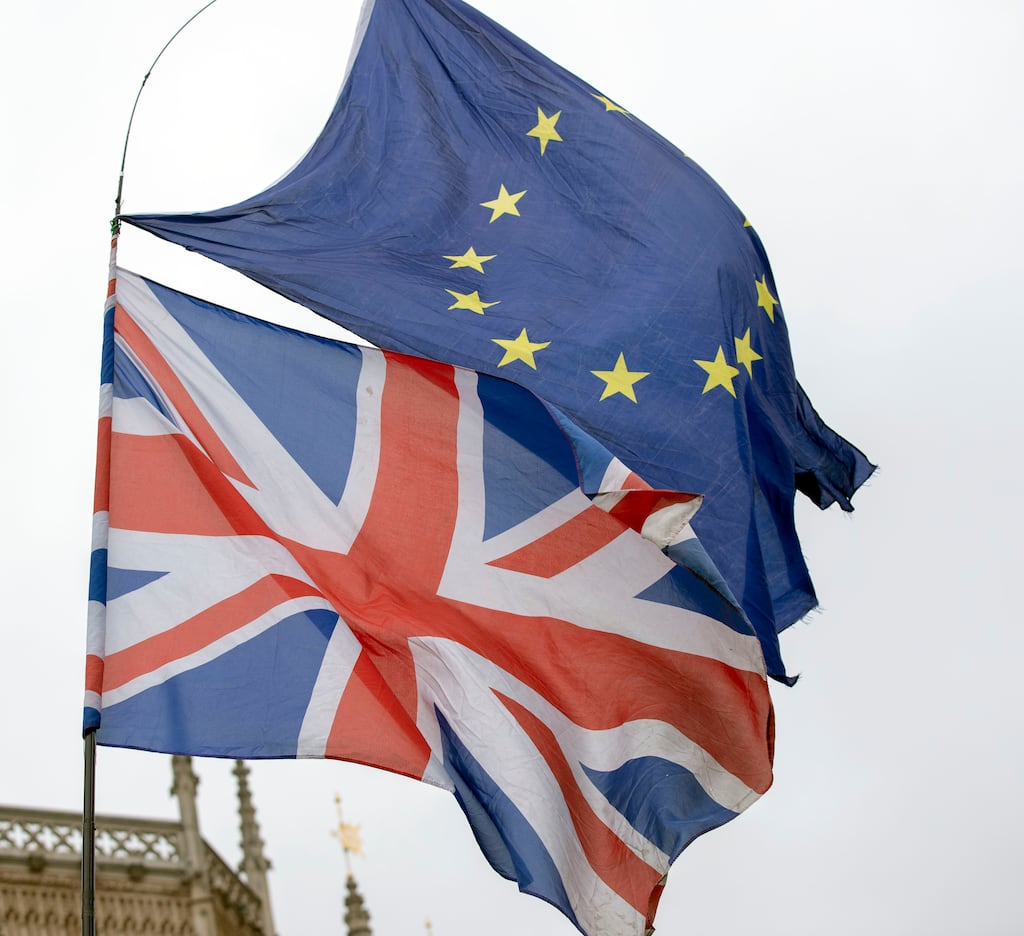
The EU single market was a game-changer. From 1993, EU producers, wherever located, had equal access to markets in all other member states. For Ireland, this broadened our export focus away from a primary dependence on the UK. Many US multinationals established a base in Ireland from which to serve the European market.
The single market also changed the nature of the distribution and logistics sectors. By eliminating the need for customs forms, it facilitated a switch from a model where separate deliveries were made by each individual producer to supply shops and supermarkets, to one where a single truck operating from a central warehouse could supply all the goods needed on the supermarket shelves. It meant a single truck could fill the shelves of every aisle in the supermarket, rather than separate deliveries of bacon, biscuits and shampoo.
Initially, supermarkets in northern France, Germany and Belgium were supplied each day from central warehouses near Rotterdam port. The result was a big increase in efficiency of distribution, reducing consumers’ costs.
Ireland followed suit. Local firms like Musgraves and Dunnes operated from central facilities here, while Aldi, Lidl and Marks & Spencer could supply their stores from warehouses in Britain.
READ MORE


Brexit changed that. Aldi and Lidl had to develop new Irish warehouses and a new Ireland-only distribution system at significant cost. Likewise, Marks & Spencer has incurred costs to sell into Ireland that are inevitably passed on to consumers.
Brexit has also disrupted online sales, previously easily sourced from UK websites. That’s been a nuisance, and this disruption of distribution channels has resulted in a small loss of national income for us.
The consequences of Brexit have been much more severe for the UK. While trade with the EU remains important to the UK economy, there are additional costs and paperwork for both imports and exports, adding to overheads. About 20,000 small UK firms just gave up on trying to export to the EU as a result of increased customs bureaucracy.
An Economic and Social Research Institute (ESRI) study by Janez Kren and Martina Lawless found that Brexit led to a 16 per cent fall in UK exports to the EU, with trade declining by 24 per cent in the opposite direction. Reflecting the difficulties for small UK exporters, there was a substantial reduction from January 2021 in the number of products exported from the UK to the EU.
These setbacks to mutual trade inflicted more damage on the UK economy than on European countries.
The ESRI study found no significant change post-Brexit in Irish exports to the UK. By contrast, the fall in Irish imports from the UK was 36 per cent, although some of this may reflect how trade through Northern Ireland is treated in data.
[ We need Britain to get real about BrexitOpens in new window ]
Before the Brexit referendum, a series of studies showed that a substantial economic cost would result for the UK from leaving the EU. But such studies were dismissed by Brexit cheerleaders as “Project Fear”. There was little real public debate on the economic consequences of a leave vote.
It turns out that the fears of economic harm have proved all too true. While the costs were assessed in 2016 at about 4 per cent of UK gross domestic product, today the damage appears to be at least 50 per cent higher. The degree of harm to Britain from cutting ties with its nearest market have been exacerbated by today’s trade uncertainty across the globe.
It is now estimated that UK investment is 12-18 per cent lower than it would have been due to Brexit, employment is 3-4 per cent lower, and productivity is also down 3-4 per cent. Overall, economists’ early characterisation of Brexit as bringing an economic slow puncture, rather than a car crash, has been vindicated
Services exports to the EU remain extremely important for the UK. In particular, its financial sector, headquartered in London, has traditionally played a big role for Europe. While the city remains important in Europe today, a substantial amount of this business had to relocate within the EU. Initially it had been hoped that some of this Brexit refugee business would come to Ireland, and some did. However, most went to other EU cities, such as Paris.
[ Brexit remorse is not enough to turn back the clockOpens in new window ]
Wherever the activity relocated, the resulting loss of dynamism for London has had negative consequences for all of the UK. Just as tax revenue generated from Dublin’s economy benefits the rest of Ireland, a slowdown in London’s growth means lower government resources for the UK regions, including Northern Ireland.
The current UK government is being punished for the hit to living standards and public services stemming from the UK’s sluggish post-Brexit economy. Ironically, Reform UK, from the guys who brought you Brexit, seems to be benefiting from this discontent.


