

Every cloud has a silver lining and for fast fashion retailer Penneys that was the sale of socks last week to fuel protesters at its flagship Mary Street store off O’Connell Street.
“They did buy boxes of socks because they were there longer than they had planned so we were happy for them to come in,” says Alli Latham, general manager of the store, the busiest in its Irish network of 38 outlets.
The downside was that the shop attracted 10,000 fewer customers last week when compared with the same week in 2025. And it struggled to get deliveries to the store.
“That’s obviously not great for business,” says Primark chief executive Eoin Tonge. “But we live in a turbulent world in the moment, so unfortunately, that’s what we’re dealing with.”
READ MORE


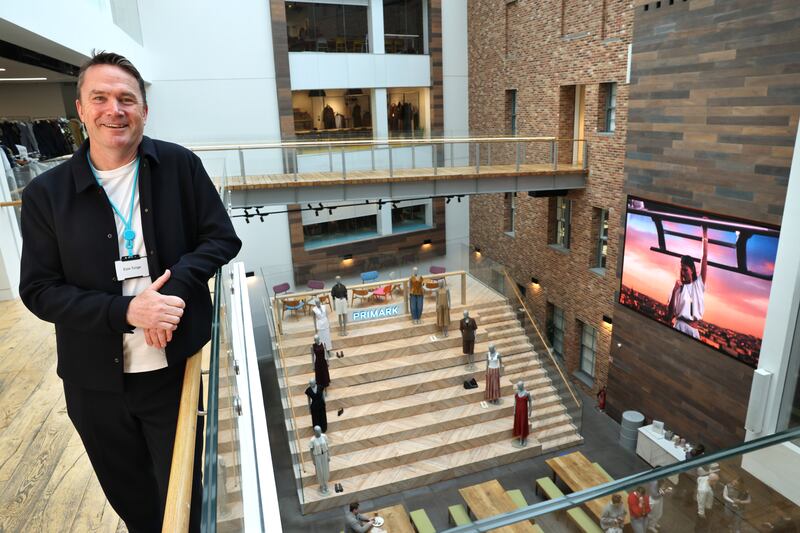
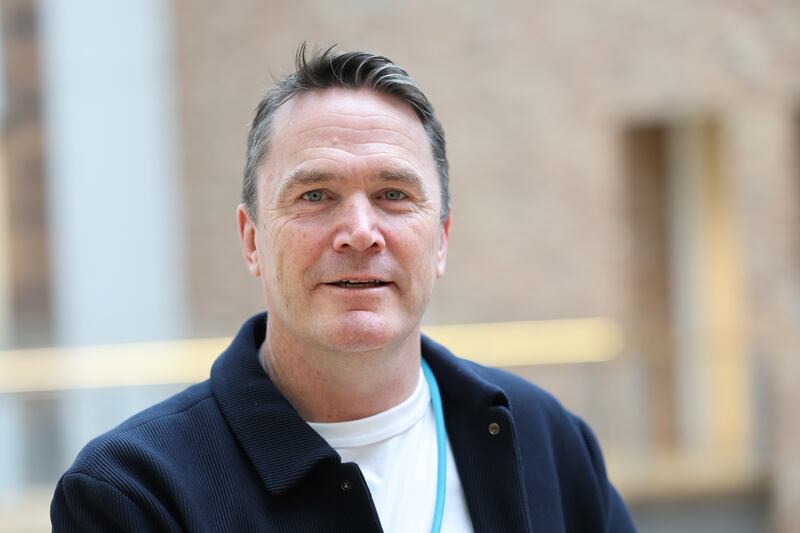
We are on a store walkabout with Tonge, the Dubliner who was appointed as CEO (just its third since Primark was set up in 1969) last month having filled the post on an interim basis for the previous year.
Tonge lifts a stylish and contemporary dress off a rail among its Major Finds collection for women. It costs just €12. “This is amazing value,” he says, adding they generally sell out quickly. “It’s a new thing, we’ve only been doing this since October last year. Womenswear is still the biggest part of our business, obviously.”
He also highlights a pair of women’s jeans for €24.
How long do they last? “Jeans nowadays practically last forever,” he says, citing durability tests it carries out on its products by washing them time after time.
Tonge says womenswear accounts for half of its business, with menswear and kids about 20 per cent each and non-apparel (home, beauty and accessories) the balance.
We stop by its sprawling selection of pyjamas, again heavily skewed towards women and children. Pyjamas are a unique selling point for Penneys, particularly at Christmas time.
“We just dominate that category,” he says “We are the best in the world in pyjamas. It’s a big claim but I’ll make it.”
One of its bestselling pyjamas is the Boyfriend collection, with Penneys shifting 200 sets every hour across its 38 Irish stores.
Tonge himself is clothed top to toe in Penneys gear. The white T-shirt, matching navy casual pants and jacket and white shoes comes to about €75.
“Actually this isn’t out yet,” he says. “I got an advance. I always wear Penneys, at home as well. It’s part of the culture, our people want to wear Penneys, nobody’s forced to wear them.”
The walkabout is designed to reinforce the message that Penneys offers quality clothing at low prices.
Primark (Primark operates in 19 countries but only uses the Penneys name in the Republic) sells some 2 billion units a year in its near 500 stores globally. It operates under the umbrella of Associated British Foods, which is listed in London.

[ Irishman Eoin Tonge appointed chief executive of PrimarkOpens in new window ]
In a January trading update, ABF said Primark’s like-for-like sales had declined by 2.7 per cent in the 16 weeks to January 3rd.
Primark has been working hard over the past year or so to try to improve price perception among consumers amid what the retailer has described as a “difficult clothing market”.
Tonge says Penneys/Primark had a “tricky enough” time last year, with some of it down to people reducing their average spend or just not spending at all.
“We’ve had a bit of a pick up into this year ... a bit of an improvement, but obviously now we’ve got a different world to deal with, in terms of inflation. But the consumer seems resilient at the moment. We’ll have to see how the next few months pan out.”
On the perception issue, Tonge says he wants to bring Primark/Penneys back to “what it has always been known for, which is unbelievable value”.
Did Primark lose sight of its core mission on low prices and value by expanding too quickly over the past decade?
Tonge acknowledges it expanded its range of products with “slightly higher price points” and experimented with non-clothing offerings in-store that have since been stripped out.
“But we haven’t changed the fundamentals. Eighty five per cent of our business is under €10. But as you expand a little bit there’s always a danger that people have a perception that you’ve become more expensive.”
He also cites competitors, including the Chinese ecommerce giant Shein, who offer a “very low price point”.
“But there’s nothing fundamentally wrong. We’ve just got to remind people what amazing value we have and some of it’s about sharpening the offer.
“I want to bring Penneys back to what Penneys was ... we were the value disrupter on the high street and in town centres. People copied us and we’ve got to remind people who the original was.”

Did Primark miss a trick by not being online, especially during Covid?
“We offer click and collect in the UK. So you can go online and order from the website,” he says by way of defence but you can’t order online for delivery to your home. The goods have to be collected in a store.
“The economics of online are something you have to go in with your eyes wide open. If Penneys or Primark had done that 10 years ago it wouldn’t have been a success, economically. And a lot of people have fallen by the wayside by virtue of big investments they put into going online in the mid 2010s,” he argues.
“I don’t think we’ve missed a trick and we’ve moved on a lot, with click and collect in the UK, we’ve launched our apps, we’ve redone our websites, we’ve five million people registered with us online. So we’ve moved a lot but it has to make sense and economically work.”
Is there a day coming in the next five or 10 years when Primark will be fully online and customers will be able to get goods delivered to their door?
“I don’t really want to say if there’s a day coming. We’ll continue to look at whether it makes sense to do it. The technology keeps on developing and we’ll keep an eye on that.
“It’s expensive to deliver and to fulfil the order. You’ve got to build the right technology and you’ve got the cannibalisation of your bricks and mortar. Our store business is still very strong. We’re not sitting here feeling that we have to do something. But the world keeps changing so we have to keep an eye on it.”
Tonge also suggests Primark’s recent trading challenges have been the result of not communicating its value message well enough.
“For as long as Primark has been around it has never done much advertising. It’s been incredibly successful on word of mouth and Spain is a good example of that. We went in there, no advertising and we’ve rolled out almost 70 stores.
“Unbelievable success, all built around word of mouth. But the world’s a noisier place now, you can’t just expect that to happen [any more]. We’ve found in the United States ... when people find out about Primark, they love it. So we’ve got to remind people of the value, the price and the quality.”
It’s not just on O’Connell Street that Primark has encountered disruption to its trading. It opened its first outlet in Dubai last month, just after Israel and the United States began bombing Iran, who retaliated by lobbing rockets at Dubai and other neighbours in the Middle East.
Primark has since opened a second store in Dubai and is pressing ahead with plans to open in Bahrain and Qatar. It opened in Kuwait last October.
Tonge had to pull out of a trip to Dubai to help cut the ribbon on the new store. “Couldn’t go. That’s a franchise arrangement and we had lots of conversations with them. They are on the ground and know what’s going on. They’re operating other brands like H&M, Starbucks and so on and their strong advice to us was we need to go ahead with this, it’s more normal than you think from where you are sitting thousands of miles away.”
According to Tonge, the Dubai Mall store has been one of its top-performing outlets since its opening and has not had to shut at all because of the conflict. “It’s been a very strong success so far. We’re constantly speaking to the guys on the ground to make sure everything is okay. Like everyone, we’re hoping for a resolution to this at some point in time.”
Given its different culture and dress norms, the Middle East might not seem like a natural place for a retailer such as Primark to trade. But the initial signs are promising.
“We were told people don’t queue [in Kuwait] but there were queues and queues for about three days,” he says. There’s more of a skew to nightwear and leisure [in the region] but it’s going well.”
Primark is also planning a big expansion of its business in the US, with nine new stores on the drawing board, including a new flagship in Manhattan.
Lots of European retailers (Tesco for example) and other businesses have floundered in the US but Tonge is confident Primark will succeed in the long term.
“It’s still very early days I would say for our US business and we’ve been on the ground for 10 years. We’ve 38 stores. We’ve got concentration around the New York area, 12 stores, and we’ve put some marketing into that area and people there are starting to get to know us.
“Getting known in the States is not easy. We’ve a much better sense of who the customer we’re going after. It’s family, with an interest in fashion. And a female-led customer. You’ve got to be a bit more bespoke. We’re going into a phase now where we’re going to be a bit more tailored towards the US.”
Warming to the theme, he says the new flagship store in Manhattan will be “awesome”. Located on Herald Square between 32nd and 33rd streets, it will open on May 8th. “It’s going to bring fantastic brand awareness for us in the States, probably globally.”
Will Primark play the Irish card in Manhattan?
“We haven’t really played the Irish card in our US business. We’ll do a little bit on St Patrick’s Day but we don’t really play the Irish card. It wouldn’t work in Texas. We will have a lot of Irish people working in the stores so there’s an Irish flavour to it but it’s not part of the proposition.”

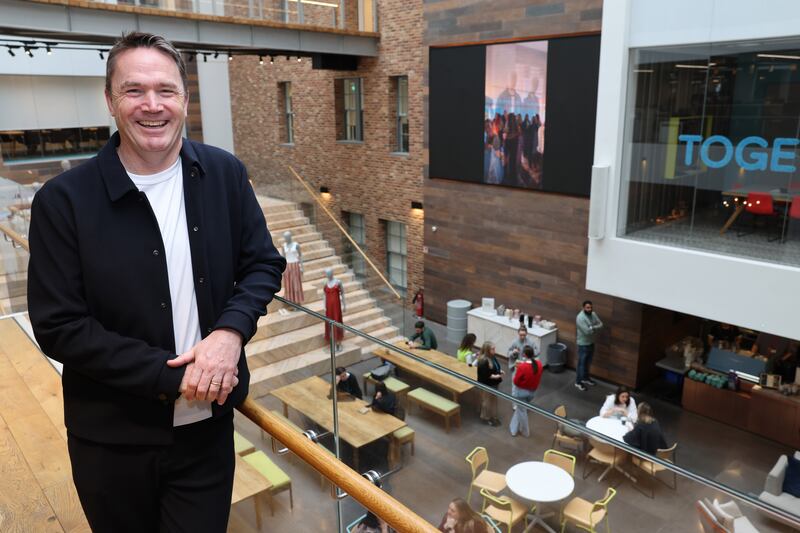
Founded here in 1969 under the leadership of the legendary Irish retailer Arthur Ryan, Primark’s funky headquarters is located beside the Mary Street store and is still very much an Irish business, Tonge says.
“We send Irish people all around the globe. That’s what makes me proud, being CEO of one of the best Irish companies there’s ever been. We’re in 19 countries, with 80,000 employees and close to 500 stores.”
Tonge is also on the board of ABF, the first Primark executive to hold that role. He says ABF are hands off, allowing the business to operate independently.
In November, ABF said it was undertaking a review of Primark, suggesting it could be spun out from the mother ship. We should get an answer to the question next week when ABF publishes its half-year results on April 21st.
Tonge gives little away. “Look, 95 per cent of what we’ve got to do here doesn’t change if we’re public [company] or not.”
Tonge says he grew up around Clonskeagh and Mount Merrion. His late father was an electrical contractor with his own factory, “repairing transformers”.
“He was a hard worker and I worked with him all my youth. I’m pretty sure I got my work ethic from him, and from my mother,” he says.
He was one of five children, went to Catholic University School on Leeson Street and did engineering at UCD.
He joined US investment banking giant Goldman Sachs on leaving college. “It’s the one decision I still can’t really fathom. My final year project was on AI in 1994. It was called artificial neural networks at the time and I think Goldmans thought I had some way of predicting the future and were quite excited.”
He started in London, with stints in Hong Kong, New York and London again over the course of 12 years. From there, he went to listed Irish food group Greencore, under the leadership of David Dilger. “I was Patrick Coveney’s [then chief financial officer] first hire and the pitch was that the business was coming out of sugar and was going to scale up in food. It was 13 years of unbelievable experience ... I don’t think there’s a business challenge that I didn’t have to deal with in Greencore.”
From there, he went to Marks & Spencer, where he spent two and a half years before being headhunted by ABF. He became interim boss of Primark in March 2025 when Paul Marchant left the business amid allegations about his behaviour.
Looking out five years, what does Primark look like on his watch?
“I think it will be a lot bigger. It will be in more countries. We will be a little more bespoke in each country. It will still feel like a Primark whether you’re in Romania or El Paso but it will feel more local. We’re going to continue to grow.”
CV
- Name Eoin Tonge
- Job Chief executive, Primark
- Age 53
- Lives Leeds
- Family Married with three children, aged 24, 22 and 18. One child is living in Dublin and going to college in UCD, another is working in London and his youngest is doing their A levels in school in Leeds.
- Hobbies “Love rugby. And running.” He has run 11 marathons, including five in Dublin.
- Something we might expect He always wears Penneys/Primark clothes.
- Something that might surprise His three children were each born on different continents (one in Dublin, one in New York and one in Hong Kong), largely as a result of his 13 years with Goldman Sachs.
- Leadership style “I’m very focused. I want to be clear and quite direct but apply common sense to all decisions I have to make. And you have to make decisions. I don’t feel I can leave a room without making a decision, even if it’s we haven’t made a decision. So everyone knows I’m switched and won’t beat around the bush. But I’ll do it nicely.”


