

The rivalry between Earvin “Magic” Johnson, the smiling, flamboyant Michigan basketball sensation, and Larry Bird, the sardonic, understated pure shooter from Indiana, is generally regarded as the birth of the modern NBA, transforming the image of a moribund league when they were drafted by Los Angeles and Boston respectively in 1979. Their rivalry was elemental, encompassing east and west, black and white.
Johnson remains one of Michigan’s gilded sports heroes, but on Wednesday he reminded people of his family’s origin story. “My father Earvin Johnson Sr was born in Mississippi,” he wrote. “I wish he was alive to see Scott Colom become the first Black senator from the state in over 140 years.”
Johnson senior was born in Wesson, Mississippi in the summer of 1934. His obituary photograph, in which he wears a white fedora to match a white suit, white shirt and white tie offers a strong clue as to where his son acquired his taste for sartorial glamour. Johnson senior was a sharecropper’s son and part of the mass migration who moved to the industrial north in the booming 1950s, finding work with General Motors and raising his family in Lansing.
“Four million people left the South because of the racial terror in the South – intellectual capital and creative talent lost because of hate,” said the politician Mitch Landrieu during the emotional minutes before Colom took the stage for his victory speech in Tougaloo College in Jackson on Wednesday. “I think race is this nation’s Achilles heel. In America we will never realise our full selves until we get past and through this racial division we still have.”
READ MORE


As it turned out, Colom’s first words as Mississippi’s first black senator since Blanche Bruce, in 1875, was less a triumphalist politician’s victory lap than a quietly extraordinary homily. The most miraculous, and emotional, of the midterm elections stories was the last to arrive. Colom recalled that he had begun his unlikely bid to unseat Cindy Hyde-Smith in April 2025 when he had held a town hall in Jackson.
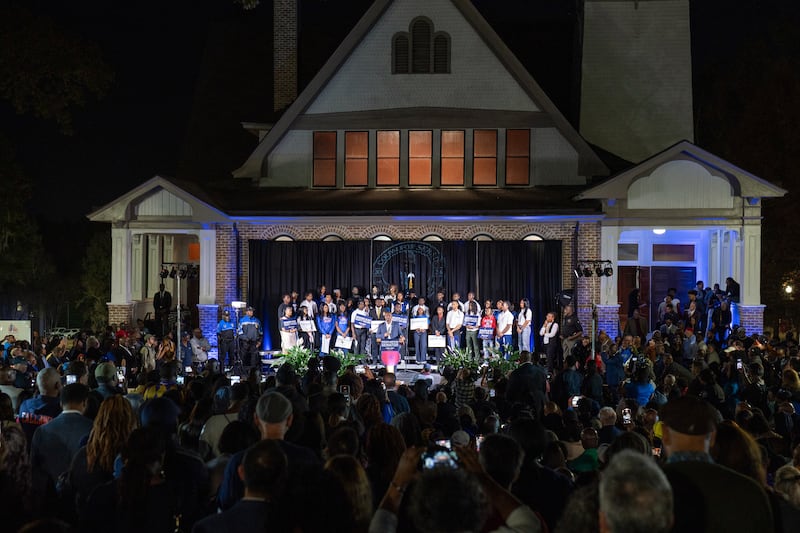
No more than 10 people showed up. Colom was no greenhorn: he was an attorney whose family is steeped in the Mississippi civil rights movement – and whose father was a Reagan republican – but he seemed to be pushing against an impossible weight of history here.
Mississippi is the least showy and most mysterious of all the Southern states. So many of America’s 20th century touchstones- William Faulkner, Elvis Presley, Eudora Welty, Charley Patton, BB King – found their voices in what Martin Luther King, in his most famous speech, termed “a state sweltering with the heat of injustice, sweltering with the heat of oppression.”
That was in the summer of 1963. The absence of a black senatorial representative for Mississippi since the back-to-back representation by Hiram Revels and Blanche Bruce, despite a black population of 36 per cent, are both historical and obvious. But it mirrored a national story.
After Bruce stepped down in 1881, there was no African-American US Senate representation from anywhere in the US until 1967. Barack Obama, elected in 2005, was just the fifth African-American to serve there. Those decades-long gaps contain multitudes of painful struggle, violence and persistent, peaceful protest.
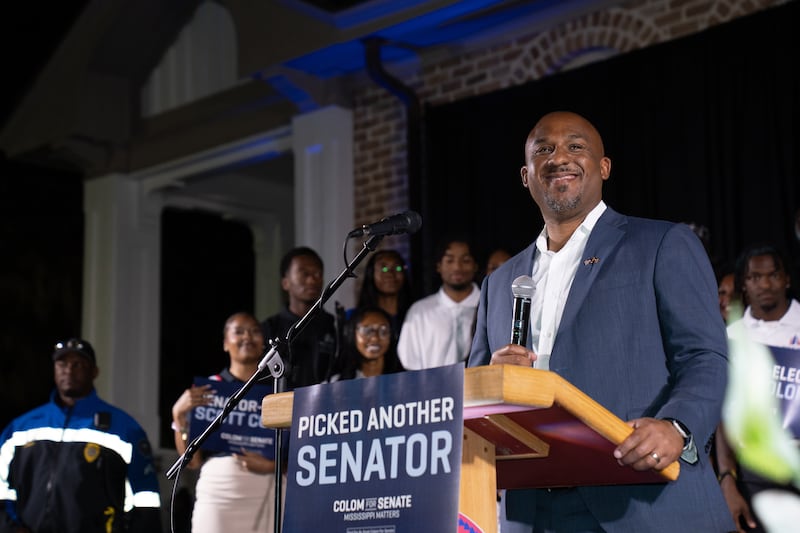
One of the first people Colom remembered in his speech was Medgar Evers, the Mississippian civil rights activist and second World War veteran shot to death in Jackson by another veteran, and Ku Klux Klan member, Byron De La Beckwith – the day after King’s speech in Washington.
Two trials ended in hung juries: De La Beckwith remained free for another 30 years until he was convicted of the murder in 1994.
Evers had been instrumental in investigating the death of Emmett Till, the 14-year-old Chicago boy abducted, tortured and murdered in Drew, Mississippi while visiting relatives there in August 1955. His body was thrown into the Tallahatchie river. The two men who stood trial for his murder were acquitted that September. They admitted to the murder, in detail, in a paid interview published in Look magazine a year later.
The writer Wright Thompson, whose family have farmed in the Clarksdale area of the Delta for generations, was shocked to learn in 2021 that the barn where Till was taken after his abduction still existed, not far from where he grew up. The information led him on a quest that he published in The Barn, a forensic investigation into Till’s murder and the story of land ownership, and race, in Mississippi. During his research, he discovered that in the archived copies of Look magazine held in libraries, the pages containing the article had been ripped out. On Wednesday night, on CNN, Thompson sought to place the brightness of Colom’s achievement in context.
“My father helped run the campaign for the first black candidate for the Senate since Reconstruction, who was Robert Clarke, and they burned a cross in our front yard. That was 1982. It feels like a referendum on Mississippi and what kind of state we want to be. We say that Faulkner quote all the time: ‘The past isn’t dead, it isn’t even past’. But this felt like a day when we were stepping into the future for Mississippi.”
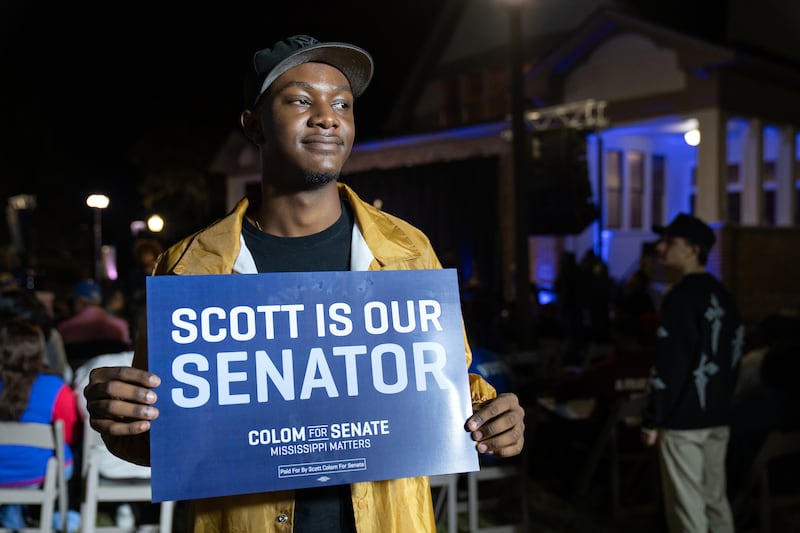
Colom spoke for 16 minutes, low-key and smiling and radiating a genuine sunniness. His election had been a triumph of clever promotion and relentless campaigning. He even turned up to a Trump rally in Corinth to speak with Maga voters standing in line in the sun. The purpose was not to change their mind but to show a black Democratic candidate laughing and conversing with Trump loyalists. He has repeatedly pointed out that they have more in common than not.
On Wednesday night, he had a message for all Mississippians, “The ones that voted for me, the ones that didn’t vote for me, and the ones that didn’t vote,” he clarified as he made them a vow that will become part of Mississippi lore.
“I’m gonna treat your children the way I want my children to be treated. I’m gonna treat your parents the way I want my parents to be treated.”
[ Keith Duggan: Thomas Massie's lonely revolt against Trump reaches its final actOpens in new window ]