New York-based Noel Gaynor was one of a number of Irish-American businessmen absorbing news on Thursday of Donald Trump’s tariffs announcement.
Gaynor, from Ballinrobe in Co Mayo, is proprietor of The Butcher Block, a supermarket in Sunnyside, Queens, that has specialised in Irish products for the local community and beyond for 30 years.
“It’s hard to say this early on. I’m not sure we know enough yet to determine how things will work out,” he said, the morning after the United States president announced a 20 per cent tariff on imports from the European Union.
“I feel it’s a waiting game really, it could take a few weeks or months even to notice any effects,” said the shopkeeper who sells Irish produce including Kerrygold, which already retails at about 80 per cent above prices in Ireland due to import costs.
READ MORE


“Some of our orders, for example, take up to six or eight weeks from when we order them, to [when they arrive on the shelves]”.
It is not yet possible to determine how much other businesses, such as the bar and restaurant industry, will be affected, with the exporting of Irish whiskeys especially being mentioned in economic conversation.
Dubliner Joe Byrne, who has a business interest in a number of bars in Queens and Manhattan, says: “It’s hard to accept it as reality with him [Trump], until it actually happens, and that’s when we’ll get to see these cost differences. If these tariffs are fully implemented, and they remain a long-term plan, we will definitely need a radical rethink where costs and the ordering of products is involved.”
It is not only Irish owners of businesses in the US that are concerned, however. There are Irish parents of US-reared children, such as Dubliner Rachel Maguire and her American husband Steven. Rachel says: “The prices are already high for Irish goods here, and to hear that there’s a possibility that they’ll go up even further, it’s almost like we’re being punished.
“I don’t buy as much Irish things as I used to. I used to always go to the Irish stores, especially to get soda bread and things like that, but then during Covid, when we couldn’t travel as much, it became easier just to start baking at home. Now there might be even more reason to do that,” she said.
Chris Lambe, originally from Leixlip, Co Kildare, is a climate consultant who has been based in the US for several years. “From a consumption perspective, the tariffs don’t bother me,” he said.

“There’s a reasonable American alternative for most things, the exception maybe being wine. What bothers me is this is a manufactured crisis. Completely unnecessary, but to what end? With Trump, you always have to try to guess the endgame. What will he use this crisis to achieve?”
Jokingly, he added: “At the same time, I’m glad he put a tariff on uninhabited Antarctic islands. Those penguins have been ripping us off for years.”
Further north in Boston, importers of Irish speciality goods are assessing the potential impact of tariffs with a mix of concern and cautious optimism.
Cindy Quinn, who owns Greenhills Irish Bakery in Dorchester with her husband Dermot, originally from Co Offaly, worries that specialty items like Kerrygold butter are “pricey enough already”.
The bakery specialises in soda bread, scones and tea, catering to the longstanding local community of Irish immigrants in Dorchester centre. Most of the baked goods will not be impacted, says Quinn, save for the treacle in the treacle bread, which she procures from an Irish importer.
The grocery story also sells a small grocery selection of Irish goods, Barry’s tea being the number one selling item. Customers will likely see an increase in the price, says Quinn.
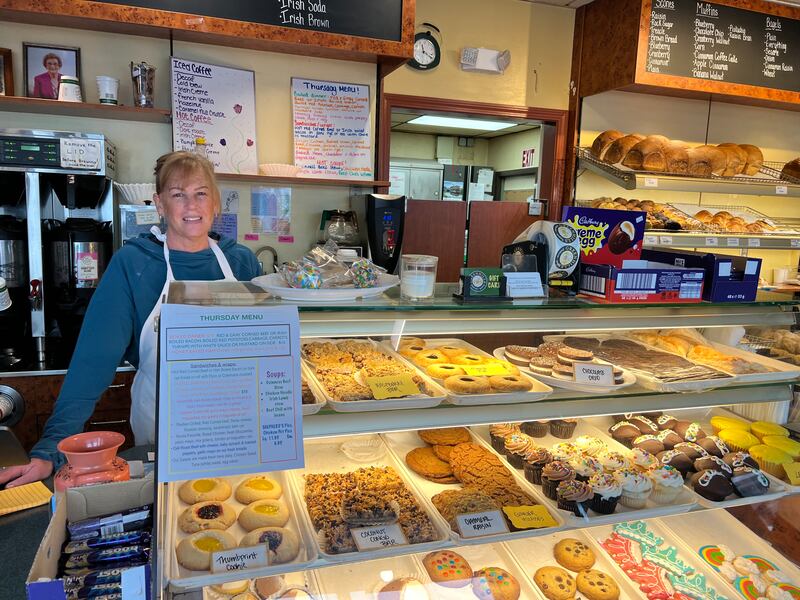
Tricia Burns, the manager of the bakery and originally from Belfast, is less concerned. People will “pay anything to have something from home”, she says. “They don’t really care what price it is so long as they’re getting it.”
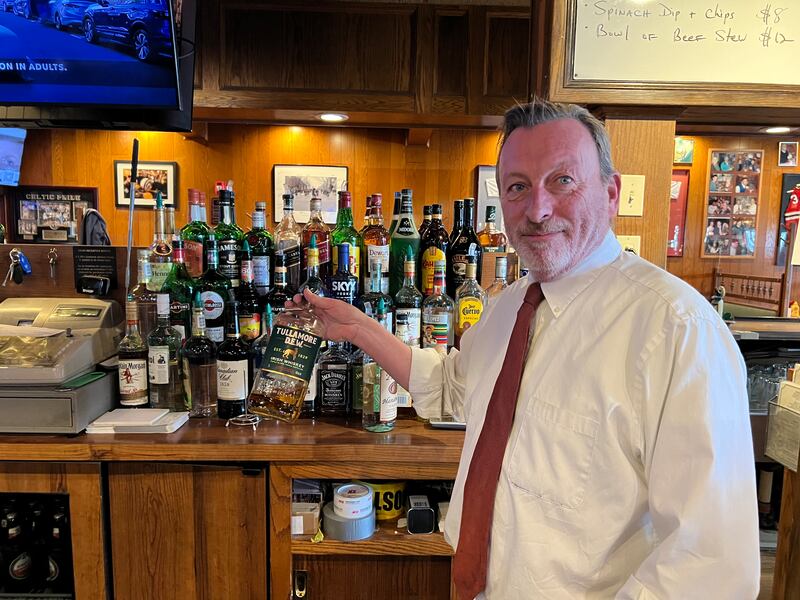
At the Eire Pub across the street, where they serve Guinness and a wide variety of Irish whiskeys, Co Kerry native John Curran, and a bartender at the establishment for more than a decade, is not too worried either.
“I don’t think it’s going to last long,” says Curran of the newly imposed tariffs. “I think this is all going to come out in the wash.”
At Casali’s Market next door, manager Mohammed Zaman says business is already bad. Casali’s Market sells a wide range of Irish goods, including Kerrygold and Tayto crisps. They also sell Crunchie bars, Maltesers, and other imported chocolates favoured by their Irish clientele.
“People used to spend money, right now they don’t spend money,” says Zaman, citing the rising American egg prices. “They don’t have money for Irish candy.”
Dhruv “Lucky” Patel, 40, owner of the Lucky Shamrock grocery store in Quincy, says he and his family have been catering to the Irish community for 25 years, initially in Dorchester. His store sells Kerrygold butter, as well as Donnelly bacon, McCloskey’s baked goods, Green Isle potato waffles and hash browns, among other imports.
The tariffs will have a big impact on business. “Things are not going to be easy,” he says. “Things will change, definitely.”
Groceries are always a bit of a gamble, he says, as there are no returns and perishable goods have expiration dates.
Patel tries to keep prices low, but tariffs will have an impact. “No one wants to spend $7 on a cookie,” he says. This may mean he has to cut back on the variety of items he is able to import.
Frances Duffy, a caregiver formerly from Co Donegal, says the higher prices will be no deterrent.
“If I want it, I want it,” says Duffy, pushing a cart through Lucky Shamrock full of Batchelors peas, frozen loaves of Pat The Baker bread, and three large tubs of Kerrygold.
When it comes to butter, her family “won’t eat nothing else”.