
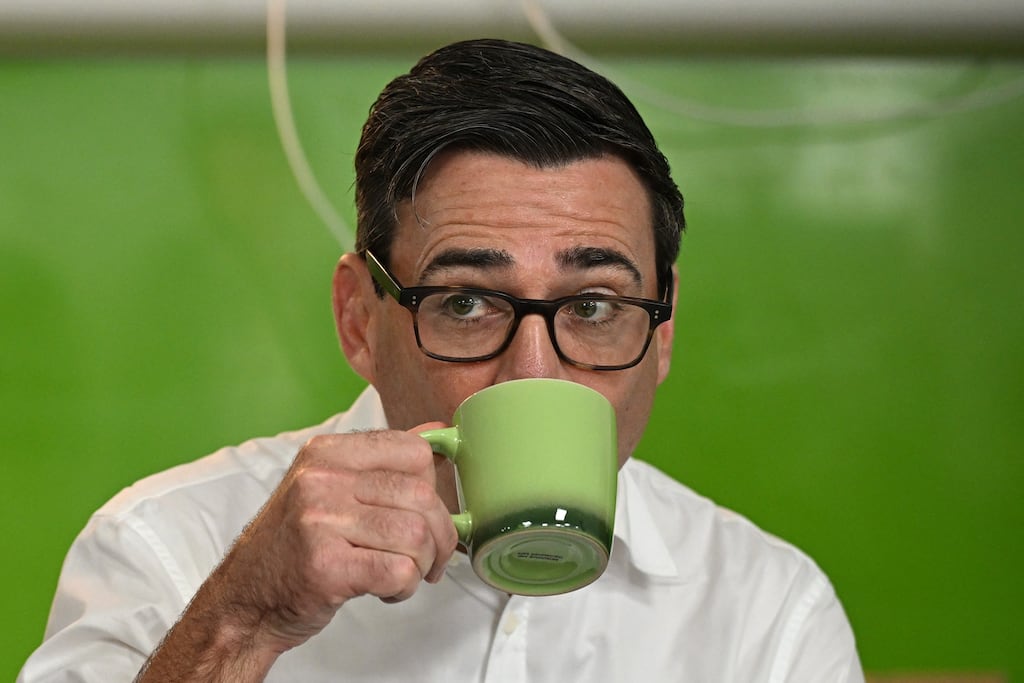
Britain’s prime minister Andy Burnham arrives in Turkey for this week’s Cop31 climate change summit just as green issues appear to be sliding down his country’s agenda.
While Burnham is at the summit, his deputy, the UK’s first secretary Louise Haigh, will chair a meeting in Downing Street about targets for electric vehicle sales. Burnham would probably have recused himself from the meeting even if he wasn’t out of the country, as his wife, Marie-France van Heel, advises an electric car charging company.
It is believed Haigh is limbering up to impose deep cuts on government-mandated industry targets for electric car sales, a flagship policy for cutting Britain’s emissions. Under existing rules, 80 per cent of all new car and 70 per cent of all new van sales must be electric vehicles by 2030, with petrol and diesel sales phased out completely by 2035.
Haigh reportedly plans to have the 2030 target slashed, which will be a relief to what remains of the car manufacturing industry in the English midlands and north where Burnham’s Labour government hopes to win back support from Nigel Farage’s Reform UK.
READ MORE


The expected move on electric cars comes just weeks after the British government approved the Jackdaw gasfield in the North Sea, to the chagrin of environmentalists. Meanwhile, UK chancellor of the exchequer, John Healey, cut energy department spending by about £3 billion (€3.6 billion) in last month’s budget to pay for more outlay on defence.
As a result, UK taxpayer funding is being scaled back for previously-vaunted schemes to subsidise heat pumps, boiler upgrades and solar panels for British homes. Healey also cut funding for carbon capture projects by £700 million, pulling the rug from beneath yet another one-time totem of UK government policy to combat climate change.
Meanwhile, Burnham’s government is preparing to make a decision on Rosebank, an oilfield prospect in the North Sea, where there is an effective UK government ban on licences for new drilling. If it approves Rosebank, murmurings among some Labour backbenchers about perceived backsliding on green issues will get significantly louder.
The change in emphasis is not limited to the UK government in Westminster. First minister John Swinney has deftly nudged the Scottish National Party away from its previous position of supporting the North Sea drilling ban. Last week, he confirmed he was now opposed to it.
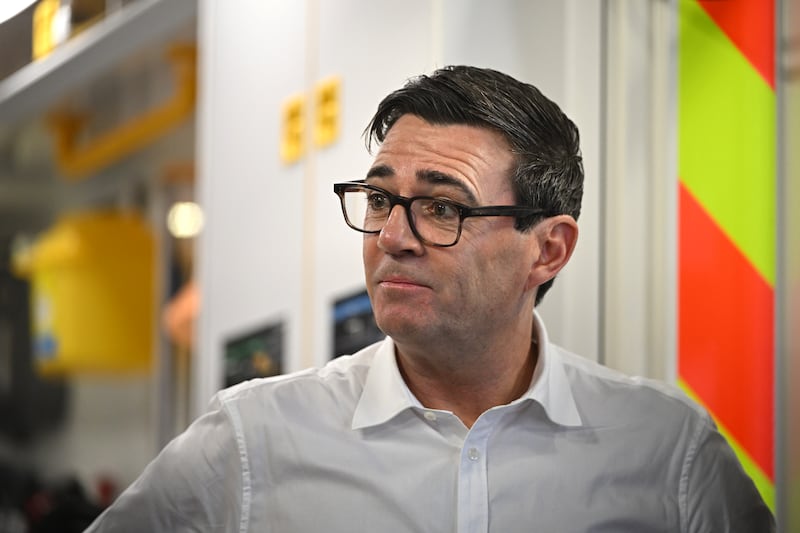
Downing Street insists climate change is still a top priority for Burnham’s government. Yet it has been elbowed out of the way by financial concerns in the country-at-large.
Polling company YouGov publishes a regular tracker of the top issues facing Britain, as decided by the public. Fears over the environment were for years among the main concerns: in 2019, it outstripped even the economy as a worry for British voters.
In the latest YouGov tracker last week, the environment was down to fifth in the list, named as a top issue facing Britain by just 17 per cent of those polled. The economy was top with 54 per cent, followed by immigration, defence and health. Notably, the environment has slid further down the YouGov list since Burnham took office in July.
Green issues shot up the agenda under former Tory prime minister David Cameron, but they peaked under his successors, Theresa May, followed by Boris Johnson. In 2019, May’s government wrote Britain’s 2050 net zero emissions deadline into law, while Johnson’s administration drafted the rules designed to phase out petrol and diesel cars.
Yet each prime minister since has chipped away at green prioritisation. Rishi Sunak was the first to scale back some emissions targets in a 2023 move that was condemned at the time by Labour, which in office appears fully prepared to go even further.
The wider political landscape in Britain around climate change has sparked alarm among some environmentalists. The Tories may be far from a return to power, but the party under Kemi Badenoch has still promised to further scale back green targets.
Farage’s Reform, meanwhile, delights in railing performatively against net zero, which it blames for increasing costs for homes and businesses. The mere mention of net zero at a Reform rally always elicits hisses and pantomime boos.
Further research this week from More in Common shows that while many voters remain worried about climate change, they worry about their pockets even more. Those who were struggling financially were 23 percentage points less likely to support it than those were better off. Cost of living is cited as the main reason for opposing it.
Therein lies the political challenge for Burnham. He previously attended Cop as mayor of Greater Manchester and returned saying he was “worried” about the standard of the climate change debate among the world leaders of the time.
Now he is one of them, running a country that remains scarred from its last cost-of-living crisis that started four years ago. This winter it will enter a new one.
Apart from a brief period earlier this year when Britain sweltered under its hottest summer on record, climate change rarely figures on the country’s national agenda. The only thing making British people green is the hit to their pockets from rising energy bills.
[ US aircraft reportedly evacuated from second British base due to Iran threatOpens in new window ]