The decision of the high court in London to reject the ban under anti-terror legislation of the campaign group Palestine Action strikes a heavy blow against UK government policy to curb protesters.
It also buttresses the case of those who have long argued that in recent years Britain has been on a slippery slope towards curtailing freedom of expression.
Palestine Action, a direct action group involved in break-ins at military suppliers linked to Israel’s war in Gaza, was proscribed by the UK government last July. This put it legally on a par with al-Qaeda and Islamic State.
Membership or active support of Palestine Action became punishable by up to 14 years jail. About 2,800 people have been arrested in Britain since last July for silently displaying signs saying: “I oppose genocide, I support Palestine Action.” About 500 have been charged. The future of those cases is now in doubt.
READ MORE


Huda Ammori, a founder of the group, challenged the UK government ban on eight grounds. She only needed to win one to have the ban declared illegal.
In the end, the three-judge panel on Friday agreed with her on two grounds: that the ban significantly interfered with freedom of speech and assembly, and that it ignored the UK government’s own rules requiring it to take a more holistic view of the specific threat to the UK before putting it on the proscribed list.
Despite Ammori’s victory over the UK’s home office, Palestine Action is still banned – for now. The judges said they intended to overturn the ban, but put a stay on it pending submissions from both sides about lifting the ban before an appeal by the UK government.
Home secretary Shabana Mahmood quickly issued a statement saying she would appeal, but the defiance of her tone did not mask the scale of her defeat.
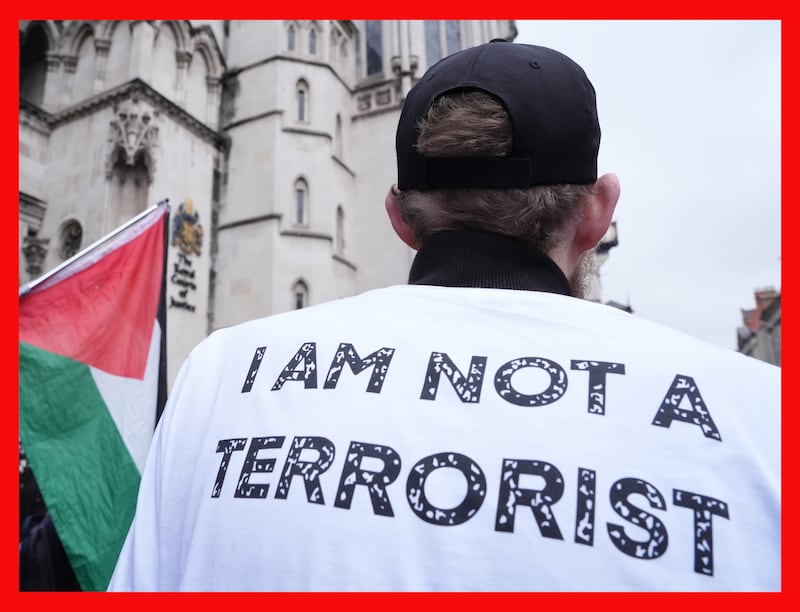
It is important to note that Friday’s ruling has no impact on the cases of Palestine Action members prosecuted for allegedly violent attacks on the UK division of Elbit, an Israeli military hardware supplier, and also on an RAF base.
Six of this cohort were cleared by a jury of an attack earlier this month, in another blow to the UK state’s attempts to rein in Palestine Action. Others are on remand over alleged attacks, including some who were on hunger strike in recent months.
All of those tried or currently charged over these attacks faced action over alleged incidents from before last July’s ban. The Palestine Action proscription also has nothing to do with legal action against the Belfast hip-hop trio Kneecap.
The ban, while rejected by the judges, is still in place. However, if and when it is formally lifted, the UK government will be forced back to the drawing board.