As US president Donald Trump arrived in China on Wednesday, US negotiations to end the conflict in the Middle East have stalled and its military objectives in the war appear to be out of reach.
Speaking before departing from Washington, Trump played down the role China could have in resolving the conflict, in which both sides have blocked maritime traffic through a waterway that normally carries one-fifth of the world’s oil supplies.
“I don’t think we need any help with Iran. We’ll win it one way or the other, peacefully or otherwise,” he told reporters. “We have Iran very much under control.”
He repeated a threat to decimate Iran unless its leaders agree to a deal on the country’s nuclear programme.
READ MORE


Yet talks seem to be deadlocked, with the two countries unable to agree on constraints on Iran’s nuclear enrichment.
The president also appeared to brush off the growing economic impact of the conflict, as Iran’s de facto blockade of the Strait of Hormuz rattles global energy markets.
“The only thing that matters when I’m talking about Iran, they can’t have a nuclear weapon,” Trump said. “I don’t think about Americans’ financial situation. I don’t think about anybody.”
Iranian state media said this week that, in response to a US proposal to end the war, Iran had demanded that the United States recognise its sovereignty over the Strait of Hormuz, end sanctions and pay war reparations. Trump castigated the Iranian response over social media as “TOTALLY UNACCEPTABLE.”
Experts on Iran say those demands suggest the country’s clerical rulers feel emboldened, believing they have prevailed in the war by surviving a US-Israeli attempt to overthrow them.
Since the two sides agreed to a ceasefire last month, the United States has imposed a blockade on Iranian ports in an effort to compel Iran to relinquish control of the Strait of Hormuz, through which about a fifth of the world’s oil and gas shipments once flowed. That appears to have had little success in forcing Iran’s hand in negotiations.
And while Trump and his defence secretary, Pete Hegseth, have said Iran’s military capabilities have been decimated during the war, US intelligence agencies have privately painted a very different picture.
Iran has retained roughly 70 per cent of its pre-war missile stockpile, according to the assessments. They also said that, despite extensive US and Israeli bombardment, Iran had restored access to most of the missile sites it maintains along the Strait of Hormuz and still fields about 70 per cent of its mobile launchers.
Israel and the United States launched a joint attack on Iran in late February, setting off a war that quickly engulfed much of the Middle East. Iran retaliated by firing volleys of ballistic missiles and drones at Israel and across the Gulf, drawing in many of the United States’ Arab allies.
Soon after the outbreak of war, Lebanon opened up as another front in the conflict after the Iran-backed militant group Hizbullah began firing rockets at Israel. The Trump administration has nominally declared a ceasefire in Lebanon, which was one of Iran’s demands for a broader truce, but intense fighting between Israel and Hizbullah has largely continued.
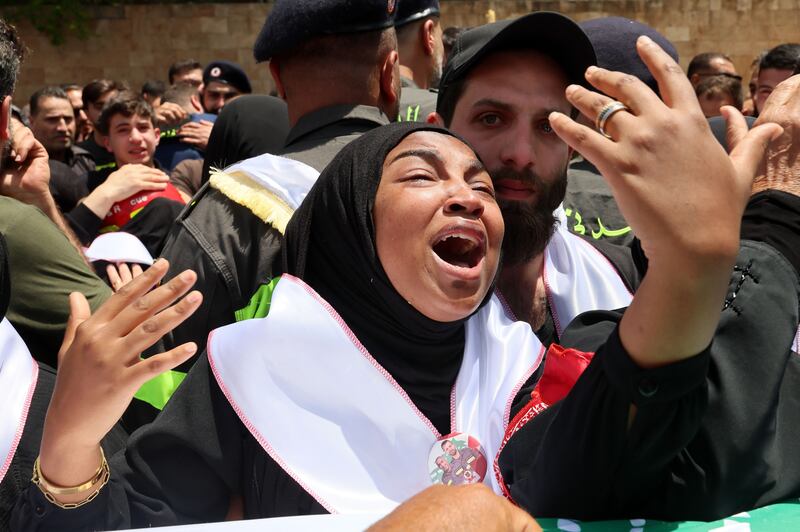
On Wednesday, at least 12 people, including a mother and two children, were killed in southern Lebanon in a series of Israeli air strikes on vehicles, the Lebanese Health Ministry said. The Israeli military did not immediately respond to a request for comment on the strikes.
Also Wednesday, the Israeli military said in a statement that it had targeted Hizbullah weapons storage facilities and rocket launchers in southern Lebanon, where Israeli troops still occupy a broad swath of the region. Hizbullah fighters have increasingly targeted Israeli soldiers in the country’s south with low-cost, fibre-optic drones. – The New York Times/Reuters
.