
Main Points
- The US and Iran are reportedly exploring short-term options to end the conflict but the most contentious issues, including Tehran’s nuclear ambitions, remain unresolved
- Israeli prime minister Binyamin Netanyahu said there was no ‘immunity’ for its enemies, a day after its military launched attacks against Hizbullah in southern Beirut despite the ceasefire with Lebanon
- Pope Leo and US secretary of state Marco Rubio discussed ‘efforts to achieve a durable peace in the Middle East’ in a meeting at the Vatican
- Oil prices dropped to their lowest levels in two weeks as investors began to express optimism over a potential peace deal in the Gulf
- The EU’s transport chief has told airlines to pay passengers for fuel-linked cancellations as concerns remain over potential shortages in the coming weeks
Key Reads
- When a ‘pause’ becomes an ending: Trump tries to bring Iran war to a close
- Only a lucky or well-informed few are benefiting from erratic US policies
- Iran war reveals globalisation’s invisible workforce
Iran claims it struck US military naval units
US military naval units operating in the area of the Strait of Hormuz came under Iranian missile fire, following an attack by the US military on an Iranian oil tanker, Iranian state media, citing an unnamed military official, said on Thursday.
US military vessels were forced to retreat after sustaining damage from Iranian missile strikes, it added. It was unclear when the incident happened.
The Pentagon did not immediately respond to a request for comment, but on Wednesday, the US military said it had disabled an Iranian-flagged oil tanker that was trying to sail towards an Iranian port.
The US military said that US forces hit the tanker’s rudder with a F-18 fighter jet. – Reuters
Iranians open fire on US military in the Strait of Hormuz
Iran’s state broadcaster, citing an unnamed military official, has said that “enemy units” operating in the area of the Strait of Hormuz came under Iranian missile fire, following an attack by the US military on an Iranian oil tanker, forcing the units to retreat.
The Islamic Revolutionary Guard Corps-affiliated Fars news agency said Iran’s armed forces had exchanged fire with enemy forces attacking Bahman pier on Qeshm island, which is in the strait. – The Guardian
US and Iran narrow potential ceasefire to single-page document
Three senior Iranian officials say Tehran and the United States are discussing a one-page plan for both sides to reopen the Strait of Hormuz and end hostilities for 30 days while they try to reach a comprehensive deal.
The talks over a short-term agreement are continuing, the officials said, with negotiators trading proposals over how to describe the framework for a potential permanent deal.
The three Iranian officials, who are close to the negotiations and spoke on condition of anonymity to discuss sensitive diplomacy, said a key obstacle was the US demand for commitments in advance on the fate of Iran’s nuclear program and its stockpile of highly enriched uranium.
They said US negotiators continue to insist that Iran agree in principle to hand over the stockpile to the US, close three nuclear facilities and suspend enrichment for 20 years.
The White House did not immediately respond to a request for comment on the negotiations, but the position described by the Iranians was in line with what Americans described as the US position in recent weeks. – The New York Times
‘Interim’ deal to end Iran could be available this weekend
The United States and Iran are close to a temporary agreement to halt the war in the Middle East, officials in Pakistan have claimed.
The diplomatic activity gathered fresh momentum after a near breakdown of the current ceasefire earlier this week.
Officials on Islamabad said a very basic “interim” deal could be reached as early as this weekend and that Tehran was reviewing a US proposal.
However, US president Donald Trump and Pakistan have consistently suggested a breakthrough was imminent, and weeks of previous efforts to negotiate a permanent end to hostilities have made little real progress.
Recent days have seen wild swings from hope to despair as the US and Iran test each other’s resilience and will, seeking leverage in any talks through belligerent rhetoric, defiance and sporadic violence.
His comments come after Iran said a US proposal to end the war is “still being considered”.
US news outlet Axios reported that the White House believes it could be closing in on a 14-point memorandum of understanding with Iran, which could set a framework for more detailed nuclear negotiations.
A senior member of Iran’s parliament has dismissed it as a “wish list”, while a foreign ministry spokesman said Tehran would share its views of a US proposal with Pakistani mediators.
Pakistan’s foreign minister said his country was “endeavouring to convert this ceasefire into a permanent end to this war”.
Trump meets Brazilian president Lula in Washington
US president Donald Trump is currently meeting with Brazilian president Luiz Inácio Lula da Silva at the White House.
The meeting was supposed to have ended hours ago with a press conference, but, to date, there is no sign of either man.
There is no love lost between the them especially after Lula deposed Trump’s ally Jair Bolsonaro who had previously been described as the “Trump of the Tropics”.
Lula has been a critic of Trump’s actions in Venezuela and in Iran. Trump imposed swinging tariffs on Brazil before withdrawing them.
The relationship between the western hemisphere’s biggest countries is changing as Brazil has the world’s second biggest supply of rare earth and critical minerals (after China).
Trump is expected, if a press conference takes place, to answer questions about Iran.
Liquefied natural gas (LNG) carriers have transited the Strait of Hormuz five times over the past two weeks, maritime tracking firm Kpler said on Thursday.
That was up from just one between March 1st and April 21st, after the Middle East war largely halted traffic through the strategic waterway.
Normally, 20 per cent of global seaborne LNG passes through the strait.
“LNG operators have remained highly cautious about transiting the strait given the high value of the vessels and the relatively limited size of the global LNG fleet,” Laura Page, Kpler analyst told AFP.
The five crossings recorded since April 22nd have involved four LNG tankers linked to the United Arab Emirates. All kept their transponders off as they navigated the strait. – The Guardian
Chinese-owned tanker attacked near Strait of Hormuz
A Chinese-owned oil products tanker was attacked near the Strait of Hormuz on Monday, Chinese media outlet Caixin reported, as president Donald Trump launched a US plan that day to help stranded vessels but suspended it a day later.
This was the first time a Chinese oil tanker has been attacked, a person with knowledge of the matter told Caixin on Thursday.
Traffic through the vital strait, through which 20 per cent of the world’s oil and gas supplies pass, has been at a virtual standstill since the Iran conflict began on February 28th.
The unnamed vessel’s deck caught fire and the ship was marked “CHINA OWNER & CREW”, according to Caixin.
It was not clear if any of the vessel’s crew were injured.
China remains a key buyer of Iranian oil, which has been targeted by a US blockade in the Gulf of Oman.
China’s foreign ministry did not respond to an out-of-hours request for comment.
Trump said on Monday the US would begin efforts to assist ships stranded in Hormuz, though he suspended it a day later, after Iran responded by launching drones and missiles at several ships and at its neighbours, particularly the UAE.
Maritime security sources said the Chinese vessel that was damaged was believed to be the Marshall Islands-flagged oil products and chemical tanker JV Innovation, which had reported a fire on its deck to nearby ships on Monday.
The incident took place off the United Arab Emirates coast in the Gulf close to Mina Saqr, the report said. – Reuters
Israeli air strike kills son of chief Hamas negotiator with US
An Israeli air strike killed the son of Hamas’ chief negotiator in US-mediated talks over Gaza’s future, a senior Hamas official said on Thursday, as leaders of the militant group held talks in Cairo aimed at safeguarding their truce with Israel.
Azzam Al-Hayya, son of Khalil Al-Hayya, succumbed to his wounds on Thursday after being struck in an Israeli attack on Wednesday night, senior Hamas official Basim Naim said. He is the fourth son of Hamas’ exiled Gaza chief to have been killed in Israeli attacks.
The Israeli military did not respond to a request for comment.
Later on Thursday, health officials and the Hamas-run interior ministry said at least three police officers were killed, and other people, including one policeman, were wounded when an Israeli airstrike targeted a police post in western Gaza City.
There was no immediate comment from the Israeli military. – Reuters
Some 20,000 ship crew members trapped in Gulf, says UN
Around 1,500 ships and their crews are trapped in the Gulf due to the Iranian blockade in the Strait of Hormuz, the secretary general of the United Nation’s International Maritime Organisation said in Panama on Thursday.
The war in the Middle East provoked reprisals from Tehran across the region and a shipping blockade in Hormuz, a crucial global trade route.
“Right now, we have approximately 20,000 crewmen and around 1,500 ships trapped,” Arsenio Dominquez told the Maritime Convention of the Americas. – The Guardian
The state department official did not say who would participate in the meeting. US secretary of state Marco Rubio said on Tuesday that peace was achievable but required Lebanon’s government to have the capability to fight Hizbullah. – Reuters
Israel and Lebanon will hold talks in Washington on May 14th and 15th, a US state department official said on Thursday. – Reuters
US and Iran exploring short-term options to end war
The United States and Iran are edging toward a temporary agreement to halt their war, sources and officials said on Thursday, with Tehran reviewing a proposal that would stop the fighting but leave the most contentious issues unresolved.
The emerging plan centres on a short-term memorandum rather than a comprehensive peace deal, underscoring deep divisions between the two sides and signalling that it would be an interim step.
Tehran and Washington have scaled back ambitions for a sweeping settlement as differences persist, particularly over Iran’s nuclear programme – including the fate of its highly enriched uranium stockpiles and how long Tehran would halt nuclear work.
Instead, they are working toward a temporary arrangement set out in a one-page memo aimed at preventing a return to conflict and stabilising shipping through the strait, the sources and officials said.
“Our priority is that they announce a permanent end to war and the rest of the issues could be thrashed out once they get back to direct talks,” a senior Pakistani official involved in mediation between the two sides told Reuters.
The proposed framework would unfold in three stages: formally ending the war, resolving the crisis in the Strait of Hormuz and launching a 30-day window for negotiations on a broader agreement, according to the sources and officials. – Reuters
Thursday: The day so far
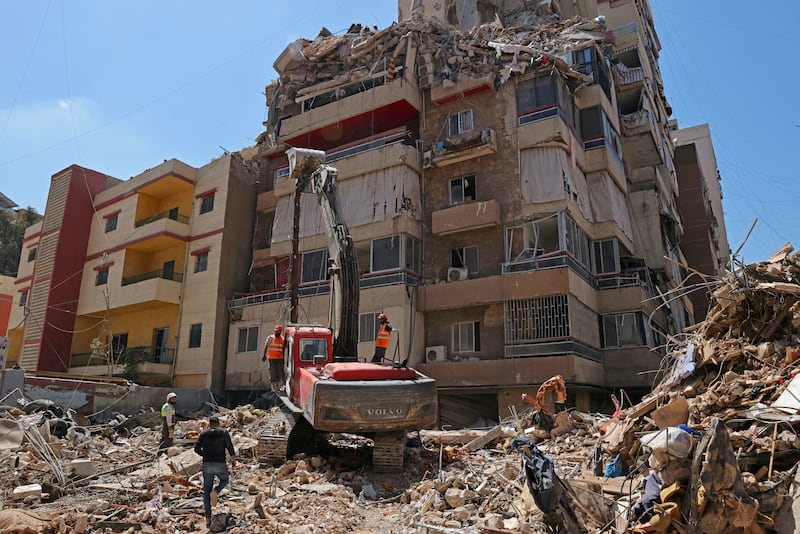
After Beirut strike, Netanyahu says ‘no immunity’ for militants
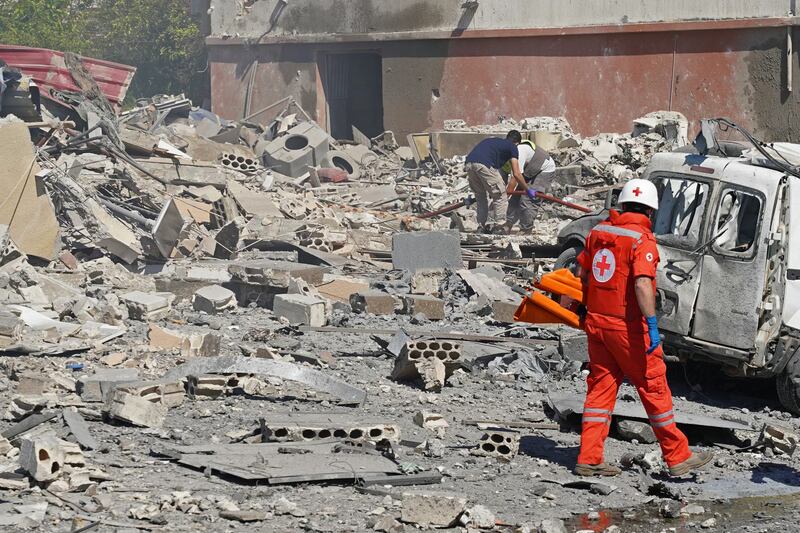
Israeli prime minister Binyamin Netanyahu said on Thursday there was no “immunity” for Israel’s enemies, a day after the Israeli military targeted a Hizbullah commander in its first strike on Beirut’s southern suburbs since a ceasefire was declared last month.
Israel earlier said the attack killed the commander of the Iran-backed group’s elite Radwan force.
Hizbullah, which controls Beirut’s southern suburbs, has yet to issue any statement on the strike or the commander’s status.
“He likely read in the press that he had immunity in Beirut. Well, he read it and it is no longer the case,” Netanyahu said in a statement.
Netanyahu said the Hizbullah commander, identified as Ahmed Ali Balout by the Israeli military, “thought he could continue to direct attacks against our forces and our communities from his secret terrorist headquarters in Beirut”.
“I say to our enemies in the clearest possible way: No terrorist has immunity,” he said. – Reuters
Iran foreign minister speaks with Pakistani counterpart
The Iranian foreign minister, Abbas Araghchi, has spoken with his Pakistani counterpart, Ishaq Dar, on the phone today, according to a statement posted on the former’s Telegram channel.
Oil price hits two-week low amid hopes of peace deal
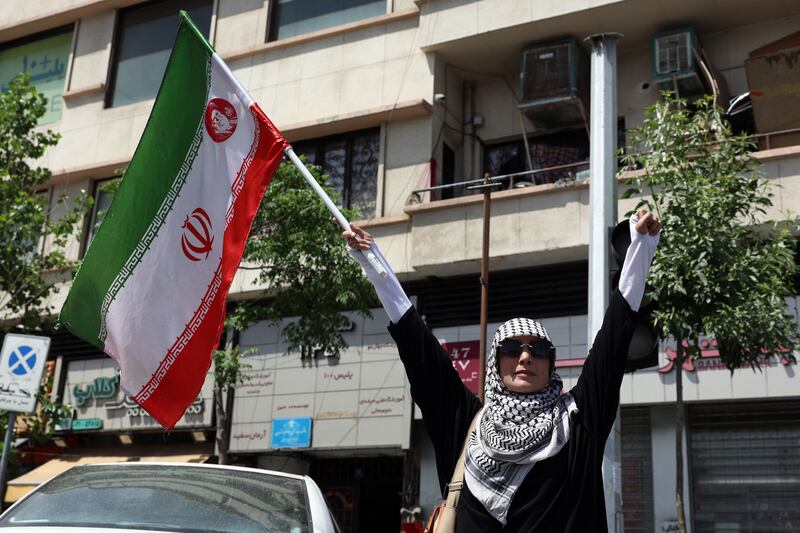
Brent crude has now sunk to its lowest level in over two weeks. The benchmark oil measure is down 5 per cent today at $96.19 (€81.68) a barrel, its lowest level since April 21st.
Investors appear to remain hopeful that Iran might give a positive reaction to the peace deal proposed by the US yesterday, after Donald Trump again said the war will be “over quickly”.
Reports indicate Tehran is reviewing a US proposal that could eventually lead to the reopening of the Strait of Hormuz, while broader nuclear discussions may be delayed until later stages. – The Guardian
Iran conducting ‘near-daily executions in secrecy’
Iran is carrying out near-daily executions of prisoners in secrecy and, in some cases, refusing to hand the bodies of the dead to their families, according to rights groups and sources close to the relatives of the dead.
Many families only learn of executions after they have been carried out, with some facing harassment and pressure not to speak publicly on the personal impact of the state killings, the sources said.
In the latest reported surge, Iran has executed at least 24 people since March, with six executions carried out over two days, according to a Norway-based monitoring group, Iran Human Rights (IHRNGO).
The killings have raised fears for hundreds believed to be facing the death penalty over mass antigovernment protests in January, as well as those held on espionage accusations during the war with the US and Israel.
An internet blackout imposed more than two months ago has made it increasingly difficult to communicate with people inside Iran, although some have been able to send out messages, including voice notes sent through encrypted channels or by satellite internet.
In one message sent to The Guardian, a close family member of Saleh Mohammadi, a teenager and national wrestling champion executed in March, said the family had been facing “profound psychological trauma”.
“After our brother’s execution, individuals who support the government have repeatedly gathered in front of our home, chanting slogans and subjecting us to ongoing harassment and psychological pressure,” the person said.
“These actions have multiplied our suffering and intensified our sense of insecurity. I have nightmares every night.” – The Guardian
US president Donald Trump hasn’t commented on the meeting between Rubio and Pope Leo yet, but has been busy posting about other topics on Truth Social including sharing an image of a large statue of himself which has been erected at his golf club in Florida.
The statue – which was inspired by his reaction to 2024 assassination attempt – is actually bronze with a layer of gold leaf on top, according to the sculptor who made it.

Rubio and Pope discuss ‘durable peace’ in Middle East
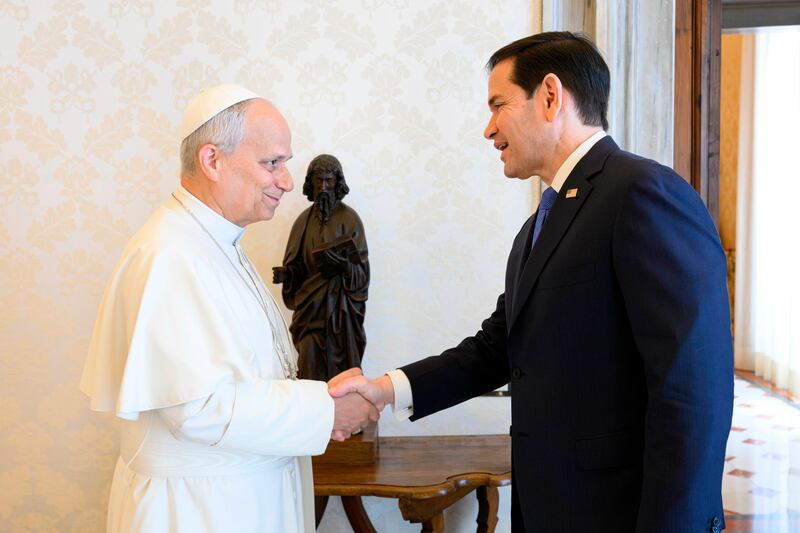
US secretary of state Marco Rubio discussed “efforts to achieve a durable peace in the Middle East” in talks at the Vatican on Thursday, the US state department said.
Rubio met Pope Leo and afterwards Vatican Secretary of State Cardinal Pietro Parolin in a visit that lasted two-and-a-half hours.
US state department spokesman Tommy Pigott said Rubio and the pope discussed the situation in the Middle East “and topics of mutual interest in the western hemisphere”.
“The meeting underscored the strong relationship between the United States and the Holy See and their shared commitment to promoting peace and human dignity,” he said.
In a separate statement about the Parolin meeting, Pigott said the two diplomats discussed “ongoing humanitarian efforts in the western hemisphere and efforts to achieve a durable peace in the Middle East”.
The discussion “reflected the enduring partnership between the United States and the Holy See in advancing religious freedom”, the statement said.
The meeting was aimed at repairing relations between the Vatican and the White House after Trump insulted the pope numerous times. – AP
Rubio and Pope Leo discuss Middle East in ‘constructive’ meeting
Some details are now emerging from the meeting between Marco Rubio and Pope Leo.
The pair discussed “efforts to achieve a durable peace in the Middle East”, according to a statement from the US state department quoted by AP.
The meeting showed “strong” relationship between the US and the Vatican, it added.
Separately, a US official told reporters the meeting was “friendly and constructive”.
More as we get it.
US secretary of state Marco Rubio has left the Vatican after his meeting Pope Leo XIV. Details of the meeting are yet to be confirmed, but he spent about two hours there.
Rubio initially met the pontiff before meeting senior Vatican officials, including top diplomat Italian cardinal Pietro Parolin, Reuters reported.
Pope meets Tusk and Rubio
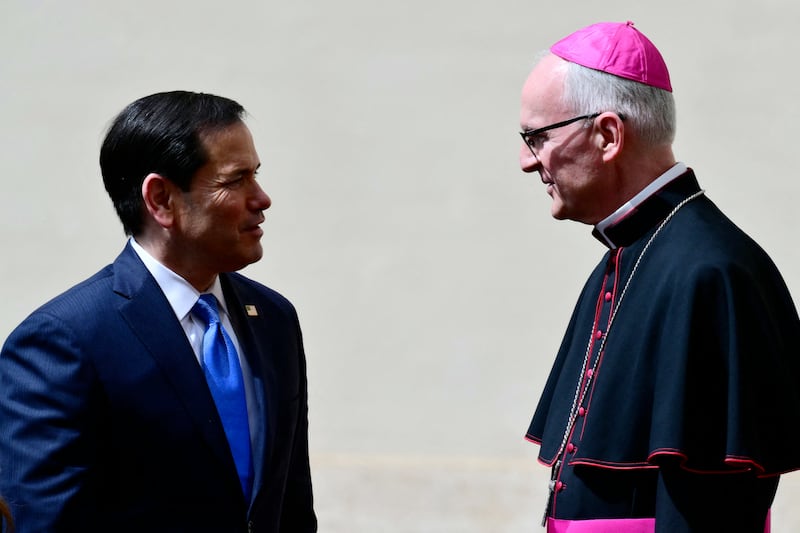
US secretary of state Marco Rubio has arrived in the Vatican to meet Pope Leo XIV.
Earlier today, Pope Leo welcomed Poland’s prime minister Donald Tusk to the Vatican.
Speaking to reporters after the meeting, Tusk said the pair discussed a potential papal visit to Poland, signalling 2028 as an option, but that a large part of their conversation focused on international affairs.
“Of course, the conversation was about Ukraine ... about the international order, the armament of Poland and Europe, and the armament of Germany. Well, you know how many hot topics there are,” he said.
Tusk is due to meet Italian prime minister Giorgia Meloni later today and Rubio tomorrow. – The Guardian
UAE slips hidden oil tankers through Strait of Hormuz
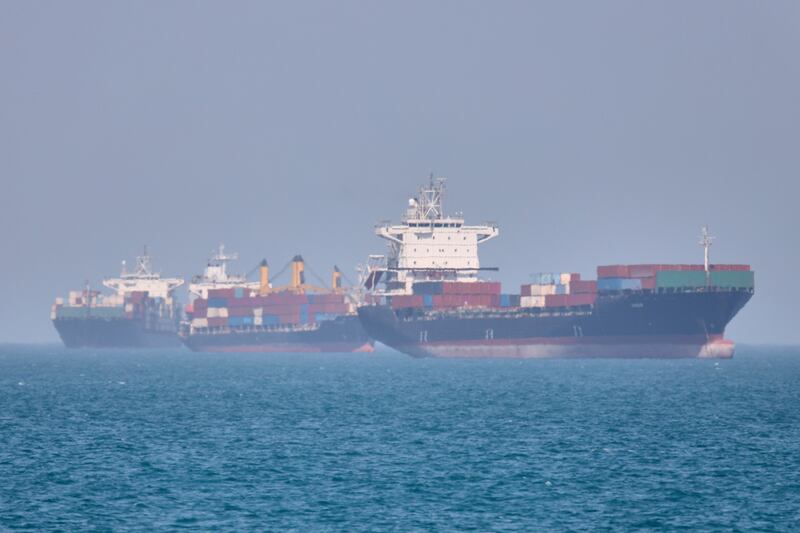
With their location trackers shut off to avoid Iranian attacks, the United Arab Emirates and buyers have recently sailed several tankers loaded with crude through the Strait of Hormuz in a bid to move oil bottled up in the Gulf by the Middle East conflict, according to industry sources and shipping data.
The volumes are a fraction of the UAE’s typical exports before the US-Israeli war on Iran but they demonstrate the risks the producer and buyers are willing to take to free up oil sales.
The other Gulf producers – Iraq, Kuwait, and Qatar – have either halted sales, deeply cut prices to entice uninterested buyers or are shipping only through the Red Sea in the case of Saudi Arabia.
In April, the UAE’s Abu Dhabi National Oil Co managed to export at least four million barrels of its Upper Zakum crude and two million barrels of Das crude on four tankers from terminals inside the Gulf, according to three sources, shiptracking data from Kpler and an analysis of satellite data from SynMax. – Reuters
Pakistan expresses optimism at possible deal
Pakistan, which has positioned itself as a key mediator in talks between the US and Iran, has continued to express optimism at a possible deal without offering any clues at to where the negotiations currently stand.
The Pakistani foreign ministry spokesperson, Tahir Andrabi, would not disclose details of the ongoing diplomatic efforts but said a deal could be reached soon.
“We remain positive ... and we hope the settlement will be soon rather than later,” he told a news briefing on Thursday.
While the first round of US-Iran talks took place in the Pakistani capital Islamabad on April 11th, Andrabi hinted a future deal could be agreed elsewhere. “If it takes place in Islamabad, it would be an honour and a privilege to host it,” he said.
In televised remarks today, Pakistan’s prime minister, Shehbaz Sharif, said Islamabad remained in “continuous contact with Iran and the United States, day and night, to stop the war and extend the ceasefire”. – The Guardian
Oil supply shock to worsen even if conflict ends

Oil supplies are set to tighten further in coming weeks even if the US and Iran agree on a peace deal to end their war because it will take weeks for oil shipments to resume from the Middle East Gulf and reach refiners worldwide – so oil companies will continue to deplete storage tanks to meet peak summer demand.
The world has used temporary buffers – commercial stockpiles, oil in transit or held in storage at sea and emergency reserves – to offset the shock from the war in the Middle East. The full impact of the disruption to oil supplies has yet to wash through markets and the global economy because it will be many months before Middle East production and exports return to pre-war levels, executives from major energy companies, investment banks and market analysts have said.
The rapid depletion of commercial stockpiles and emergency reserves has come at a time when stockpiles typically build as refiners and retailers prepare for peak demand during the northern hemisphere summer. The global energy system will soon enter peak demand in a weakened position to deal with the spike in consumption from summer driving, aviation, farming and freight.
“Even if the conflict, and I hope so, will end in the month of May, we would exit the conflict with clearly some very low inventories,” TotalEnergies CEO Patrick Pouyanne said last week. He estimated at least 500 million barrels of oil have already been consumed from stockpiles.
For comparison, the US has about 460 million barrels in crude inventories. Equinor CEO Anders Opedal said on Wednesday that it would take at least six months for the market to get back to normal, even with peace in the Middle East. – Reuters
Maersk hikes shipping prices to offset Iran war costs
Shipping container giant Maersk has revealed it is facing a $500 million (€425m) hit each month from disruption caused by the Iran war and is passing on costs to customers through higher freight rates.
The Danish group, which carries around one in five of the world’s seaborne containers, said costs will surge in the current quarter and next, but it is so far fully offsetting this through price rises.
Chief executive Vincent Clerc said the closure of the Strait of Hormuz could start impacting global trade and consumer demand.
He told Bloomberg TV: “There is a lot of uncertainty if we look further into the year with respect to what are going to be the secondary impacts of this war – inflation, possibly a reduction in demand.
“There are some question marks about how this is eventually going to flow through the economy.”
The group reported better-than-expected first quarter results as it said the Middle East conflict had a limited effect on the period, though it posted a steep drop in pretax profits to $292 million (€248 million), down from $1.43 billion (€1.2 billion) a year earlier.
Revenues fell 2.6 per cent to $12.97 billion (€10.9bn).
Maersk kept its guidance unchanged for 2 per cent to 4 per cent growth in the global container market, but said the outlook was “highly uncertain”. – PA
IDF claims to have killed Hizbullah commander

The Israel Defense Forces (IDF) said it has killed the commander of Hizbullah’s Radwan force, the most elite unit of the pro-Iran armed group, in a strike on Beirut’s southern suburbs.
In a statement, the IDF named the Radwan commander as Ahmed Ghalib Balut, saying he was killed in a strike in the Dahiyeh neighbourhood in southern Beirut.
Hizbullah has not immediately commented on the report. Israel struck Beirut yesterday for the first time since a ceasefire took effect on April 16th. At least 11 other people were killed in strikes across the south and east, according to the Lebanese health ministry. – The Guardian
EU tells airlines to pay passengers for fuel-linked cancellations
Airlines must continue to reimburse passengers for flight cancellations caused by high energy prices, the EU’s transport chief has warned, rejecting claims of jet fuel shortages in Europe.
EU transport commissioner Apostolos Tzitzikostas told the FT that cancellations driven by fuel prices were not considered extraordinary circumstances, meaning airlines must still compensate passengers. He said the rising cost of kerosene was part of doing business in this sector.
The Greek commissioner also claimed Europe “can sustain jet fuel supplies for a long period”, despite warnings from the International Energy Agency (IEA) and fellow EU commissioners that airlines would soon run out of kerosene.
“The price of jet fuel is the reason why we have cancellations of flights and if they cancel flights without extraordinary circumstances – jet fuel prices are not extraordinary circumstances – they will have to reimburse the people,” he said.
France preps aid for airlines hit by jet fuel price hikes
The French government is preparing to provide financial aid for airlines hit by jet fuel price hikes, transport minister Philippe Tabarot has said.
In a post on X, Tabarot said the government and airlines had made progress in a meeting on Wednesday on aid including deferrals of social security contributions, extended tax payment deadlines and flexibility on fuel loads.
“Airlines are facing a major shock. The government is fully committed to supporting them and helping them get through this difficult time,” he said.
European authorities are scrambling for solutions to prevent broad aviation disruptions this summer after European airlines have warned of jet fuel shortages within weeks as a result of the Iran war. Europe is more dependent on jet fuel imports, with some 75 per cent from the Middle East, than for any other transport fuel. – Reuters
Message from the Editor

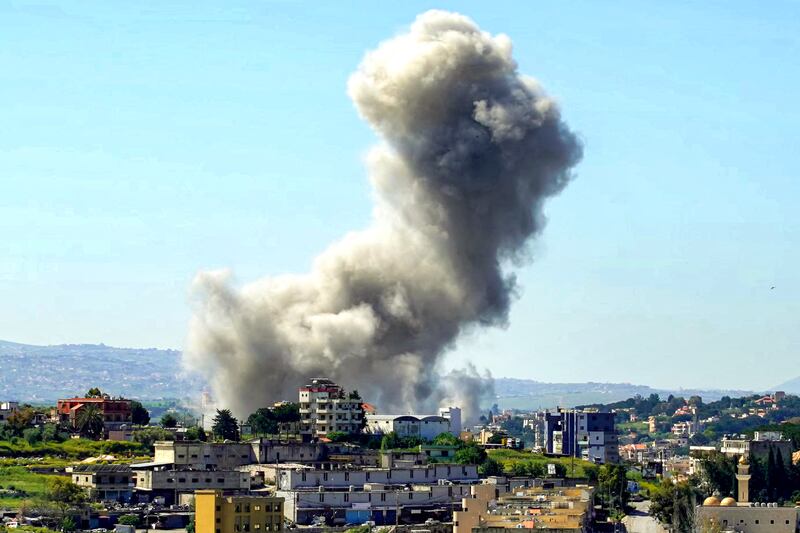
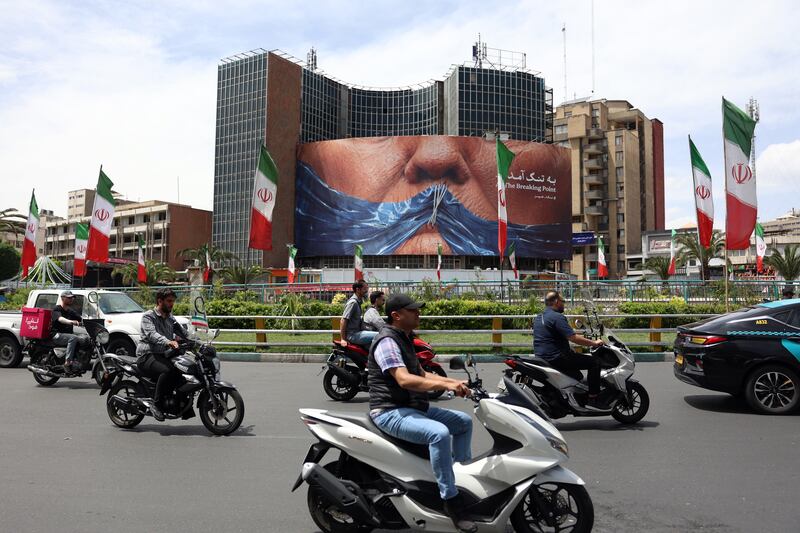
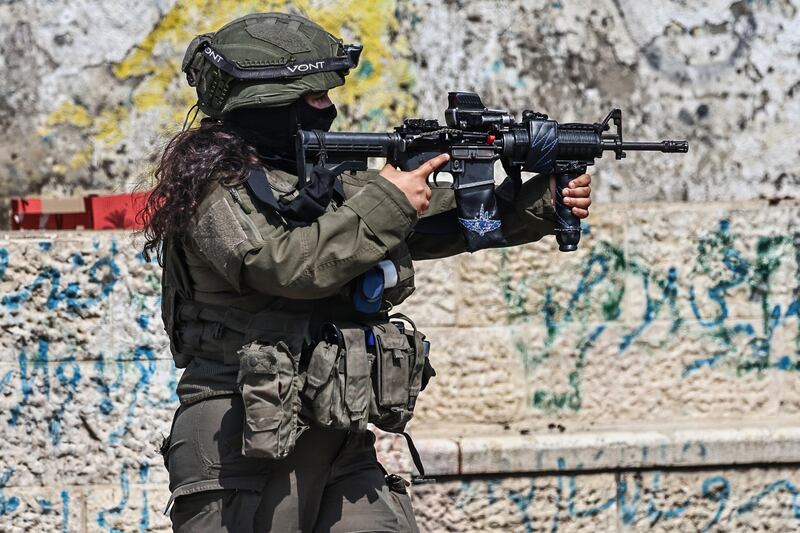
Here is a round-up of some of the latest images emerging from the Middle East:

European shares pause as Nikkei hits new closing high

European shares were steady on Thursday, after a sharp rally in the previous session, with investors holding on to optimism that a US-Iran peace deal may be close.
The pan-European Stoxx 600 was muted at 623.56 points, as of 8am Irish time. Major regional bourses were mixed, with Germany’s Dax flat and London’s FTSE 100 down 0.2 per cent.
The European index gained 2 per cent on Wednesday, leaving it about 2 per cent away from pre-war levels.
Japan’s Nikkei 225 stock index has ended today’s session at a new closing high. The Nikkei jumped by over 5.5 per cent to end the day at 62,833 points, now up 24 per cent so far this year. – Reuters/The Guardian
Eurozone yields head lower as optimism over Iran peace deal grows
Eurozone government bonds eased for a third day on Thursday, after staging their biggest rally in a month the previous day, as investors grew optimistic that the US and Iran might soon reach a deal to end the war.
Brent oil prices, which have been a driving force for broader financial markets since the war broke out in late February, were last up modestly above $100 (€85) a barrel on Thursday, having slid over 10 per cent the previous day on the back of the prospect of a US-Iran peace deal, even though the fate of the critical Strait of Hormuz appeared unresolved.
With some concern about a damaging energy-price shock abating, bonds held on to most of the gains made on Wednesday, when two-year yields, which are most sensitive to expectations for inflation and interest rates, dropped sharply.
Two-year Schatz yields fell nearly 12 basis points (bps) on Wednesday, the most since April 8th, and were last at 2.536 per cent, down 2.4 bps on the day.
Two-year Italian yields, some of the worst-affected by concerns about inflation, were last down 4.4 bps at 2.7 per cent, having dropped 13 bps the previous day. Italian two-year bonds have been the second-worst performing major economy bonds during the war, having risen 60 bps, behind British two-year yields, which are up 85 bps. – Reuters
Anger over Shell’s ‘monstrous’ profits
Danny Gross, climate campaigner at Friends of the Earth, has said Shell’s profits are “indefensible”, after the company doubled its quarterly earnings.
“Once again, fossil fuel giants are pocketing monstrous profits while drivers are being squeezed at the petrol pump and households are set to pay higher energy bills,” Gross said.
“Our fossil fuel-reliant energy system siphons money away from ordinary people to the rich and powerful.” – The Guardian
Shell profits soar amid surging oil prices
Shell has announced a higher-than-forecast surge in profits for the first three months of the year, thanks to rocketing oil prices caused by the Iran war.
The oil giant reported underlying earnings of $6.92 billion (€5.88 billion), more than double the result in the previous three months and 24 per cent higher on a year ago.
Most analysts had expected the group to report profits of $6.36 billion.
It said the soaring cost of crude had boosted its oil trading business, and the wider chemicals and products division saw underlying earnings more than quadruple to $1.93 billion from €449 million a year earlier.
The group announced more returns for shareholders, with another three billion dollarsin share buy-backs for the next three months and a 5 per cent increase in its dividend payout.
Chief executive Wael Sawan said: “Shell delivered strong results enabled by our relentless focus on operational performance in a quarter marked by unprecedented disruption in global energy markets.
“The safety of our people remains our priority as we work closely with governments and customers to address their energy needs.” – PA
Israeli army strikes southern Beirut suburbs

The Israeli army carried out a strike in the southern suburbs of Beirut on Wednesday, the first in the vicinity of the Lebanese capital since a fragile ceasefire came into effect last month.
The assault in Dahiyeh was intended to kill a Hizbullah commander. There has been no official confirmation of his death.
The strike was the first to hit Beirut’s suburbs since the April 16th ceasefire, although hostilities in the south of Lebanon have not halted.
Maersk first-quarter profit beats forecasts
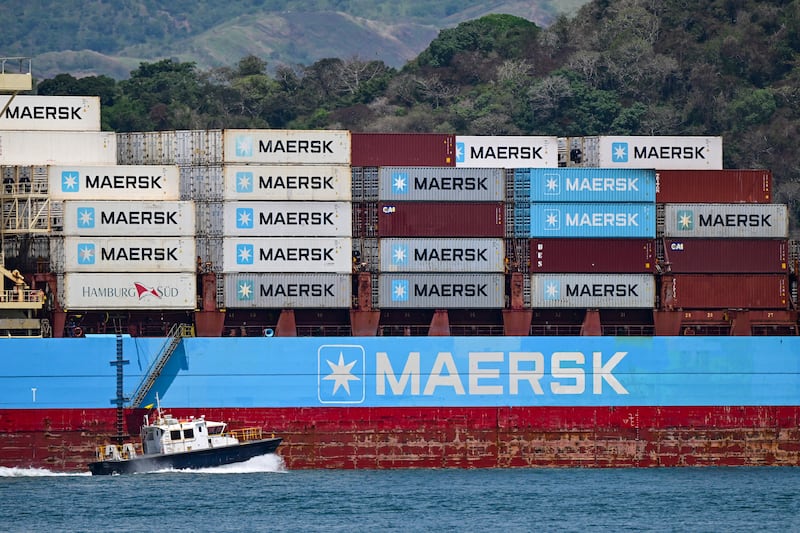
Danish shipping group Maersk posted first-quarter operating profits slightly above analyst forecasts on Thursday and kept its full-year earnings guidance unchanged.
Underlying earnings before interest, tax, depreciation, and amortisation (EBITDA) for the January-March period came in at $1.73 billion (€1.47 billion), compared to a median forecast of $1.66 billion in a company-provided poll of 10 analysts.
Maersk, which is often seen as a bellwether for global trade, still projects global container volume growth of between 2 per cent and 4 per cent this year.
“We’ve seen strong demand across most regions this quarter, supporting robust volume growth in our three business segments,” chief executive Vincent Clerc said in a statement.
The first quarter does not capture the Middle East war’s full impact on global supply chains as the conflict began on February 28th. The war has disrupted shipping routes across the region after Iran closed the Strait of Hormuz to commercial traffic, pushing up costs such as fuel. – Reuters
Tehran deploys new legal framework as it hangs 14 men in two weeks
Tehran has stepped up hangings of people accused over antigovernment unrest earlier this year or of working with foreign forces, deploying a new legal framework in the wave of politically linked executions, the Financial Times reports.
At least 28 men have been executed since March 18th, at the height of the US-Israeli war on Iran, according to official accounts in state media. Half of those were killed over the past two weeks as the pace of hangings accelerated following a fragile ceasefire in the conflict.
Many were accused of collaborating with the enemy or killing members of the security forces during unrest in January, when the Islamic Republic faced its biggest anti-regime protests in years. Others were accused of spying for Israel during the war.
At least 11 of the 28 men were hanged without being charged with killing anyone or engaging in armed struggle, state media records showed. They were largely charged with carrying large knives as an act of intimidation, attacking police stations to grab weapons or setting fire to state property.
Their deaths followed a new law ratified last year that increased penalties for espionage-related offences after Israel’s 12-day war with Iran in June 2025, the FT reports.
Iran had already stepped up executions last year – carrying out more than 1,000 between the start of the year and late September, according to Amnesty International, the highest rate in at least 15 years – fuelled by attempts to quash dissent and a surge in executions for drug offences, Amnesty said.
Read the full story here.
Oil prices edge up again after Wednesday’s dip
Oil prices rose over $1 (€0.85) on Thursday, rebounding from the previous day’s sharp losses, as investors weighed the prospects of a Middle East peace deal succeeding.
Brent crude futures were up 78 cents (€0.66), or 0.8 per cent, at $102.05 (€86.84) a barrel at 5am. US West Texas Intermediate gained 76 cents (€0.64), or 0.8 per cent, to $95.84 (€81.56) a barrel.
Both benchmarks slumped more than 7 per cent on Wednesday, hitting two-week lows on optimism over a possible end to the Middle East war. They pared losses, however, after Trump said it was “too soon” for face-to-face talks with Tehran and a senior Iranian lawmaker said the US proposal was more of a wishlist than a reality.
“While peace negotiations are likely to continue at least until next week’s US-China summit, the outlook beyond that remains uncertain,” said Hiroyuki Kikukawa, chief strategist of Nissan Securities Investment, a unit of Nissan Securities.
Trump and Chinese president Xi Jinping are scheduled to meet next week. – Reuters
Rubio to meet Pope Leo after Trump’s personalised attacks
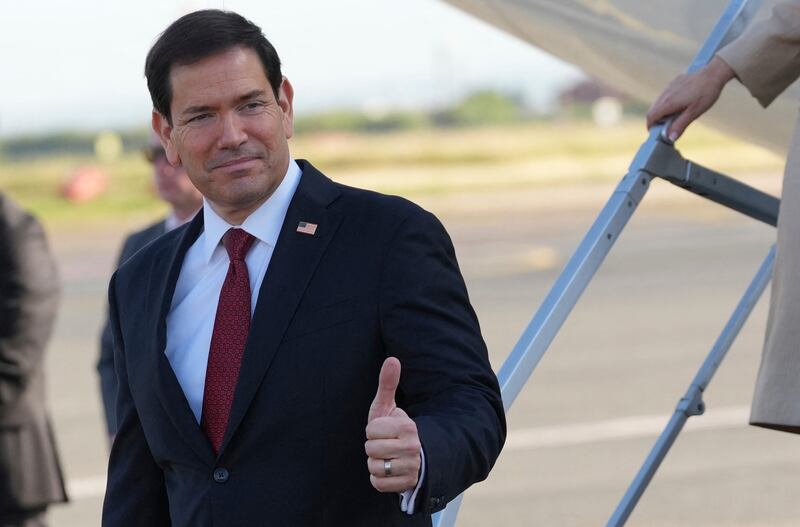
US secretary of state Marco Rubio will meet Pope Leo XIV at the Vatican on Thursday, in a potentially fraught encounter as president Donald Trump has continued a series of disparaging attacks on the Catholic leader over the Iran war.
Rubio, who also serves as Trump’s national security adviser, was due to arrive at the Vatican’s Apostolic Palace around 10.15am (Irish time) for the visit, the first between the pope and a Trump cabinet official in nearly a year.
The closed-door meeting is expected to last about a half-hour, after which Rubio will also meet the Vatican’s top diplomat, Italian cardinal Pietro Parolin.
Leo, the first US pope, drew Trump’s ire after becoming a firm critic of the US-Israeli war on Iran and the Trump administration’s hardline anti-immigration policies.
The president has kept up an unprecedented series of public attacks on the pope in recent weeks, drawing a backlash from Christian leaders across the political spectrum.
On Monday, Trump falsely suggested the pope believed it was okay for Iran to obtain nuclear weapons and said Leo was “endangering a lot of Catholics” by opposing the war.
Leo told journalists after the latest attack that he was spreading the Christian message of peace. The pope also firmly rejected the idea that he supported nuclear weapons, which the Catholic Church teaches are immoral.
“The mission of the Church is to preach the Gospel, to preach peace,” said the pope. “The Church has spoken out for years against all nuclear arms, on that there is no doubt.” – Reuters
‘More wishlist than reality’: Iran’s verdict on Trump’s peace strategy
United States president Donald Trump predicted a swift end to the war with Iran as Tehran considered a US peace proposal that sources said would formally end the conflict while leaving unresolved key US demands that Iran suspend its nuclear programme and reopen the Strait of Hormuz.
An Iranian foreign ministry spokesperson cited by Iran’s ISNA news agency said Tehran would convey its response, while Iranian lawmaker Ebrahim Rezaei, a spokesperson for parliament’s powerful foreign policy and national security committee, described the proposal as “more of an American wishlist than a reality”.
“They want to make a deal. We’ve had very good talks over the last 24 hours, and it’s very possible that we’ll make a deal,” Trump told reporters in the Oval Office on Wednesday, saying later “it’ll be over quickly”.
Trump has repeatedly played up the prospect of an agreement to end the war that started on February 28th, so far without success.
The two sides remain at odds over a variety of difficult issues, such as Iran’s nuclear ambitions and its control of the Strait of Hormuz, which before the war handled a fifth of the world’s oil and gas supply.
A Pakistani source and another source briefed on the mediation said an agreement was close on a one-page memorandum that would formally end the conflict. That would kick off discussions to unblock shipping through the strait, lift US sanctions on Iran and set curbs on Iran’s nuclear programme, the sources said.
Iran’s parliament speaker, Mohammad Bagher Ghalibaf appeared to mock reports that indicated the two sides were close, writing on social media in English: “Operation Trust Me Bro failed.” – Reuters


