
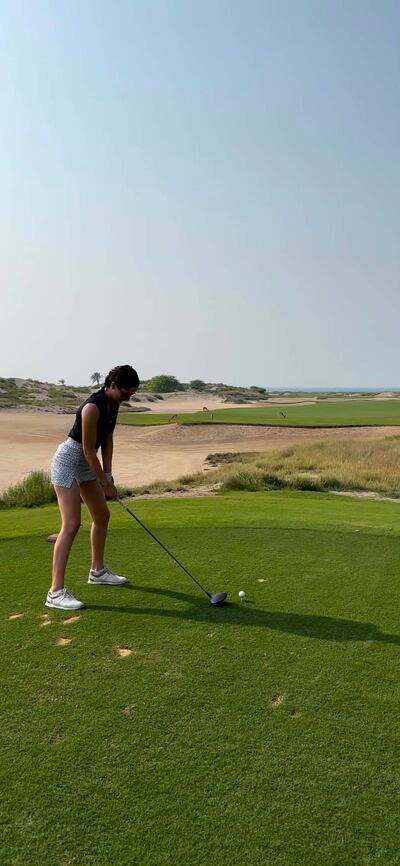
Shortly after 7pm on Monday, Amy Condon was hosting a women’s golf lesson in Abu Dhabi when a loud alert rang from her phone, indicating that projectiles had been launched from Iran.
“Our hearts just dropped, but it was kind of a sense of: ‘Oh no, not this again’,” she says.
Monday’s renewed strikes on the United Arab Emirates (UAE), which followed about a month of relative calm brought about by the ceasefire, came as a surprise to several Irish people living there.
Originally from Terenure, Dublin, Condon has lived in Abu Dhabi for four years, where she plays and coaches golf professionally.
READ MORE


The 29-year-old recalls the group assessing whether they were in danger following the alerts on Monday, awaiting any sign or sound that missiles or drones might be near the golf course.
They proceeded with the lesson until a second alert rang out about 40 minutes later.
“But again, we heard nothing,” she says.
More than 2,800 projectiles have been launched at the Gulf nation since the beginning of the conflict, according to the UAE’s defence ministry. In that space of time, 227 people have been injured and 13 have been killed, 10 of whom were civilians.
“Don’t get me wrong, it is terrifying when you hear these loud noises and these massive booms,” Condon says, describing her apartment building and windows vibrating during attack interceptions early on in the conflict.
“I live on the 27th floor and you can feel it. It’s almost like an earthquake, but it’s a positive thing because they’re being shot down, which is fantastic,” she says.
“I never thought that I would experience anything like this ever.”
Although “a lot” of friends left the UAE in March, she says she was happy to stay put, describing a “sense of reassurance” in the country’s defence systems.
“The big thing for me is that it put a lot of perspective in the sense of what’s going on in Gaza. I’m hearing the noises of them being shot down, whereas they’re hearing the noises of them not being shot down,” she says, adding that she counts herself “very fortunate”.
Some Irish living in the UAE did not wish to go into detail about the conflict or its effects on the country. Others would only speak on the condition of anonymity, having heard of expats getting into difficulty with the country’s strict laws concerning cybercrime and defamation.
[ US effort to help stranded ships exit Strait of Hormuz to be paused, says TrumpOpens in new window ]
Criticism of UAE authorities or damaging the state’s reputation can result in deportation or prison sentences, alongside fines.
One Irish woman living in the UAE for several years said it was “very much about showcasing a positive outlook on things”, remarking how those living there are not supposed to say “negative things”.
Regardless, the woman believes she is “very safe” there, saying any attacks launched at the country have been aimed at US bases or interests.
About two hours before Condon received the first alert on Monday, Tom Broderick, a teacher from Co Kerry living in Dubai, received one urging him to shelter in place.
The 41-year-old, who has lived in Dubai for almost a decade, said the attacks “came out of nowhere”.
“I think it took a lot of people by surprise, because things have been relatively quiet here for almost a month now,” he says.
Before Monday’s attacks, Broderick, who is originally from Listowel, says life in Dubai had “gone back to normal”.

Over the course of three hours, five alerts rang out from his phone on Monday, he says, warning him to shelter in place until the threat had been cleared.
“It’s definitely quieter in terms of tourism,” he continues. Although those living in Dubai are “going about their daily lives as normal”, he says, “you’re always a little bit unnerved about what’s going to happen next.
“I think everybody here is kind of hoping that the ceasefire will lead to an eventual peace process between Iran and the US, and that everything will go back to normal.”
Maureen Lafferty, a teacher from Derry who first moved to Abu Dhabi in 2013, was eating out with friends when alerts rang out from their phones.
“We all just looked at each other, turned the alarms off and had dinner,” she says, adding that her friend’s sister was able to fly home on Monday night “no problem”.
The 36-year-old believes the UAE has “set a precedent for safety”, saying it has “gone above and beyond each time”.
“My mom and dad always worry about me, and I always think, if I was in Ireland, and we were getting attacked by missiles, we would all be dead. There’s no question about it,” she says.


