The software engineer remembers the very moment in late 2019 that the Iranian government realised its multibillion-dollar investment in policing the internet was full of holes.
For nearly a decade, Iran had tried to build a parallel version of the internet, called the National Information Network (NIN)– walled off, supposedly secure and approved by the Supreme Council of Cyberspace.
Pejoratively nicknamed the “halal internet” by some Iranians, it was a cruder version of China’s “great firewall”. Its goal was simple: at times of upheaval, it would allow the government to cut off ordinary Iranians from the world, and potentially from each other, while allowing the Islamic republic’s government and economy to continue functioning within the borders of this parallel network.
But here was Mohammad Jahromi, then-minister of information and communications technology, sitting at the head of a large table in Tehran, showing screenshot after screenshot of conversations between Iranians trying to organise protests in November 2019.
READ MORE


They came from the chat window of a regime-approved video game.
“That’s when it became clear: the experiment in the ‘halal internet’ wasn’t working,” said the engineer, now living in exile in Europe. “The next time, they would have to shut it all down.”
Last Thursday that is exactly what Iran did: it almost completely closed down the internet in one of the deepest and most sophisticated blackouts in history, experts who study digital repression said.
That has allowed the regime to pull a veil over the true extent of the protests and its own brutal crackdown, while hampering ordinary Iranians’ ability to organise on social media.
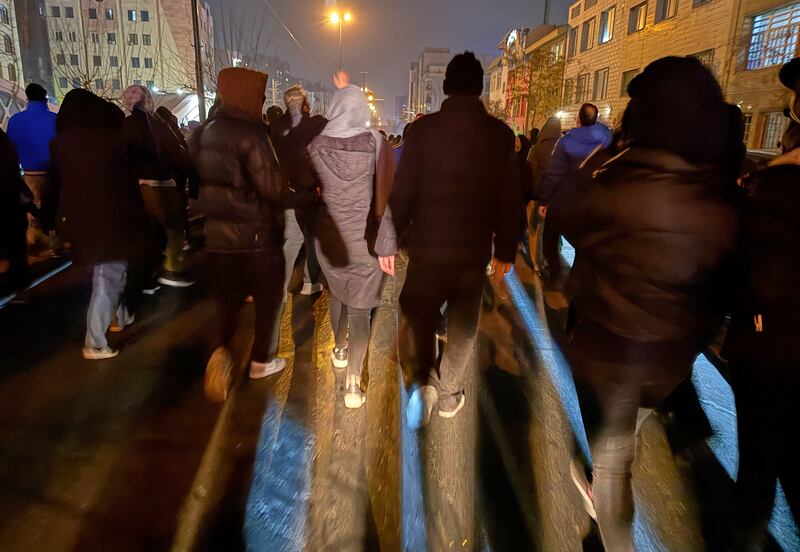
So complete was the shutdown that even regime insiders issued with so-called “white” Sim cards, allowing unfettered access in the past, found themselves cut off from the internet, said two cyber security researchers. People with these privileges had been able to use them during the blackout that accompanied the 12-day Iran-Israel war in 2025 when the NIN also continued to function.
[ Trump warns US will take 'strong action' if Iran starts executing protestersOpens in new window ]
[ Inside Iran's protestsOpens in new window ]
Piercing that veil has presented an immense challenge. But people like the software engineer and other supporters of Iranian internet freedom have spent years preparing for this scenario.
In the engineer’s case, he left his job with the government, moved abroad and got involved in a project to smuggle in Starlink receivers into the country across the borders with Iraqi Kurdistan and Armenia.
The project took advantage of a Joe Biden-era sanctions exemption given in 2022 for US tech companies to offer communication tools in Iran. At that time Elon Musk activated access for the country to SpaceX’s Starlink constellation of satellites.
Others, many of them émigrés or self-exiles from Iran’s entrepreneurial cyber security and telecoms sector, built or customised software to overcome the government’s blocks.
One messaging service, described to the Financial Times by an active user, piggybacks on the bare-bones internet infrastructure that the regime has allowed to remain functional, turning a small government-approved email network into a means of communication with the outside world. A basic text-only browser service can also evade the blocks.
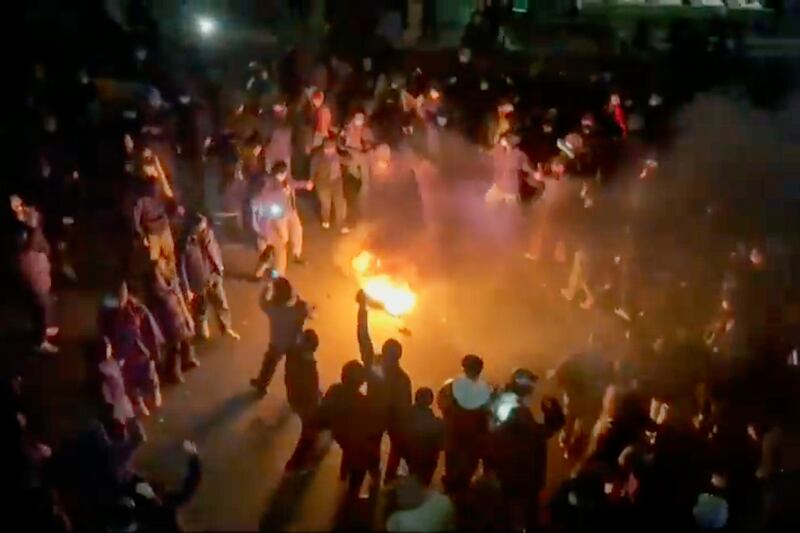
The few videos that have trickled out have been viewed around the world: hundreds of bodies outside morgues, the sound of machine gun fire at a protest site and the voices of ordinary Iranians, describing the killing of loved ones and the chaos on the streets.
“In many ways, this is the worst shutdown we have seen in my 15 years of working in this space,” said Fereidoon Bashar, executive director at ASL19, a Canadian company with roots at Toronto university that helped create some digital backdoors to the outside world.
“But despite their attempt to shut everything down, they haven’t succeeded in making sure that nothing gets out, including their brutal and deadly crackdown [on] protests,” he said. “It’s definitely more than they would have liked to get out.”
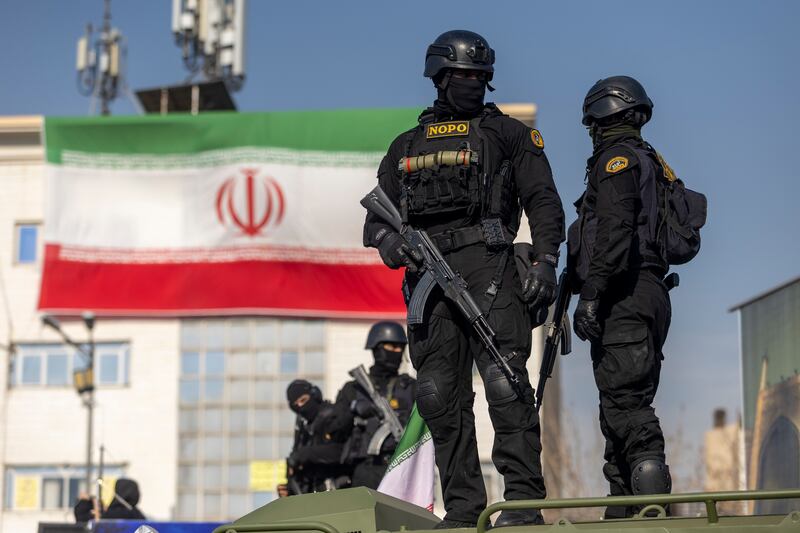
Researchers studying Iran’s attempts to build guardrails around its internet describe a decades-long, expensive effort propelled by the regime’s paranoia.
In the early days of the internet in the 1990s, Iran’s only digital link with the outside world was a small particle physics lab called the Institute for Research in Fundamental Sciences.
Since then, the Islamic republic has allowed only one additional conduit to the global internet, the Telecommunication Infrastructure Company, said researchers at Project Ainita who have studied Iran’s multilayered control over the flow of information.
That has made it relatively simple for the regime to cut off access to the outside world, compared with other populous countries which have dozens or hundreds of access points.
“There is a single point of failure,” said one of the researchers, who asked not to be named. “The internet is not supposed to be like this. This is by design.”
Project Ainita’s analysis of this blackout showed it appeared to have happened “in a panic”, the researcher said. “It really feels like someone came into the room with an order that said ‘cut it all now’, and then it was done.”
In its haste, the Iranian government appears to have also taken the National Information Network offline, at least initially.
“They basically decapitated everything: banks went offline, ATMs stopped working, phones and even government news websites went offline,” the researcher said.
The sharp cut-off gave the government the opportunity to reconnect parts of the NIN, keeping a stranglehold on news but restoring functionality to parts of the economy.
Researchers said banking functions have been largely restored albeit with restrictions on how much cash individuals can withdraw. Petrol pumps are processing payments and some government services are being restored.
Hesam Nourouz Pour, who was consulted by the Iranian government when it started setting up the NIN early in 2010, said: “From a policy perspective, they have achieved what they wanted to achieve.”
Nourouz Pour, now a visiting lecturer at Copenhagen university, said parts of the NIN coming online while the country remains largely cut off from the global internet amounted to “the ideal situation for them”.
That has left a small group of internet activists, working secretly, trying to get information out of Iran and help galvanise the protests. Musk’s Starlink connections have been at the core of the effort, said two people involved in the process.
Ahmad Ahmadian, executive director of US-based group Holistic Resilience, said his team initially helped smuggle in Starlinks to trusted human rights activists, journalists and satellite television networks after the 2022 Biden-era sanctions exemptions.
Then a black market for the devices emerged and thousands were smuggled into the country for ordinary Iranians to watch Netflix, post on Instagram and trade cryptocurrencies. That gave the country a small but robust network of Starlinks to share videos and sensitive information abroad when the regime shut off the internet.
“From the very first day, we saw from every single part of the country videos that were coming out,” he said. “People were coming up with very ingenious ways to share their Starlink bandwidth – setting up systems for people outside Iran to get in touch with their families.
“These are high-risk activities,” Ahmadian added. In 2010 he shared an Iranian prison cell with a journalist who had been detained for using a satellite phone. “We knew this day was coming, and we wanted to be prepared for that.”

SpaceX on Tuesday appeared to have made Starlink access in Iran free of charge, with users able to log on without paying a subscription fee.
In the past few days, groups using the Starlinks to evade the blackout have reported outages. These could be the result of military-grade electronic warfare, an expensive and geographically limited effort that would involve brute-force jamming of the frequencies used by SpaceX’s satellites.
Such tactics have worked, if sporadically, for Iran’s ally Russia on the battlefield in Ukraine, where Starlinks are used extensively by the Ukrainian army.
SpaceX did not respond to a request for comment.
But other activists attributed the ebb and flow of videos from within Iran to a far simpler challenge: users may have sought to evade detection by the security services by only using the Starlinks sporadically, hiding their distinctive antennas from snooping neighbours and drones trained to pick them out from rooftops.
Iranian state TV on Tuesday showed more than 1,000 electronic devices such as mobile phones and signal boosters that the information ministry seized, saying they had been smuggled illegally into the country to be used for espionage.
In a sense Iran’s firewall is the inverse of China’s great firewall in that Beijing has created its own vibrant versions of applications such as WeChat and TikTok, while restricting its citizens’ access to some parts of the global internet.
In Iran, the government has essentially blacklisted the entire internet and is experimenting with “white listing” some essential services to keep its sputtering economy functional, said Amir Rashidi, director of digital rights and security at Miaan Group.
“State television said some services on the NIN were functional, but those services are still disrupted,” he said. “And there’s a technical challenge to this: they want to whitelist things and bring some services online, while controlling the narrative.”
Tehran may continue throttling access to the internet for Iranians trying to re-establish unfettered contact with the outside world, said Amanda Meng at the School of Computer Science at Georgia Institute of Technology.
“A bigger concern is what the internet is going to look like when it does come back online. Iran has become much more sophisticated in how they are implementing these shutdowns.”
She added: “Things are going to be really different when it does come back online, and be a lot more like [China].” – Copyright The Financial Times Limited 2026