
A Ukrainian military officer goes on trial in Hamburg on Wednesday, charged with masterminding the explosions that destroyed two Russian-controlled undersea gas pipelines in September 2022.
Seven months after Russian troops invaded Ukraine, the three detonations severed a key energy source for western Europe – and income stream for Moscow – with ongoing economic and political aftershocks.
The Ukrainian defendant, identified in extradition documents as Serhii Kuznetsov, is being charged with acting on behalf of Ukrainian security services to cause an explosion. In addition, Kuznetsov faces a war crime charge because German prosecutors have classified the Nord Stream pipelines as civilian infrastructure.
In a 136-page indictment, the 50-year-old is accused of leading a team that rented a German yacht called Andromeda. Four deep-sea divers in the team allegedly planted “high-performance” explosives and timer detonators on the pipelines 80m under the sea, southeast of the Danish island of Bornholm.
READ MORE


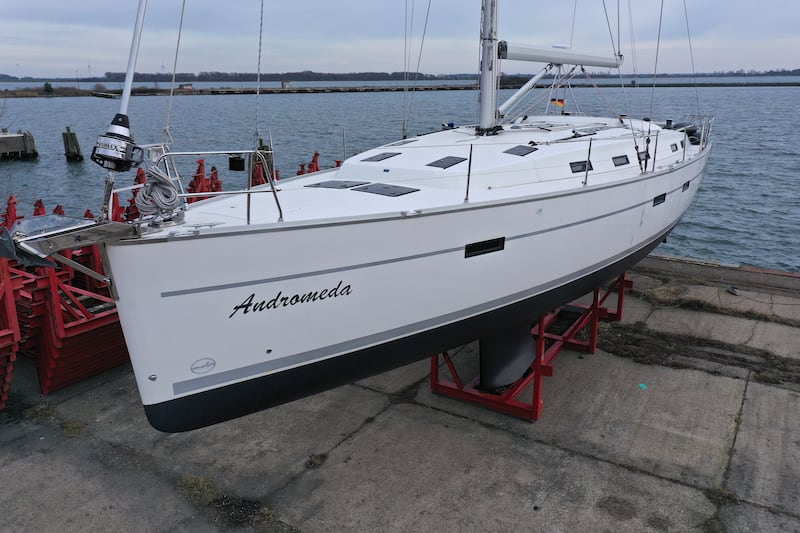
Investigators reportedly found traces of high-grade military explosives both on the ruined pipelines and the boat. A member of the team also reportedly left DNA material on the Andromeda.
During the trial prosecutors will present photographs taken by a curious holidaymaker in a German seaside town, allegedly showing the defendant and others loading up the Andromeda with equipment including deep-sea diving gear.
A trail of sightings indicate the Andromeda took a zig-zag course through the Baltic Sea from Germany to Poland and south Sweden in advance of the explosion in Danish waters on September 22nd, 2022.
On the suspect’s smartphone, investigators found documents on the two pipelines, Baltic Sea maps, information about known sea-wrecks in the region and general pipeline technical documents.

Kuznetsov, a father of four with an address in Kyiv and a 25-year military record, denies all charges. Two previous attempts by German prosecutors to have him arrested under a European arrest warrant failed, most notably in neighbouring Poland where he was tipped off by authorities in time to escape back to Ukraine.
In August 2005, Kuznetsov was arrested during a camping holiday with his family in Croatia.
“That was not very smart of him,” said Bojan Pancevski, a Wall Street Journal correspondent and author of The Nord Stream Conspiracy.
“Perhaps he felt safe because, for a long time, there was no evidence against him. But he underestimated the German police.”
A second Ukrainian man is currently fighting extradition in Croatia. In total, German investigators say they have tracked down seven suspects in connection with the explosion.

Defence lawyer Jes Meyer-Lohkamp will push the court to examine whether the attack was justified under humanitarian law, arguing the pipeline income helped finance Russia’s war against Ukraine.
He told the Bild tabloid: “It’s important to me to draw attention not just to criminal code paragraphs but look, too, at the political dimension.”
The first pair of 1,200km-long Nord Stream pipelines was approved in the last days of the Schröder administration in 2005. It and a second set were built during the subsequent Merkel administration.
The second pipeline set was completed but never entered operation as Berlin, responding to the Russian war on Ukraine, refused a permit.
The five-judge Hamburg court has refused an application by Russian energy giant Gazprom, majority owner of the pipelines, to join the trial as co-plaintiff.
A verdict is not likely before February and, in intervening testimony, observers expect the trial to highlight the contradictions of Germany’s recent energy and political interests.
“It is a funny situation,” said Pancevski. “Germany is both Ukraine’s largest [military] supporter in Europe yet now it is also prosecuting a Ukrainian offer because of alleged war crimes against their common enemy.”


