

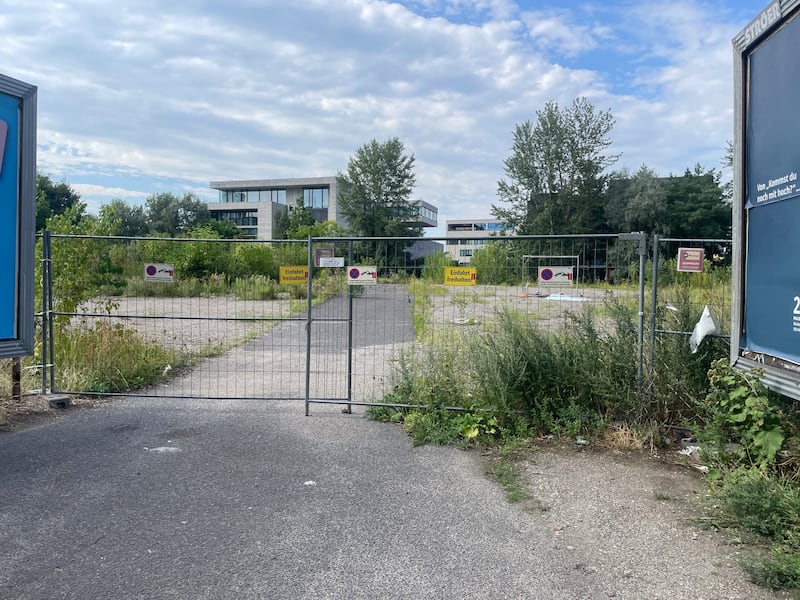
A lone crow patrols back and forth across a vacant site of weeds and gravel, guarding what was once Berlin’s most notorious address.
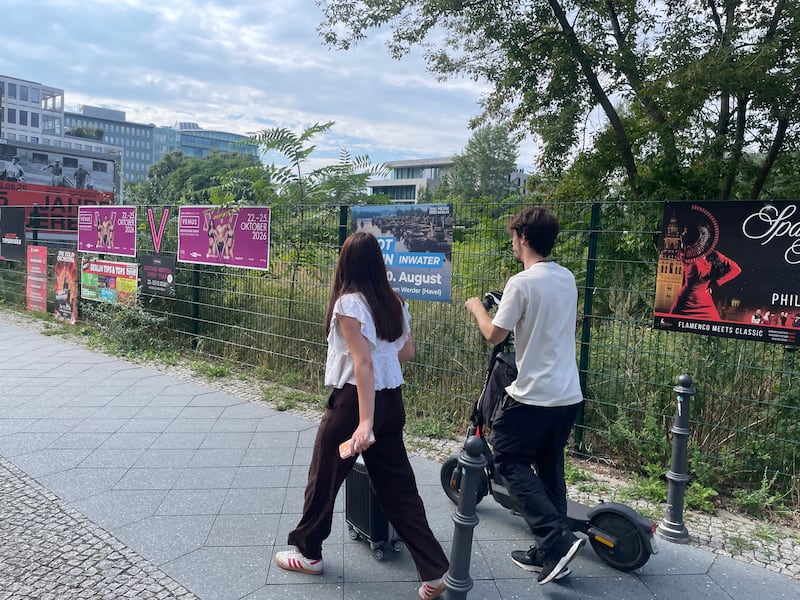
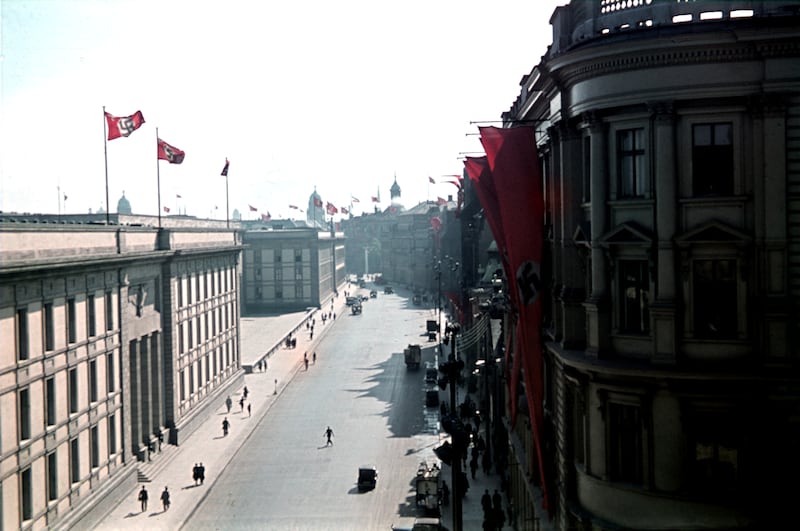
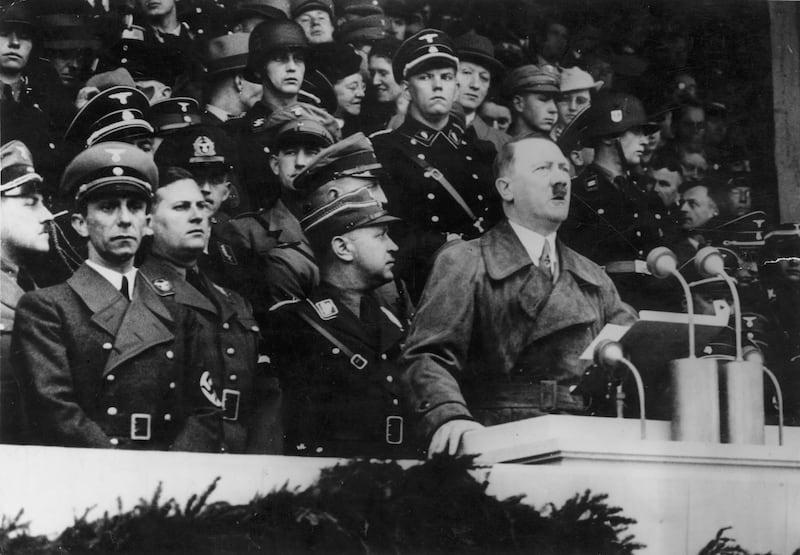
Few of the Berliners hurrying along the Voßstrasse know how its entire 400-metre-long north side was once occupied by the staggering stone expanse of Hitler’s New Reichs-Chancellery.
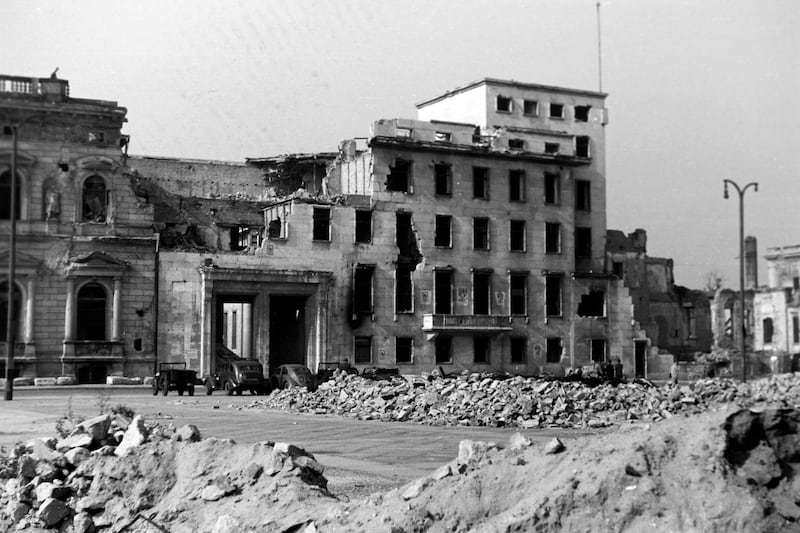
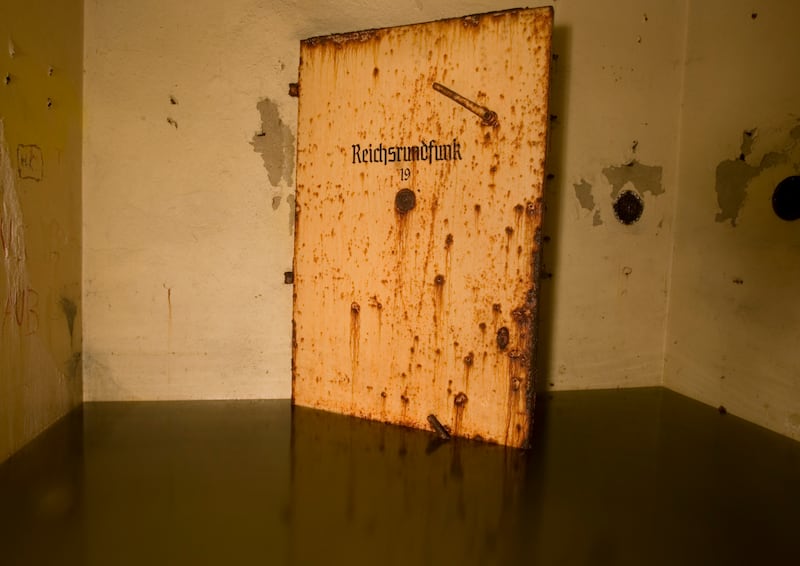
Even those who know about that monumental building, demolished in the postwar years by the victorious Allies, don’t realise that it never vanished entirely. Six metres underground, a 1,200 square metre bunker remains intact, thanks to walls of 1.5 metre-thick reinforced concrete.
Now, Berlin engineer and historical expert Dietmar Arnold has launched a campaign to save it from looming demolition.
READ MORE


“I know every bunker in Berlin, I was down here for the first time in 1997, I’ve measured it and photographed it,” said Arnold, the founder of Berliner Unterwelten (Berlin Underworld), a non-profit organisation that preserves and offers guided tours of hidden wartime and Cold War infrastructure.
In the last decades Arnold and his team have played a delicate game of slap and tickle with Berlin authorities, convincing them to hand over historical sites to their colourful association of historians, architects and diverse other nerds.
Each new site involves a new maze of official concerns, from historical to health and safety. But Berliner Unterwelten has built up credibility by offering sobre tours that never sensationalise – or commercialise – the Nazi era. Instead, visitors are shown the vast scale, and consequences, of German fascist megalomania.
Yet Dietmar Arnold thinks this record counts for nothing now. Talks with the city over the future of the New Reichs Chancellery bunker, he says, have reached unprecedented levels of official obfuscation and deception.
“We have been given the run around for years with no real information then we found out last month the green light was given for development,” he said.
Today the rubbish-strewn site looks unpromising. As one of the few remaining undeveloped sites in central Berlin, however, this is a property gold mine.
At this point Arnold is anxious to point out what this bunker is – and what it isn’t. This is not the so-called “Führer bunker”, the private underground quarters for the dictator and his inner circle, and where Hitler took his own life. That was located a short distance away, is long flattened and is no longer accessible.
The surviving bunker was built for chancellery staff, in particular carpool drivers, along with an emergency clinic and a separate, public mother-and-baby section. What makes it historically interesting, Arnold says, is as the final surviving part of the monumental chancellery, and as a rare surviving bunker in the government district.
None of that appears to impress Berlin’s city-state government. It points to a 2006 zoning plan that earmarks the site – in private ownership since 2007 – for residential development, with a key condition: documentation of the bunker before its removal.
“We have an urgent need for housing,” said Christian Gaebler, Berlin city senator for building. “I cannot see how preserving a former bunker, in which employees of Reichs chancellery sought shelter, is worth more than new housing.”

His office says a 2025 workshop involving the site has created a “legitimate expectation” for the developer that, after considerable delay, building work can start.
Among other arguments, Gaebler has expressed concern that the bunker, if retained, could become a place of pilgrimage for Neo-Nazis.
His predecessors made a similar argument a decade ago over an informational sign at the site of the so-called Führerbunker. The sign has become a stopping point for Berlin walking tourists with no Neo-Nazis in sight. Berliner Unterwelten calls the decision to allow the bunker’s removal “super embarrassing” and has assembled a vocal alliance ready to fight the demolition plans.
For Uwe Neumärker, head of the foundation that maintains the nearby memorial to the murdered Jews of Europe, news of the decision to remove the bunker left him “surprised and outraged”.
“Unlike our memorial, this is a historic site with a whole different authentic air about it,” he said. “People here sought protection while over there Hitler made decisions in his office.”
Historian Michael Wolffsohn, who lost family in the Holocaust, agrees.
“The bunker, with its apparent banality and functional authenticity, is part of a place that made possible the murder of millions,” said Prof Wolffsohn. “If we don’t keep authentic places like this, we could use the same logic to close concentration and death camps.”
Around 55 per cent of the bunker was already removed in East German times, according to Berliner Unterwelten, with the remaining 1,200 square metres preserved only because it lay in the so-called “death strip” between East and West Berlin.
Removing what remains of the bunker will be a difficult endeavour, given its reinforced concrete walls and roof are 1.5-1.7 metres thick. Berliner Unterwelten has produced plans showing how the site can still be developed and the bunker preserved. This modified development plan would allow new buildings over the old bunker, reopened as an information centre on the last days of the second World War in Berlin.
Back at the derelict site, few of the Berliners passing by have heard of the bunker – or the row over its future.
“Politicians talk about addressing the past but do everything they can to avoid real debate about perpetrators, too, and not just victims,” said Patrick Schneider, a 42 year-old university employee. “Erasing authentic sites is part of this approach.”
As the crow continues a patrol once done by armed Nazi soldiers, Dietmar Arnold says he is stepping up his bunker campaign. He produces a 2025 ruling by Berlin’s state council for monument preservation, urging a broader and far-sighted approach to “the last tangible remnants of the Third Reich’s government headquarters in Berlin”.
“In an era marked by digital abuse, the passing of the last contemporary witnesses, and a partial relativisation of Nazi crimes,” it wrote, “it is even more crucial to preserve tangible traces to be examined.”
Next week, Arnold has promised to reveal information about the site’s history and current owners, information he says will put the plan in a long line of scandals involving local politicians and property developers. This isn’t a property development row any more, he says, “it is a stitch-up”.


