

It’s 7pm on a summer evening in Berlin. The windows in the yoga studio are wide open, yet the air is tinged with incense and anticipation. In an awkward, silent circle, 14 men in their 30s sit cross-legged on varnished floorboards and wait for something to happen.
That something is Hot Boys Cry, a Berlin initiative with a catchy name and an intriguing pitch: empowering men to embrace their emotions openly. Leading by example, founder Alex Nicolaus sits on the floor and opens the session with his own story: a young father, a failed start-up, €40,000 in tax debts, anxiety, depression and suicidal thoughts.
“My daughter asked me, ‘Why are you so sad?’” he remembers, a question that sent him down an existential rabbit hole where he found numbness where emotion should have been.
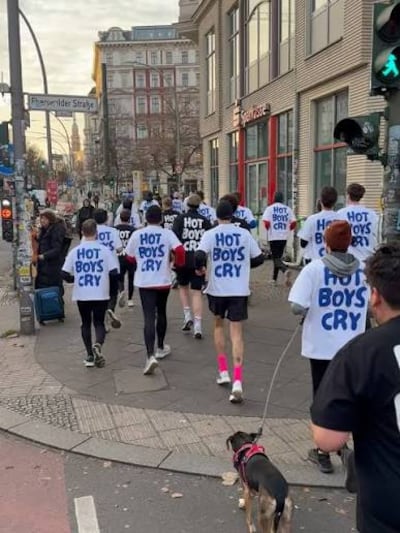
Reading more made him realise that his lack of feeling was widespread among men like him. Finding no help, he decided to help himself. His creation, Hot Boys Cry, is a hybrid of groups, jogging meet-ups, forest walks, Pilates sessions. It is also a fashion label with T-shirts and hoodies, carrying the eye-catching Hot Boys Cry brand claim on to the streets and into men’s Instagram feeds.
READ MORE


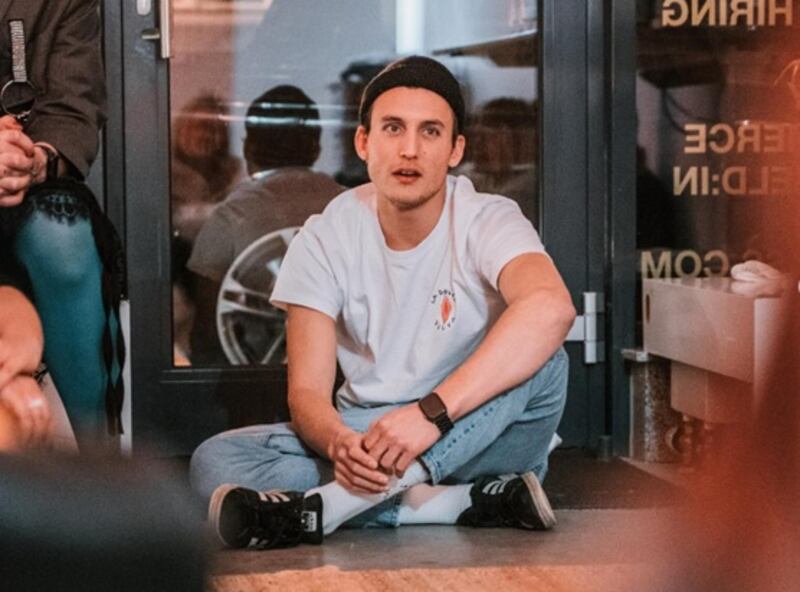
In many ways it is a young men’s shed: addressing early on the causes of consequences of loneliness. This evening’s session is being led by Monika Jiang, a Berlin-based writer and community builder whose special area is the idea of “oneliness”: how to best balance the paradoxical demand of humans to be both relational and alone.
“For us to be meaningfully with others we must equally turn inwards and be with ourselves,” she says. Men find this uniquely challenging, she says, due to early interventions that systematically strip them of their innate emotional skills and ability to connect intimately.
“By socialising boys into men within the concept of patriarchal masculinity,” she says, “we expect boys to ‘toughen up’, to ‘not cry’ and ‘be strong’ – or ‘not be like a girl’, which wrongly gets associated with vulnerability, softness, and being in touch with yourself and your inner world.”
This process leaves many men with a memory of how it used to be as a boy and feeling that, now, something is wrong – or missing. Danish philosopher Søren Kierkegaard, she says, called it “the unconscious despair of being alienated from oneself”.
The men listen closely to Jiang and, when they break into smaller groups, one man says he has struggled to talk to his male friends since his mother died of cancer last year. That admission alone brings tears of sadness and relief.
Another man says he keeps his feelings from his male friends because he fears they won’t be able to handle him sharing them. Two other men admit, independently of each other, constant feelings of guilt over how they dump their emotions into their girlfriends’ laps.
It’s not just here that efforts are under way to shift the dial. Germany’s Green Party has spent half a century fighting the patriarchy, but now a new generation of leaders is asking if they overshot the target.
“We need positive images of what good masculinity can be,” wrote 16 younger Green MPs in a discussion paper.
By failing to offer positive, diverse and attractive examples of progressive masculinity, they argue, “we have created a vacuum into which the old images have returned”.
In other words, progressive leftists have helped drive young men towards the Andrew Tate “manosphere”.
[ What is the manosphere and why is everyone talking about it?Opens in new window ]
Green Party leader Felix Banaszak faces a delicate balancing act: to leave women space to vent their pent-up frustrations towards men, while convincing his party that it is problematic for his voters to cling to an assumption that “as a man, you are the problem and will remain so”.
“You can go pump iron in the gym or paint your nails, as far as I’m concerned go pump iron with painted nails ... the main point is: don’t be an assh**e,” said Banaszak to the German edition of Playboy, not a regular home for Green politicians.
Some Green politicians are leading by example with Instagram posts from the gym (without nail polish), something that has triggered pushback and claims of “performative vulnerability”.
But back in the Hot Boys Cry session, no one is “performing”. After two hours, and some tears, the men appear happier and lighter, they chat to each other and swap contacts.
“I didn’t know what to expect and came here with real reservations,” admits one man as he pulls on his shoes. “But this is real, I feel real, for the first time in a long time.”


