The gunman who was wounded during the Bondi Beach terrorist attack in Sydney is likely to survive his injuries, authorities said.
Australian police said a father and son – who have yet to be formally identified – were behind the shooting on Sunday in which 15 people were killed, including a 10-year-old girl and a British-born rabbi.
As of late Monday afternoon, 27 people were receiving care in hospitals across Sydney, NSW Health said.
Six people remain in critical conditions with the others in serious and stable conditions, while police believe the ages of the dead range from 10 to 87.
READ MORE


Two police officers who were injured remain in serious but stable conditions.
The alleged gunmen behind the Bondi beach attack are a father-son duo suspected of using legally obtained firearms to commit the massacre, according to police.
Naveed Akram (24) was arrested at the scene and taken to a Sydney hospital with critical injuries. His father (50), who the Sydney Morning Herald first reported to be Sajid Akram, was shot dead by police. Police would not confirm their names.
[ ‘Everyone was screaming’: Irish eyewitness describes Bondi Beach killingsOpens in new window ]
At a press conference on Monday afternoon, New South Wales (NSW) state police commissioner Mal Lanyon said the younger gunman is expected to live to face criminal charges.
“We do have a 24-year-old male in hospital at the moment. Based on his medical condition it is likely that person may face criminal charges,” he said.
He added that police were still gathering information about the attackers.
“They are both a father and a son,” he said. “They have a connection for quite a period of time within Australia. The father has held a firearms licence since 2015.”
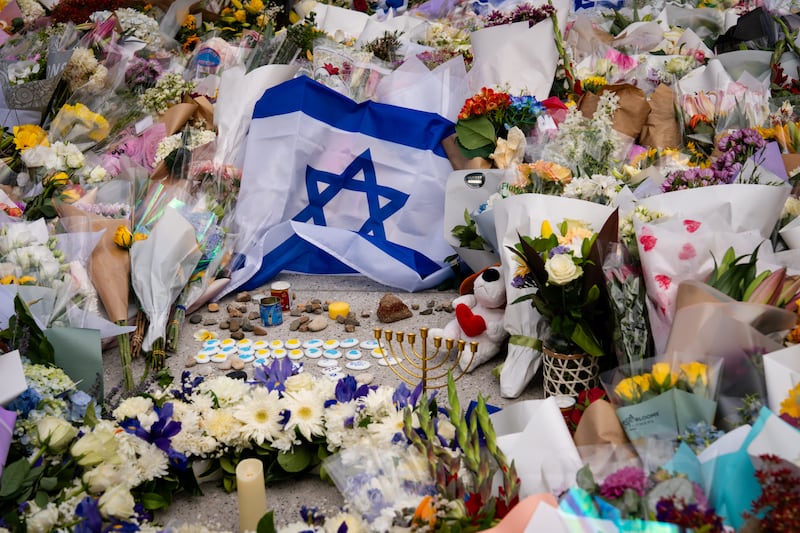
The pair allegedly killed 15 people, with dozens more injured in the shootings which took place on Sunday, during a gathering to celebrate the first night of Hanukkah.
The son was known to New South Wales police and security agencies, while his father had a firearms licence with six weapons registered to him. All six firearms have been recovered, police said.
[ Gardaí to increase presence at Jewish events following Bondi Beach shootingOpens in new window ]
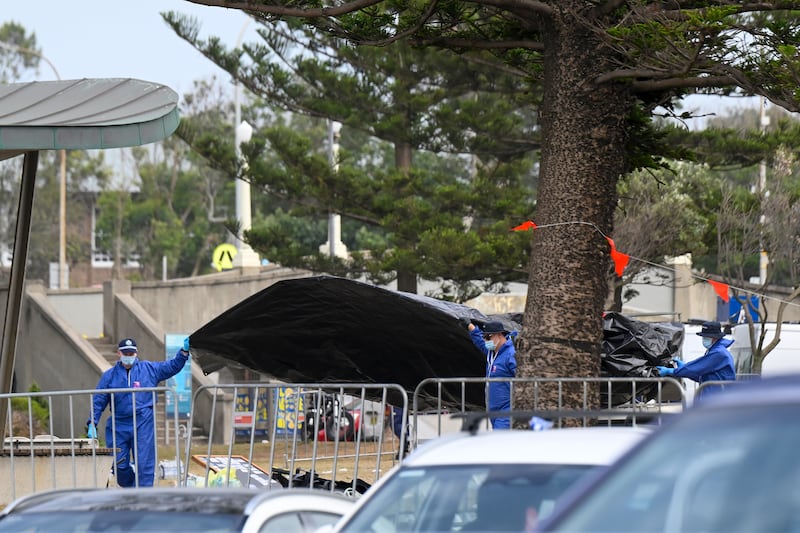
Four of these weapons, long arms believed to include a rifle and shotgun, were seized at the scene in Bondi, with other weapons also found during a police raid at a house in Campsie, in Sydney’s southwest.
Naveed Akram, who worked as a bricklayer, came under the attention of the Australian Security Intelligence Organisation in October 2019, according to the prime minister, Anthony Albanese. He was examined for six months because of his alleged associations with others, with the ABC reporting claims that the counterterror investigation involved an Islamic State cell.
“[Naveed Akram] was examined on the basis of being associated with others and the assessment was made that there was no indication of any ongoing threat or threat of him engaging in violence,” Mr Albanese said.
Mr Lanyon said the two men had lived at another house in Bonnyrigg, in the city’s west, which was also raided on Sunday night.
Mr Lanyon said there was nothing “to indicate that either of the men involved in yesterday’s attack was planning the attack”, and confirmed the older man had held a gun licence for a decade.
The NSW premier, Chris Minns, said there would “almost certainly” be changes to gun laws, and police were investigating whether there had been a failure of their systems in relation to how licensed weapons could have been used in a terror attack.
While police did not confirm the duo’s names to Guardian Australia, they have released details of their ages, the suburb in which they lived and information about the older man’s firearms licence.
[ Bondi Beach shooting as it happened: Father and son confirmed as gunmenOpens in new window ]
Sajid had held a Category AB firearm licence, police said. This is a licence which requires a person to demonstrate to police they have a “special need” for certain weapons, which can include muzzle-loading firearms (other than pistols); centre-fire rifles (other than self-loading); and shotgun/centre-fire rifle combinations.
The home affairs minister, Tony Burke, said Naveed is an Australian-born citizen. His father had arrived in Australia on a student visa in 1998, transferred in 2001 to a partner visa and had since been on resident return visas.
Until recently, Naveed Akram had been working as a bricklayer.
[ Bystander who tackled armed man at Bondi Beach shooting hailed as heroOpens in new window ]
The man who employed him said he took him as an apprentice six years ago, describing him as a hard worker who never had time off. But, a couple of months ago, he said Naveed reported that he’d broken his wrist while boxing, and would not be able to work again until 2026.
“He asked for all his entitlements paid up, annual leave and everything, but a lot of guys do that at end of year anyway,” said the employer, who did not wish to be named. “Now you can’t help but think, him getting all his money out, what’s he going to spend it on.”
He did not know Naveed well, saying he’d employed dozens of people at the same time, but he was considered a quiet person.
“In bricklaying, you work closely as a team on site, but he didn’t associate with anyone else out of hours ... he’d have lunch himself, not with anyone else,” he said.
He said he knew Naveed came “from a Muslim background”, but Naveed did not speak much about religion at work.
Another bricklayer described Naveed as a strange colleague but a hard worker who had an interest in hunting.
“No one was close to him,” said the former colleague, who did not wish to be named. “You spend a lot of time together, obviously bricklaying – [which is a] pretty mind-numbing job, so you do a lot of talking, but he was just a weird operator."
Although authorities have not said the son was a licensed firearms holder, the colleague claimed he hunted regularly, and spoke about shooting rabbits and other game around Crookwell, in the state’s southern tablelands.
They worked across Sydney, with the last job in which he saw Naveed on a site in Penrith.
Shortly after the attack, an old photo of Naveed originally posted by sheikh Adam Ismail, the head of Al-Murad Institute, went viral. Ismail distanced himself from the man, telling Guardian Australia he hadn’t seen him since 2022.
“As I’ve done with 1,000s of students over the years, I’ve taught him Qur’an recitation and Arabic only for a combined period of one year,” he said.
Ismail said he was deeply saddened by what had occurred, and gave his condolences to the victims and Jewish community.
“[The] Koran ... clearly states that taking one innocent life is like killing all of humanity. This makes it clear that what unfolded yesterday at Bondi is completely forbidden in Islam.” – AP/Guardian