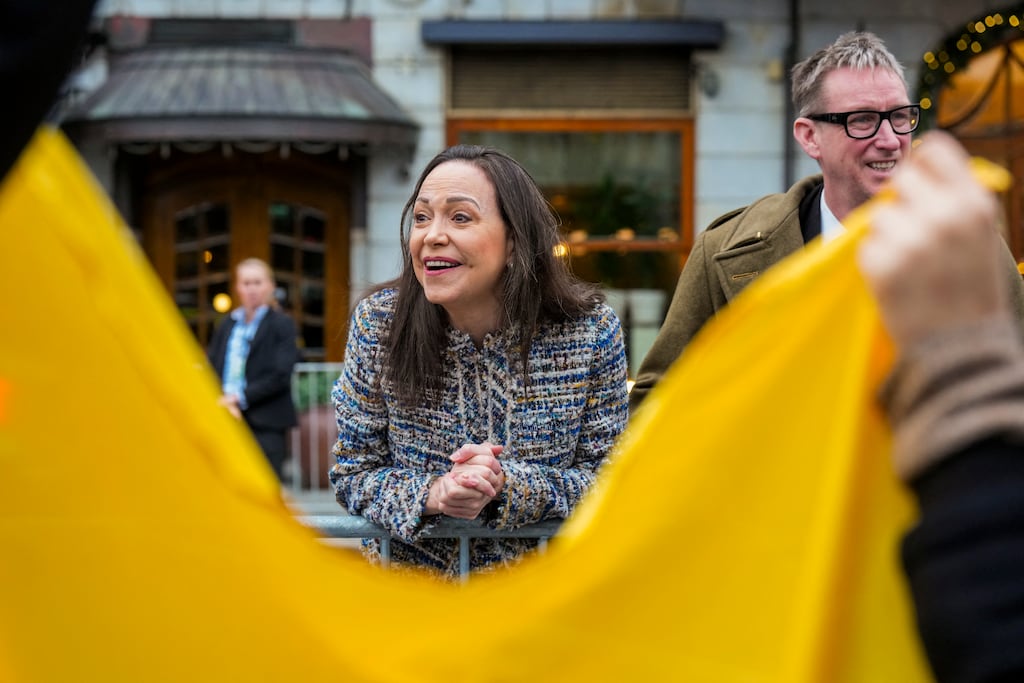
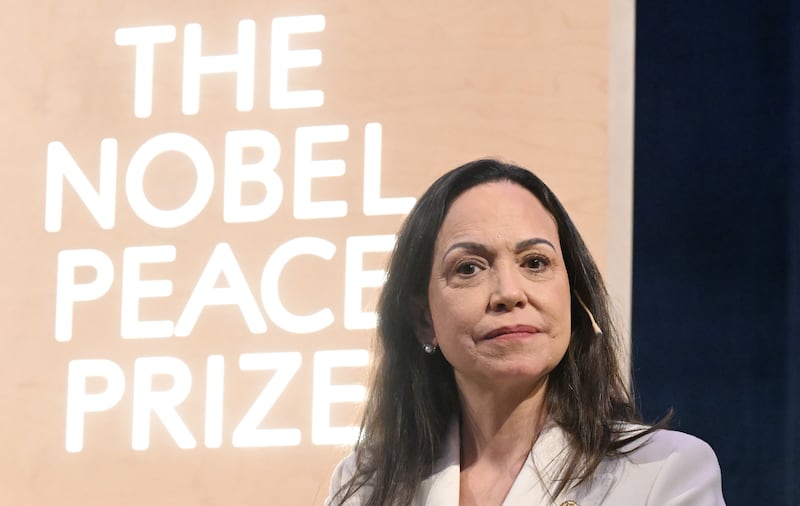
For some, it makes uncomfortable viewing: a newly minted Nobel Peace Prize winner supporting a campaign of military pressure to force out the president of her own country.
So why is opposition leader María Corina Machado backing US president Donald Trump’s moves against Venezuela’s authoritarian leader Nicolás Maduro, including the deployment of a big US naval taskforce in the Caribbean and the seizure this week of a sanctions-hit oil tanker?
The answer, Machado’s confidantes and allies say, is that Venezuela’s democratic opposition has tried everything else suggested by the international community over more than a decade – competing in elections, participating in negotiations, advocating sanctions and staging street protests. It now sees Trump as its only hope for dislodging Maduro, in power since 2013.
“President Trump’s actions have been decisive to reach the point where we are right now, in which the regime is weaker than ever,” Machado told reporters in Oslo on Thursday.
READ MORE


“You need to raise the cost of staying in power and lower the cost of leaving power. Only when you do that will this regime break down. And that’s where we’re moving towards right now.”
The choice of Machado for the peace prize sparked controversy in Norway, with two left-wing parties criticising the award and a few hundred people demonstrating against it in Oslo.
But the chair of Norway’s Nobel Committee, Jørgen Watne Frydnes, rejected the criticism in his award speech, saying people living under a dictatorship often had to choose between “the difficult and the impossible” and that it was “unrealistic” to expect “Venezuela’s democratic leaders to pursue their aims with a moral purity their opponents never display”.
[ US issues new sanctions targeting Venezuela oil sector and Maduro’s familyOpens in new window ]
One member of Machado’s delegation said the speech was met with a standing ovation by an audience “shocked to hear a European speak in such plain terms” about Venezuela.
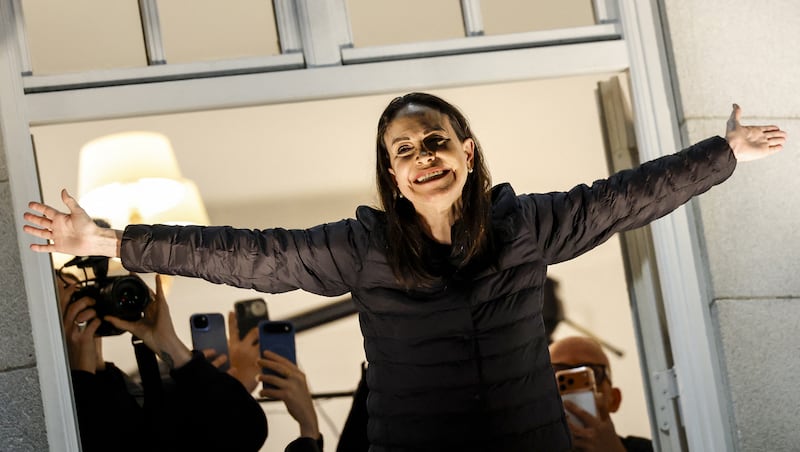
Machado raised eyebrows when she dedicated her Nobel award in part to Trump after it was announced in October, citing his “decisive support of our cause”.
Former US officials say she was motivated by pragmatism: Trump had wanted the Nobel Prize himself and there was a risk that she might lose US support if she did not defer to him.
Thor Halvorssen, the Venezuelan-Norwegian chief executive of New York-based Human Rights Foundation, said the leader of Venezuela’s opposition had to have a working relationship with the US president of the day. “Anyone with party preferences who is bothered by this fails to understand geopolitics and realpolitik,” he added.
Halvorssen, who has long known Machado, said the risks she undertook en route to Oslo – which included dodging Maduro’s soldiers at multiple checkpoints while in disguise and crossing stormy seas to Curaçao before flying to Norway – showed her steely tenacity.
“The fact that she has to navigate so much danger to leave Venezuela is proof positive about the repression and criminality of the regime,” Halvorssen said.
[ US preparing to intercept more Venezuelan ships, say sourcesOpens in new window ]
Once seen as someone on the political fringe, Machado’s uncompromising stance and her refusal to negotiate with Maduro now have broad support among Venezuela’s embattled and often squabbling democratic opposition. Activists have endured years of arrests, torture in jail and death in what the UN has called crimes against humanity.
Opposition politicians are reluctant to speak in public to criticise allies. But in private, they recall bitterly how European nations and the administration of Joe Biden pressed them to negotiate peacefully with Maduro, only for the Venezuelan leader to break his promises, or urged them to take part in elections, only to see them stolen.
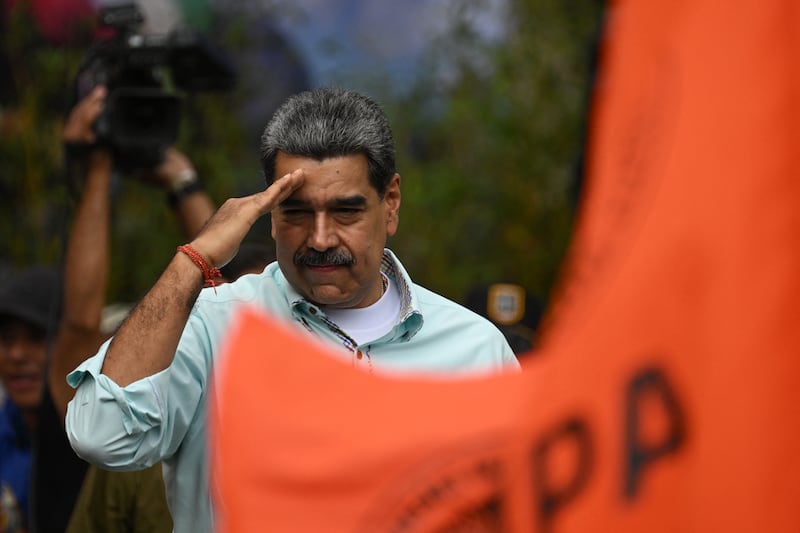
The Biden administration brokered a deal in 2023 under which US sanctions on the oil industry would be relaxed in return for Maduro holding free and fair elections.
Maduro pocketed the concessions but banned Machado from running in the 2024 presidential election and then claimed victory himself without producing evidence.
The opposition collected thousands of official tally sheets from polling stations proving that Machado’s surrogate candidate, Edmundo González, had won a landslide victory. Maduro responded by intensifying repression, deploying troops on the streets and firing live ammunition at protesters near the presidential palace.
Security forces rounded up and jailed opposition figures and conducted spot checks on mobile phones for antigovernment messages. The protests quickly fizzled.
Economic sanctions were tried during Trump’s first term, when he applied “maximum pressure” on Venezuela by trying to throttle the country’s main export, oil. Venezuela’s already feeble economy was further weakened, and refugee flows out of the country, already in the millions, continued to grow – but Maduro clung on with the support of Russia, China, Iran and Cuba.
Tom Shannon, a former top US state department official and Venezuela expert, said he believed Machado had “decided that her only hope for holding the opposition together and asserting her leadership of it was to embrace the Trump approach”.
That strategy has caused disquiet among Latin America’s left-wing presidents, none of whom attended Machado’s Nobel ceremony. The four who did come – from Argentina, Paraguay, Panama and Ecuador – were all conservatives.
“The majority of ambassadors in Washington from Latin American countries would say that they don’t want any kind of US military intervention in Latin America,” one envoy said. “We must always hope that there is another way to get Maduro out of power.”
Ideally, he said, this would involve the region’s nations acting in concert, though he conceded that bitter political divisions currently prevented this.
Others said the biggest risk to Machado’s strategy was that Trump might not deliver, noting that the US president this year has been fulsome in his criticism of Maduro but barely mentioned Machado and the opposition.
Machado has outlined a strategy for a future government in Venezuela formed by the current opposition. But even if Maduro were to cede power, it is far from clear that the regime’s security forces would allow a government formed by the current opposition to succeed him.
“The Venezuelan opposition’s plan to take over the government and to create the next republic requires an American presence on the ground in order to be successful,” said one former senior US official. “I don’t think Trump’s going to do that.”
Chris Sabatini, a Latin America expert at Chatham House, said there was a risk that Machado could find herself undermined by Trump’s likely need to find an exit, should Maduro not leave.
“She knows that Trump is deeply transactional and that his base is clearly opposed to extended US military action and even involvement in Venezuela,” he said. “So she risks being left out there on a limb.”
Those close to Machado bridle at the criticism, saying the opposition leader’s determination should not be underestimated and that Washington is now putting pressure on Maduro as never before. “Venezuela is a stage four tumour which has metastasised,” one said. “But at least we are now treating it with an oncologist.”
One big risk Machado faces is that she is unable to return to her homeland, marginalising her from her millions of supporters. Many previous opposition figureheads have seen their support evaporate when in exile.
“Far from being isolated from the base, they are cheering her for her bravery in escaping Venezuela to collect the Nobel Prize so she can take it back to the people – the real recipients of the prize,” Halvorssen said. “She will absolutely return.” – Copyright The Financial Times Limited 2025